
I’m not a parent, but I certainly know what it’s like to carry too much. As a former HS English teacher, I was a pro at caring for 200 students a year, and I don’t just mean teaching them about grammar and syntax. Every day, I would listen, problem-solve, and offer my room as a safe space for those who needed it. I arrived at work early, and my room rarely had a moment of solitude. But by the end of my fifth year, I knew I was burnt out, fried, weary, and exhausted. I was doing all the “right” things. Much like a parent, I was, in a sense, just doing my job. But on the inside, I was numb, exhausted, and irritable. If I got asked to repeat the directions one more time, or allow someone to go to the bathroom even though their bathroom passes were up, I might lose it. Can you relate?
According to culture and Scripture, parenting is a blessing. It’s full of joys and sorrows, highs and lows. But many parents, especially after they’ve parented for a few years, realize they’re living out of depletion and expectation rather than balance. They’re met headfirst with parental burnout—not a weakness, but the reality of being overloaded 24/7. We know that children are a gift from the Lord (Psalm 127:3, NLT) and blessed is the man whose quiver is full of them (Psalm 127:5, NLT), but sometimes, carrying the weight gets heavy. What happens when the role God gave us to steward begins to feel like something we have to survive?
Parental burnout is more than ordinary tiredness. It is the chronic exhaustion that comes from carrying emotional, mental, physical, and spiritual weight without enough rest, support, or margin. This article explores what parental burnout reveals about modern parenting, unrealistic expectations, and the invitation of Jesus to carry only what He has actually asked us to bear.
What Is Parental Burnout?
Parental burnout is chronic emotional, mental, and physical exhaustion tied specifically to the ongoing demands of parenting. It can show up as numbness, irritability, distance, guilt, and the sense that you are pouring from a cup that has been empty for a long time. It does not mean you are a bad parent. It means you are carrying more than your current rhythms can sustain.
What Does Parental Burnout Feel Like?
Like typical burnout, parental burnout stems from giving too much of ourselves and not taking care of the cup we’re pouring out of. Parental burnout is a chronic physical, emotional, and mental exhaustion tied specifically to parenting. Some key markers can include, but are not limited to: emotional distancing from our kids, feeling ineffective or like we’re failing, and an overall loss of joy in parenting. If you’re feeling this way, you’re not alone. These symptoms don’t make you a bad parent—they make you human.
In addition to other mental health issues like anxiety, depression, OCD, or even postpartum depression, parents can feel drained just tending to daily tasks and to-dos. But perhaps the deeper issue here isn’t that how we’re parenting is wrong, but that we’re carrying more than we were ever meant to. These mental health struggles are real, and so is the weight they add.
Living in the 21st century, it’s clear that cultural expectations of being a “good parent” are often unrealistic. We’re told to be present, gentle, structured, fun, healthy, and spiritually leading. But we also carry the invisible load of mental weight, emotional regulation, and decision fatigue. We may even wrestle with the spiritual tension of confusing our calling with our capacity. When I found myself exhausted from teaching, I had to remember and reframe what Jesus was actually asking me to carry. And newsflash: it wasn’t everything.
What Does Jesus Teach Parents about Rest?
In Matthew 11:28-30, we read these words: “Come to me, all you who are weary and burdened, and I will give you rest. Take my yoke upon you and learn from me, for I am gentle and humble in heart, and you will find rest for your souls. For my yoke is easy and my burden is light” (NIV). It’s a familiar passage about rest, but I want to encourage you to see it in a new light.
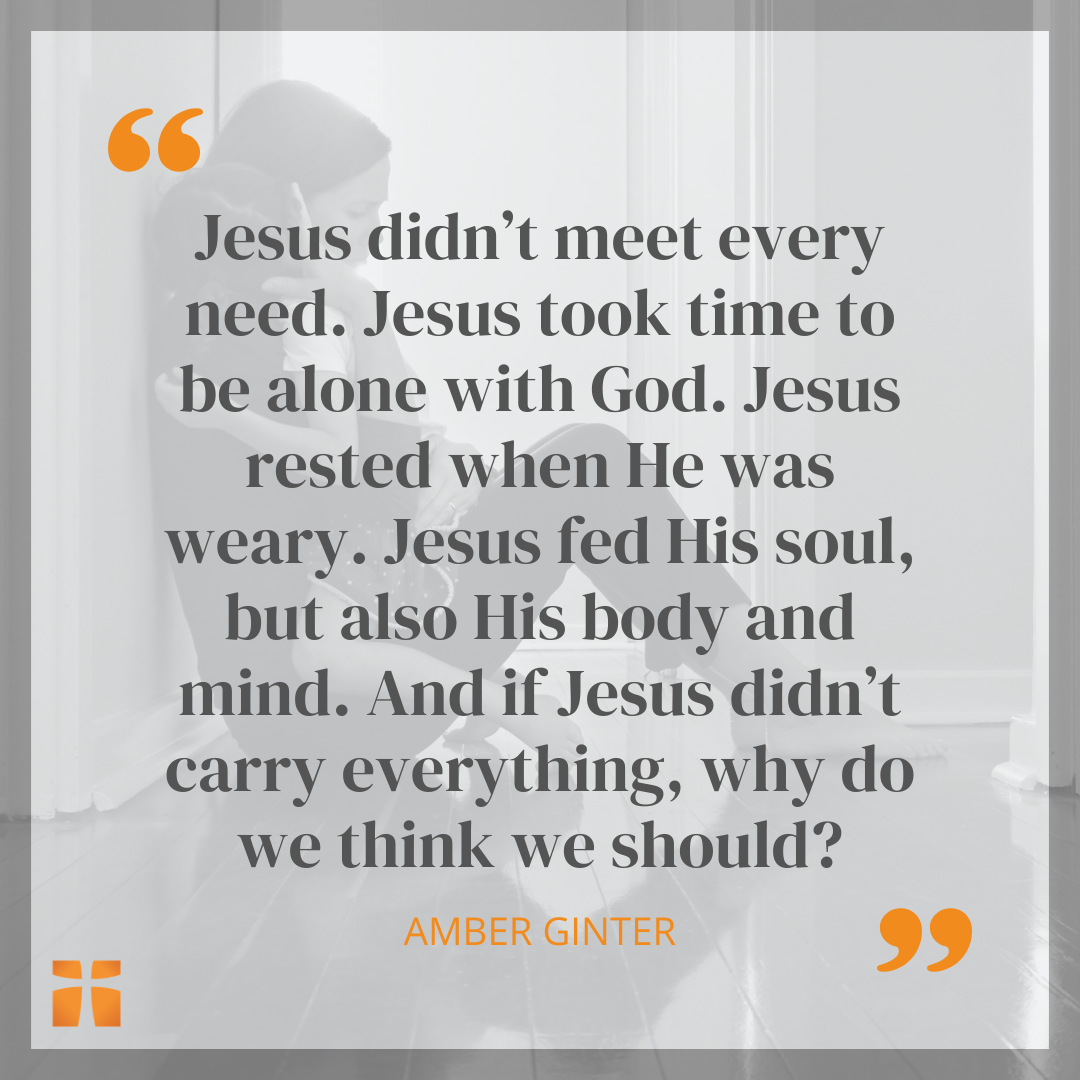
Here, we know that even Jesus withdrew from crowds. Jesus didn’t meet every need. Jesus took time to be alone with God. Jesus rested when He was weary. Jesus fed His soul, but also His body and mind. And if Jesus didn’t carry everything, why do we think we should? Despite this offered model of rest, we choose to keep carrying. Why? Because a lot of us hold pressure we place on ourselves. We have an immense fear of failing our kids. We want to be their friend, but also their protective parent.
Second, we constantly compare our parenting skills to those on TikTok, IG, and Facebook. If their parents took the kids to Hawaii, so should we. If they let their kids stay out late, so should we. The list goes on and on. Because we believe the false mantra that “Good parents sacrifice everything.” The reality is, this subtle savior complex isn’t healthy or good parenting. We weren’t created to feel responsible for outcomes only God controls.
What Happens When Parents Carry Too Much?
At the end of the day, there’s a cost for carrying too much, even if and when we mean well. Emotionally, we will become irritable, numb, and resentful. Relationally, we may grow disconnected from our kids, spouse, God, or even ourselves. Spiritually, we feel fear, guilt, and shame. Did we create that distance with God, or are we just exhausted?
As appealing as being the superhero parent may seem on the outside looking in, the truth is this: Burnout doesn’t just affect you—it shapes your home. And when we continue to look at the words of Jesus in relation to parenting, we learn that being a mom or dad is stewardship, not saviorhood. Our capacities are not infinite, but that’s by gracious and beautiful design. Because our God is a good God who cares about you, not just how well you care for others.
How Can Parents Respond to Burnout in a Healthy Way?
A healthy response begins by telling the truth about your limits. Parental burnout is not solved by trying harder, pretending you are fine, or carrying silent resentment until it spills over. It often begins to heal when you name what is too heavy, receive support without shame, and let Jesus redefine what faithful parenting actually requires. Good parenting is not the same thing as endless availability. It is stewardship shaped by wisdom, love, and dependence on God.
5 Ways to Shift a Heavy Parenting Load
- Release unrealistic expectations. Talk to your spouse about these and agree upon something together.
- Name what is actually yours to carry vs. what isn’t. Look at Scripture and ask the Lord to help you sort these things.
- Build rhythms of rest (not just survival breaks). Instead of seeing rest as a last resort, build it into your daily and weekly schedule. Bonus: Include the kids and use it as an opportunity to teach them about the Sabbath.
- Ask for help (community is biblical, not optional). It isn’t a sin to ask for help. Seek professional counsel if you need it, and don’t be afraid to talk with trusted pastors, friends, and family.
- Invite God into the ordinary stress, not just crises. Remember, God cares about every facet of your life. From the highest highs to the lowest lows, He wants to support you through the journey of parenting. And if you aren’t a parent like myself, He still wants to offer you support and encouragement in the interactions you do have with young people around you.
Friends, I don’t know what you’re carrying today, but I know enough to know that many of you are carrying too much. Instead of fighting it, might I encourage you to lay it down? Take some time to pray and reflect on what you’re carrying that the Lord never asked you to. Invite Him into this space and ask Him to speak to you. Then, tell a spouse or friend and ask them to help you stay accountable.
Biological parent or not, God doesn’t want us to carry heavy burdens. Perhaps that’s why laying something down isn’t seen as failure, but a step of bold and persevering faith.
Frequently Asked Questions About Parental Burnout
- What is parental burnout?
Parental burnout is chronic emotional, mental, and physical exhaustion caused by the ongoing demands of parenting. - What are the signs of parental burnout?
Signs can include irritability, emotional distance, numbness, feeling ineffective, resentment, and a loss of joy in parenting. - Does parental burnout mean I am a bad parent?
No. Parental burnout is not proof that you are failing. It is often a sign that you have been carrying too much for too long without enough rest, support, or margin. - What does the Bible say about carrying too much?
Scripture reminds believers that Jesus invites the weary and burdened to come to Him for rest, and that faithful stewardship is not the same thing as trying to carry everything alone.
For Further Reading
- How Should Christians Respond When the Culture Pendulum Swings?
- How Do We Navigate Outrage Culture in America in the Digital Age?
- 4 Ways to Engage Secular Culture for Christ
- The Gospel Is Offensive but You Don't Have to Be
- What Is Cultural Relativism?
Related Podcast: Overbooked and Overwhelmed - Stop the Burnout Now
You're busy. I'm busy. Is there a way out of this rat race? You've heard advice on burnout and busyness, but probably not how author and mom Tara Sun explains it from her new book, Overbooked and Overwhelmed: How to keep up with God when you're just trying to keep up with life. If you like what you hear, be sure to follow The Happy Home Podcast with Arlene Pellicane on Apple or Spotify so you never miss an episode!
Photo Credit: ©Unsplash/ Vitaly Gariev