Imagine ten children witnessing an event on a playground. All ten have their own version of what happened, but only two start shouting. They shout louder and louder, and soon everyone gathers around those two voices, repeating their story. Even though ten perspectives exist, the crowd hears only two.
Something similar happens in today’s digital media environment. During recent fighting involving Iran and Israel, social media was flooded with dramatic images and videos claiming missile strikes and destruction. Investigators later discovered that many of the most widely shared clips were old footage, video game scenes, or AI-generated images unrelated to the conflict. Millions of people saw these posts before corrections appeared. The explosion of information did not broaden understanding—it narrowed it. And for many Americans, that daily flood of manipulation and outrage has produced an unexpected response: they are walking away from both extremes.
Sitting at your computer, scrolling for the latest news, trying to discern truth, you are bombarded with political talking points, “you won’t believe this” headlines, and politicians shouting over each other. Whether through television, social media, or daily headlines, the message seems unmistakable: America is hopelessly divided. The loudest voices insist the nation is split into two irreconcilable camps, each shouting past the other.
Yet beneath the noise, there is a surprising truth. According to Gallup, 43% of Americans now identify as political independents—the highest percentage in decades—and roughly one-third identify as moderates. The loudest voices represent a far smaller portion of the population than most people realize.
Why the Loudest Voices Don’t Always Represent the Majority
Despite the constant appearance of polarization, millions of Americans quietly occupy the middle ground. Yet highly active ideological minorities dominate political conversations, especially online. Research consistently shows that a small percentage of people generate most political content on social media. Moderates often avoid public debates due to hostility, social consequences, or simple fatigue with conflict.
The result is a distorted perception of reality. The nation appears dominated by extremes, when in fact a large and growing portion of Americans hold more balanced views. This aligns with Scripture. In Matthew 5:13–14, Jesus described His followers as “the salt of the earth” and “the light of the world.” Salt adds flavor quietly, influencing those around it. Light reveals without announcing itself, exposing what is hidden in darkness. Together, salt and light do what noise never can — they bring truth and clarity into the darkness of deceit and delusion. Both exert powerful influence without shouting—but when faithful voices go silent, the cultural conversation is left to the loudest few.
How the Information Explosion Can Distort Reality
We live in the most information-saturated era in human history. Yet much of what people read or watch originates from just a few sources. Thousands of media outlets exist today, but most simply repackage reporting from dominant wire services like the Associated Press and Reuters. The 24-hour news cycle rewards speed over investigation. Social media amplifies stories that trigger emotion, outrage, or controversy. In this environment, balanced analysis travels slowly, while sensational narratives spread instantly.
Algorithms further distort perception by amplifying the most emotional, controversial, or combative voices. Moderate and thoughtful perspectives receive far less visibility. The nation may appear dominated by extremes even though a large portion of Americans quietly hold more balanced views. Proverbs 18:17 is strikingly relevant: “The first to present his case seems right, until another comes forward and questions him.” In a social-media world, the first version of a story can reach millions in minutes, shaping opinions before truth catches up.
Silence Shapes the Future as Much as Speech
In democratic societies, participation determines outcomes. Tens of millions of Americans, especially Christians, do not consistently vote or engage in civic discussion. Many avoid politics, disillusioned by its hostility or simply seeking peace. Yet when large groups withdraw, the most passionate voices—often the extremes—shape policy and culture. This is the “silent center” effect: moderates and people of faith may represent large numbers, but their reluctance to engage leaves the public square dominated by a vocal minority. Proverbs 14:34 reminds us: “Righteousness exalts a nation, but sin condemns any people.” A nation’s moral direction is shaped by the values its people actively live and defend. When the silent center refuses to act, the cultural conversation grows distorted—guided by anger and tribal loyalty rather than truth and wisdom.
Voting as Faithful Stewardship
All the discernment in the world means little if the silent center stays home on Election Day. Research by George Barna reveals that only 51% of people of faith are likely to vote, representing roughly 104 million faith-based non-voters. Moderates and people of faith are not a fringe. They are potentially the largest voting bloc in America. But potential means nothing without participation. Democracy doesn't reward the wisest voice. It rewards the voice that shows up.
Voting is not a partisan act — it is a civic and moral one. No candidate will ever be perfect, but we are called to be faithful stewards of the influence God has entrusted to us. Vote for the person and platform that most honors biblical values, knowing that only One has ever been worthy of our full trust. Throughout Scripture, God's people were called to engage the systems around them, to seek the welfare of the cities where they lived (Jeremiah 29:7), and to be a presence of truth in the public square. Opting out is not neutrality. It is abdication — and the consequences fall on everyone. Register. Research. Vote. And encourage every person of faith you know to do the same. The ballot box is one of the clearest ways the silent center can stop being silent.
4 Ways to Discern What's Politically True On Social Media
Many news organizations today prioritize volume over fact-finding, packaging stories for attention rather than clarity. Social media multiplies this effect, favoring posts that provoke outrage over measured truth. So how can readers discern fact from clickbait?
1. Pause Before Reacting.
Ask yourself: Is this headline designed to inform, or to shock me? Emotionally loaded words like shocking, outrageous, or exposed are often clickbait meant to trigger a reaction before thought. Proverbs 18:13 warns: “To answer before listening—that is folly and shame.”
2. Check the Source and Weigh the Evidence.
Is the outlet reputable? Are sources verifiable — eyewitnesses, documents, or direct quotes? Distinguish facts from commentary. Seek multiple perspectives to get a fuller picture. Dramatic language without backing is not reporting — it is opinion. Proverbs 12:17 reminds us: "An honest witness tells the truth, but a false witness tells lies."
3. Resist the Urge to Share Instantly.
Social media rewards speed, not accuracy. Waiting to verify, while controlling an emotional quick response, prevents misinformation from spreading through your own network.
4. Cultivate Discernment Through Wisdom.
Discernment is both intellectual and spiritual. 1 Thessalonians 5:21 reminds us to "test everything; hold fast to what is good." Test your sources, check the facts, and cultivate the spiritual wisdom that sees through deception.
All of these steps, however, flow from a deeper well. God's Word is eternal truth that crosses all generations, peoples, and times. While today's headlines will be forgotten by next week, Scripture remains a treasure-trove of wisdom that speaks directly into every decision we face — right vs. wrong, darkness vs. light, deception vs. truth. It does not simply inform us; it forms us. Psalm 25:5 gives us both the posture and the promise: "Guide me in your truth and teach me…my hope is in you all day long." In a world drowning in information but starving for wisdom, ultimate clarity and discernment come not from the loudest voice in the room — but from the still, small Voice that has never been wrong. In a culture overwhelmed by noise, the most important question is not which voices shout the loudest. It is whether the thoughtful, faithful voices of the silent center will choose to speak—and whether they will show up when it counts most. The question is no longer whether the silent center exists. It is whether they will remain silent.
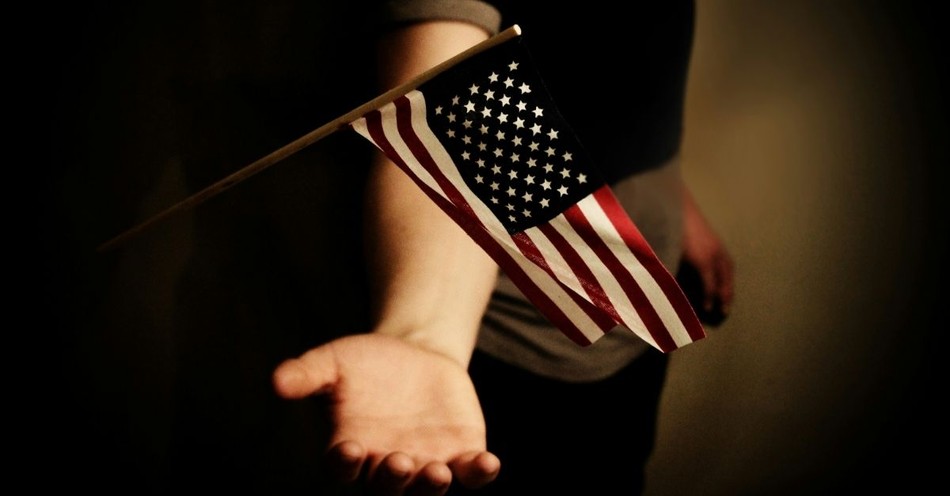
Photo Credit: ©Unsplash/Samuel Schneider