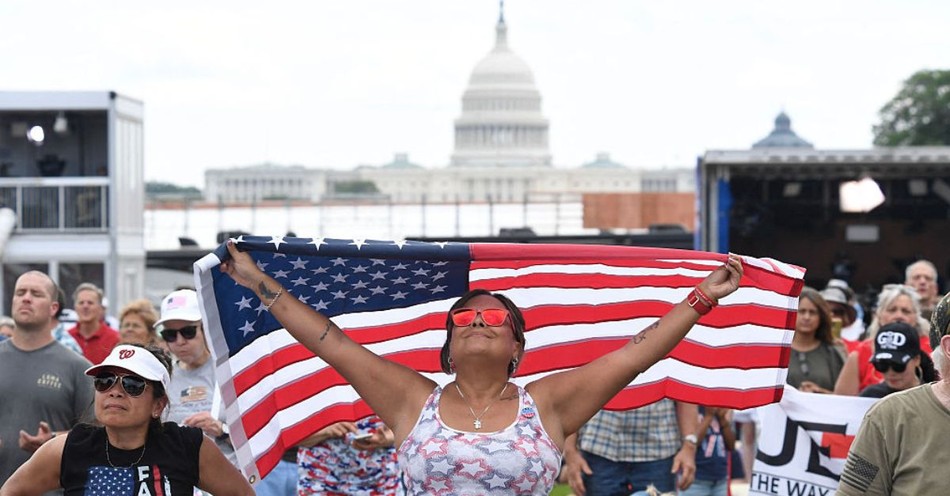
On May 17, 2026, something extraordinary happened on the National Mall in Washington, D.C. — extraordinary, that is, by modern standards. Thousands of Americans gathered not for a concert, not for a protest, not for a political rally, but for prayer. With the support of the President of the United States, the nation was called to rededicate itself as “One Nation Under God” in celebration of 250 years of American freedom.
The event, formally titled “Rededicate 250,” became one of the most visible faith-centered gatherings connected to the nation’s semiquincentennial — a National Jubilee of Prayer, Praise, and Thanksgiving. Freedom 250 described the May 17, 2026, gathering as a National Mall event with Scripture, testimony, prayer, worship, and rededication ahead of the nation’s 250th birthday; the White House’s America Prays page framed the broader effort as an invitation to prayer and rededication of the United States as “One Nation Under God.” When President Trump announced the gathering at the National Prayer Breakfast in February, it signaled that prayer would hold a public place in the nation’s 250th anniversary observance. The White House also promoted resources highlighting historic prayers, sermons, and presidential proclamations. New guidance from the Department of Education followed, aimed at protecting religious speech and prayer in public schools.
On the day itself, President Trump did not attend in person, but a recorded video of him reading 2 Chronicles 7:11-22 was played for the crowd. House Speaker Mike Johnson led a prayer of rededication, and the program included worship music, Scripture readings, testimonies, and messages from political and religious leaders. Supporters saw the gathering as a public return to prayer. Critics, however, argued that the event was overwhelmingly Christian and too closely aligned with one political movement.
For many believers, the reaction was instinctive: This is right. This is good. America needs this.
A more searching question lingered beneath the applause: When a president calls a nation to prayer, what does that moment mean? And what does God’s Word say about who is actually responsible? For Christians, a national call to prayer should never become merely political theater; it should become a personal invitation to humility, repentance, intercession, and renewed obedience to God.
How Has Public Prayer Shaped American History?
Public prayer has been part of American history from the nation’s earliest days, but its value depends on whether it reflects real humility before God.
What surprises many Americans is that this kind of public prayer is not a novelty — it is a return. Weeks before declaring independence, the Second Continental Congress recommended that May 17, 1776, be observed throughout the colonies as a day of humiliation, fasting, and prayer. That moment set a pattern that echoed through the centuries by presidents of every era.
Ronald Reagan once called the image of George Washington on his knees at Valley Forge “the most sublime picture in American history.” That image is not merely patriotic iconography. It is a theology — a declaration that the strength of this nation was never rooted in its armies or ambitions, but in its dependence on Almighty God. Washington wrote plainly that without humble imitation of the Divine Author of their religion, Americans could never hope to be a lasting nation.
John Adams added the note every generation of leaders needs reminding of: genuine repentance. He called the nation to confess offenses against the Most High God and declared that religion and virtue are not merely useful for public life. They are its sure foundations.
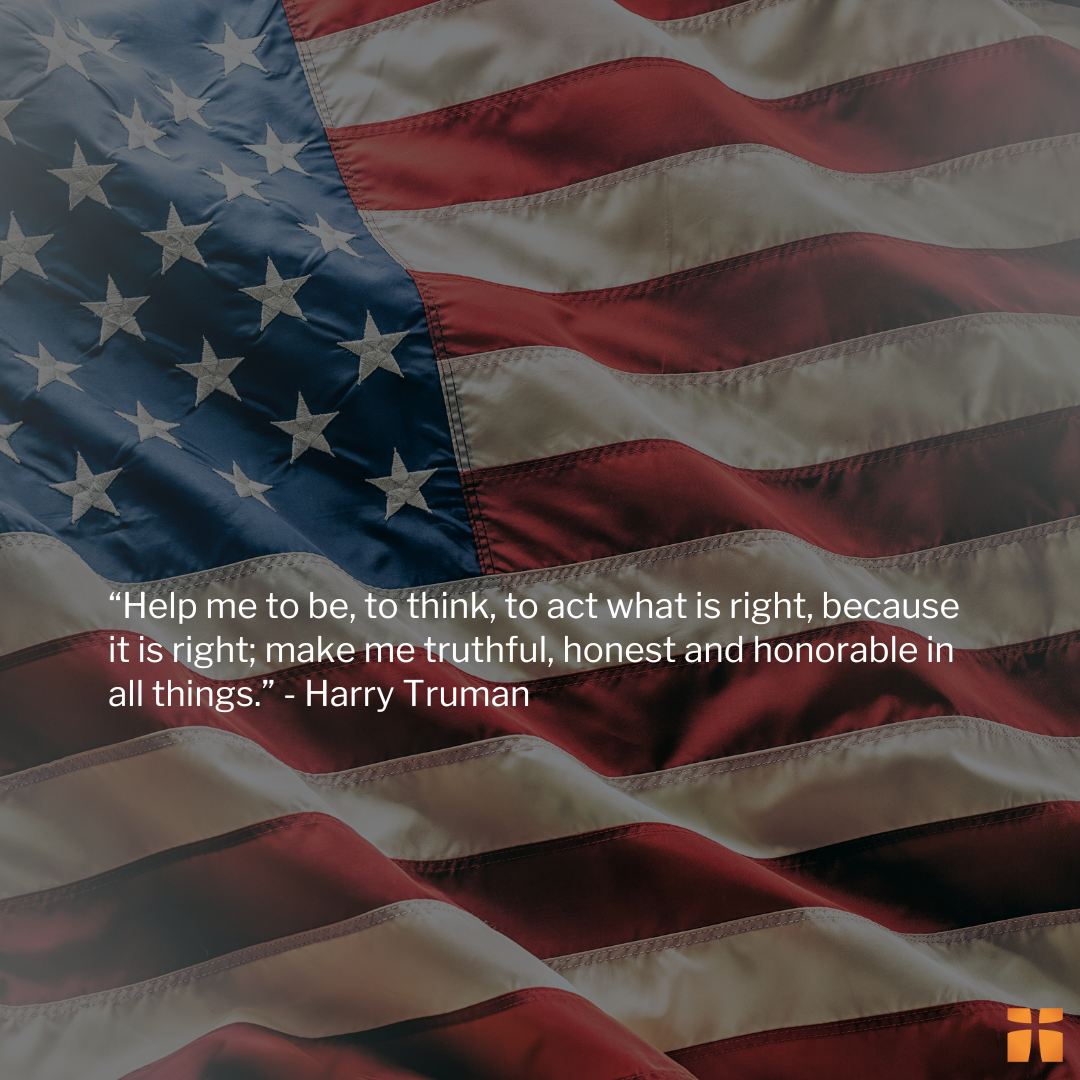
Harry Truman institutionalized what Washington had modeled, signing the annual National Day of Prayer into law in 1952. But what is most compelling about Truman is not his proclamation; it is his private prayer — words carried since his youth into the Oval Office: “Help me to be, to think, to act what is right, because it is right; make me truthful, honest and honorable in all things.” The lesson for every believer looking back on May 17 is this: the value of public prayer is most credible when it is the overflow of private prayer.
Ronald Reagan gave the Day of Prayer its permanent home, the first Thursday of May, and by law gave the nation its most enduring rationale. He cited Alexis de Tocqueville, who marveled that a free people understood what tyrants do not: “Despotism may govern without faith, but liberty cannot.” Two hundred and fifty years in, that observation has not aged. If anything, it has sharpened.
Why Has Public Prayer Become Controversial Today?
Public prayer becomes controversial when a culture no longer agrees on whether faith belongs in public life or should remain private. Two moments in early 2026 landed side by side in the national conscience, and together they reveal something the individual stories alone cannot.
In March, Secretary of Defense Pete Hegseth concluded a somber press conference following the deaths of six American service members with a simple request: pray for the troops — on bended knee, in families, in schools and churches, in the name of Jesus Christ. A CBS anchor responded on social media with mockery that drew immediate backlash. The reply from Hegseth's press secretary was straightforward: it was the same request Americans have been making since George Washington prayed for his troops at Valley Forge.
Around the same time, NBA player Jaden Ivey claimed he was cut from the Chicago Bulls for preaching the Gospel and speaking against the league’s Pride Month messaging, while other reports framed the release around conduct and team standards. Accused of being unstable because of his faith, Ivey responded with words carrying the ring of every martyr who ever stood before a hostile crowd: his life had been transformed by God when it was empty and suicidal. "I love my family, my children. I will give my life for them. I'm going to do the will of God in Jesus' name — not my will be done, but His will be done."
A soldier's prayer was mocked on national television. A young man's faith was used as grounds for professional dismissal. Two stories. One diagnosis. The culture has not simply drifted from its foundations — it has hardened against them. What was once pliable, shapeable, open to the influence of faith and virtue, has set like dried cement. And cement, once cured, does not bend; it must be broken and poured again. That is precisely what genuine revival looks like — and precisely why May 17 mattered, not merely as a political event, but as a spiritual one.
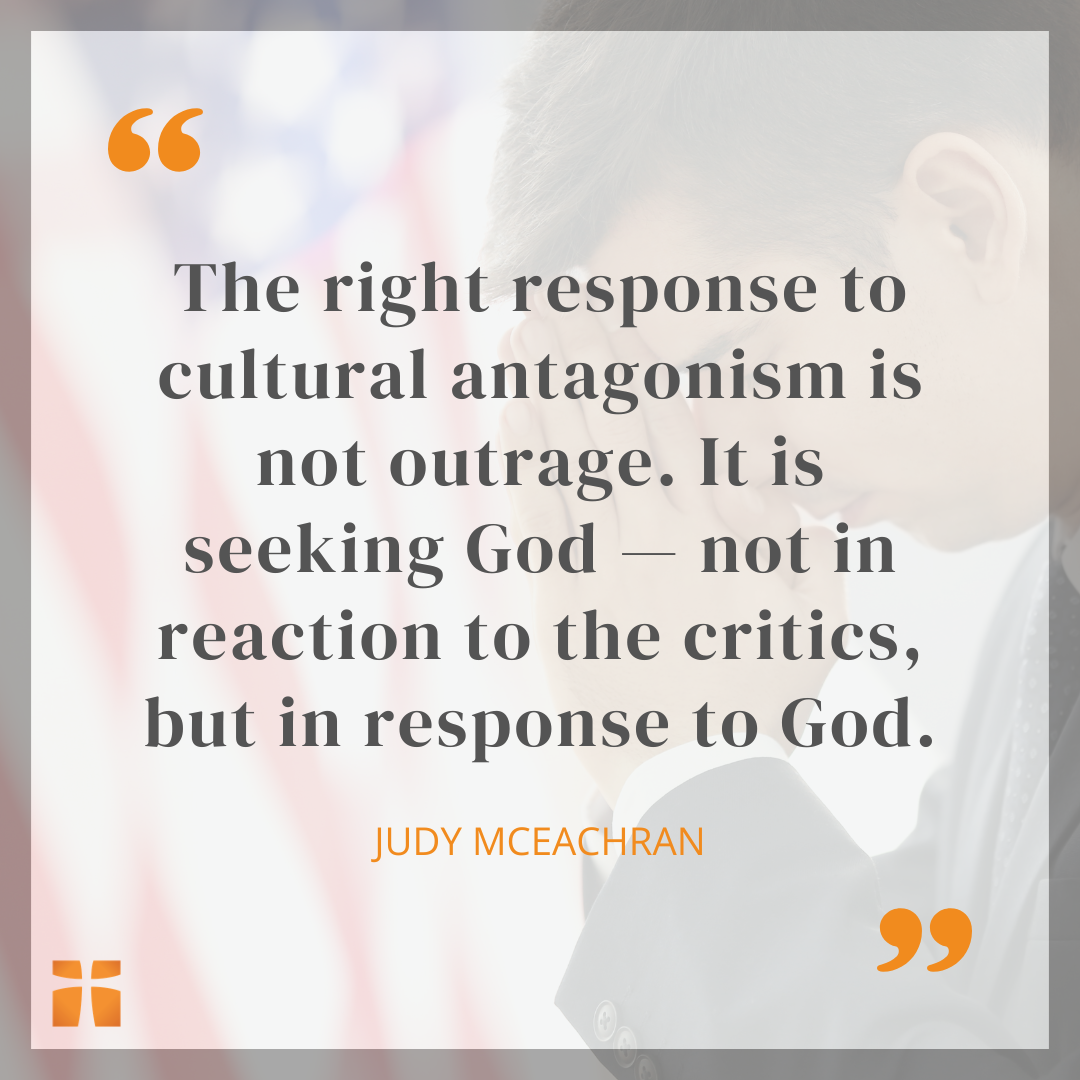
John Winthrop’s vision of America as “a city upon a hill” — a people whose covenant with God would make them a light to the nations — was not political rhetoric. It was a pastoral charge. When prayer for fallen soldiers draws ridicule, and a young man's faith costs him his livelihood, we are a long way from that hill. The question we need to ask ourselves is whether God's people are willing to find their way back. The right response to cultural antagonism is not outrage. It is seeking God — not in reaction to the critics, but in response to God.
What Does 2 Chronicles 7:14 Teach about Prayer and Repentance?
2 Chronicles 7:14 reminds Christians that spiritual renewal begins not with government action, but with God’s people humbling themselves, praying, seeking His face, and turning from sin. That passage was not merely background for Rededicate 250; it became part of the event itself. In a recorded video, President Trump read from 2 Chronicles 7, including the familiar call for God’s people to humble themselves, pray, seek His face, and turn from wicked ways. What is remarkable, looking across two and a half centuries of presidential calls to prayer, is how consistently they echo a far older voice. From Washington to Adams, from Truman to Reagan, these proclamations—whether knowingly or not—reflect the words first declared by King Solomon at the dedication of the Temple:
“If my people, who are called by my name, will humble themselves and pray and seek my face and turn from their wicked ways, then I will hear from heaven, and I will forgive their sin and will heal their land.” - 2 Chronicles 7:14
The promise is not directed at governments, but at God’s people. Not if a leader invites, but if hearts respond. And yet, it is no small thing when a national leader recognizes that our deepest need is not political but spiritual, found in turning back to God.
Why Do Faithful Intercessors Still Matter?
Faithful intercessors matter because Scripture repeatedly shows that God works through praying people who stand in the gap for others. Long before Solomon, Abraham interceded for the cities of Sodom and Gomorrah — moral cesspools on the verge of judgment. He pressed God: fifty righteous? Forty? Twenty? Even ten? God answered that for just ten righteous souls, He would spare the city — a full measure, enough to preserve a people by the salt and light of the faithful few.
Today, we have far more than ten serving God with righteousness. A president calling the nation to prayer did not create something new; he echoed what God has always asked of His people. Before politics, gender was settled by God in creation. Before politics, marriage was designed by God. Before politics, the virtues of loving one another were established by the two greatest commandments. God has always called His people to intercede — with or without a president’s invitation.
How Should Christians Personally Respond to a National Call to Prayer?
Christians should respond to a national call to prayer by beginning with personal repentance, private prayer, and renewed faithfulness in everyday life. May 17 was a significant day — an opportunity for genuine repentance, intercession, and rededication regardless of one’s politics. For Christians, that rededication begins in the heart, not on a stage.
America’s spiritual renewal doesn’t rise or fall on any one leader. It rises or falls on the faithfulness of the Church. The unity this fractured nation desperately needs will not come from political figures praying publicly. It will come from God’s people praying privately — and carrying the fruit of that encounter into their neighborhoods, workplaces, family tables, and communities. God is not a partisan. He is not impressed by crowds or podiums. He is moved by the humble and contrite heart — the heart that comes not with an agenda, but with an open hand and a bent knee.
Washington prayed. Adams fasted. Truman confessed. Reagan called the nation to its knees. And on May 17, a president invited Americans back to the Mall — back to the beginning — to rededicate what was always meant to be placed in God’s hands. A national prayer gathering may draw a crowd, but only surrendered hearts can carry revival into homes, churches, workplaces, and communities.
May 17 may have been a spark. But the fire must be lit in you. The real test began after the Mall emptied. Not because a president said so, or in spite of those who mock. But because the Author of life and liberty is still listening. America’s greatest days have always begun on bended knee—with a repentant and obedient heart.
Frequently Asked Questions about Christians, Public Prayer, and National Renewal
- What happened at Rededicate 250?
Rededicate 250 was a May 17, 2026, National Mall gathering of prayer, worship, Scripture, testimony, and rededication connected to America’s 250th anniversary. The program included political and faith leaders, worship music, and a recorded video of President Trump reading 2 Chronicles 7. - Why did Rededicate 250 become controversial?
Supporters saw it as a needed public return to prayer and gratitude before God. Critics argued that the event was overwhelmingly Christian, closely tied to conservative politics, and raised concerns about church-state boundaries. - How should Christians respond when public leaders call for prayer?
Christians should respond with humility, discernment, repentance, intercession, and renewed obedience to God rather than treating prayer as a political performance. - Does the Bible command Christians to pray for their nation?
Scripture calls believers to pray for leaders, seek God’s mercy, pursue righteousness, and intercede for others. Prayer for a nation should begin with God’s people humbling themselves before Him. - What does 2 Chronicles 7:14 mean for Christians today?
2 Chronicles 7:14 teaches that God’s people must humble themselves, pray, seek His face, and turn from sin. The passage should lead believers toward repentance, not national pride. - Is public prayer enough to bring spiritual renewal?
No. Public prayer can be meaningful, but spiritual renewal requires sincere repentance, private devotion, obedient living, and the faithful witness of the Church. - Can Christians support public prayer without making faith partisan?
Yes. Christians can value prayer in public life while remembering that God is not owned by any party, leader, platform, or nation.
For Further Reading
- What Is the National Day of Prayer?
- A Call to Pray for America
- 6 Prayers for Revival in America
- How Did the Bible Influence the Foundation of America?
- Prayer in Public Schools: The Constitutional Debate
Photo Credit: ©Getty Images/ MATTHEW HATCHER / Contributor