
Key Points
- The rise of psychedelics is not only a medical or cultural issue, but a discipleship question about suffering, wisdom, and lasting peace.
- Christians should respond to mental pain with compassion, not shame, recognizing that suffering can have emotional, physical, spiritual, and relational roots.
- Symptom relief is not the same as deep restoration; biblical peace is found in Christ and the presence of God.
- Seeking therapy, counseling, or medical support can be part of faithful Christian living when done with wisdom and discernment.
- The Church should meet suffering with presence, professional care, spiritual support, and the hope of Christ rather than silence or suspicion.
A recent study highlighted by Frontiers found that psilocybin—the psychoactive compound found in magic mushrooms—reduced aggression and activity levels in naturally aggressive mangrove rivulus fish. Researchers observed that fish exposed to psilocybin displayed fewer “swimming bursts,” high-energy behaviors associated with escalated aggression, and spent less time moving overall compared to fish that were not exposed to the substance. Another study found that fish exposed to psilocybin showed reduced aggression and calmer behavior overall.[1] (Frontiers)
What Is the Psychedelic Renaissance?
What was once associated with counterculture rebellion is now the subject of mainstream conversation about mental health, peer-reviewed research, pharmaceutical investment, and widely watched TED Talks. Researchers are exploring its potential to address depression, trauma, addiction, and anxiety - calling this moment a "psychedelic renaissance." The cultural momentum is real.[2] Studies suggest it may reduce symptoms of depression, trauma, addiction, and anxiety. This is what some are calling the "psychedelic renaissance" — and it is worth paying attention to, not to panic, but to understand what it reveals about the world we live in and the people we are called to love and serve. For Christians, the rise of psychedelics is not only a medical or cultural conversation; it is a discipleship question about suffering, wisdom, the body, and where we look for lasting peace.
Why People Are Looking for Relief from Mental Pain
Mental anguish is not weakness. It emerges when fundamental human needs — physical, emotional, intellectual, psychological, and spiritual — go unmet. When that gap grows wide enough to disrupt daily life, damage relationships, or make ordinary functioning feel impossible, something has to give.
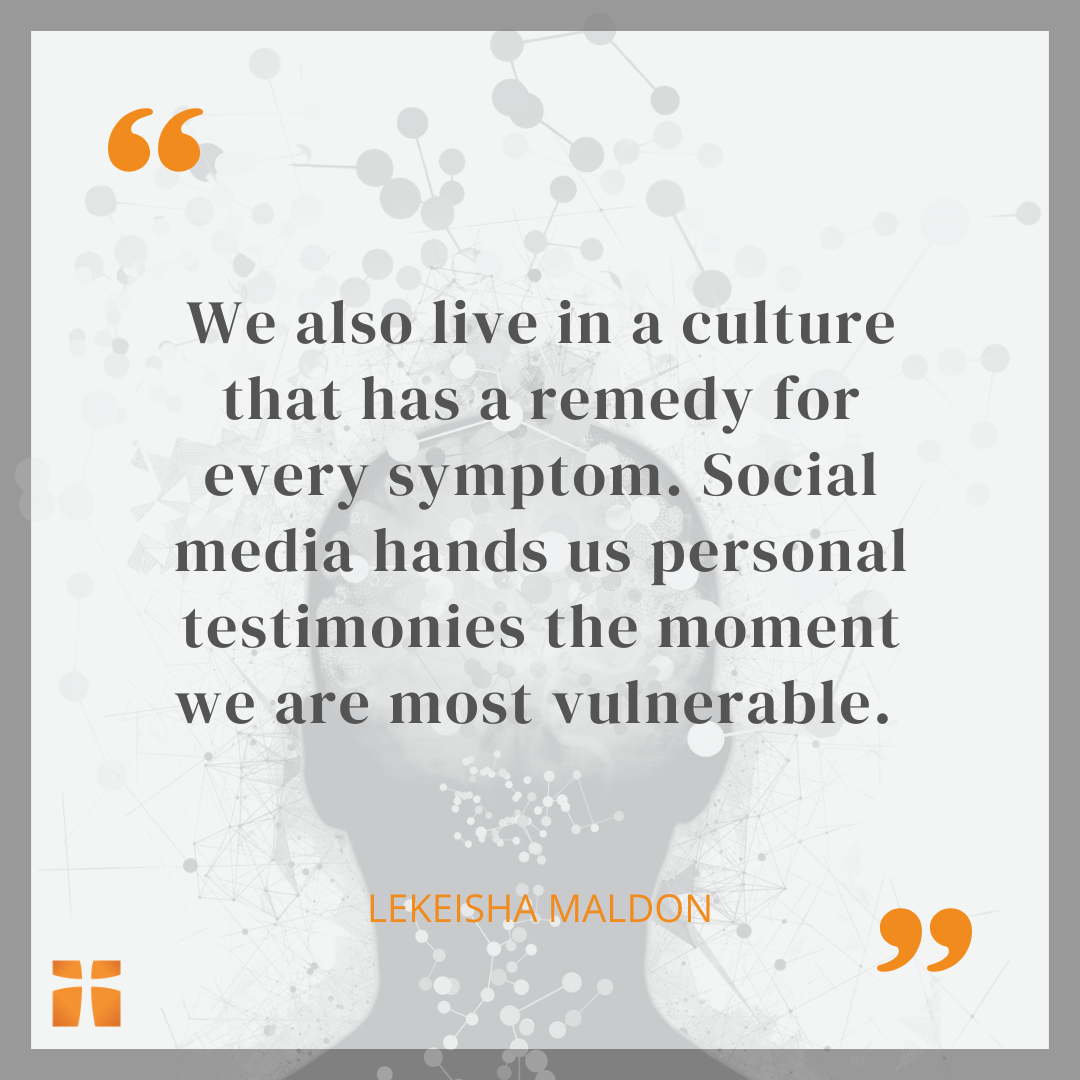
We also live in a culture that has a remedy for every symptom. Social media hands us personal testimonies the moment we are most vulnerable. Someone's story of what worked for them finds us right when we are searching. We are surrounded by the promises of quick relief. And honestly, the desire for relief is not the problem. It is human. It is understandable. But underneath the trend, I want to ask another question: What does our desperate hunger for relief reveal? I believe our anxiety, our restlessness, our need to quiet the noise — these are not merely symptoms to be managed. They are signals. And signals point somewhere. They point to a need that is deeper than what any compound can reach.
Why Christians Need More Than Symptom Management
The fish study is worth noting, but it is also worth noting clearly: reduced aggression is not the same thing as a transformed heart. Psilocybin may quiet certain behavioral responses. For a fish, quieter behavior may be the whole story. But you are not a fish. You are made in the image of God, with a soul that is not looking for sedation — it is looking for restoration. The peace that the world offers — chemical, circumstantial, or otherwise — can be real in the moment. But it does not reach the place that actually needs healing. It cannot touch what only grace can reach. Scripture does not promise us a life free from suffering this side of heaven. What it promises is God’s presence within it. Our relief does not ultimately come from something external. It comes from a Person — Jesus Himself.
Mental Health Treatment Can Be Part of Faithful Christian Living
This is not to shame anyone who is suffering, or to suggest that mental health treatment is somehow outside the reach of faithful Christian living. A Christian approach to counseling recognizes that our emotional suffering has multiple roots. Not all pain is the result of personal failure or spiritual rebellion. Sometimes suffering is simply the reality of existing in a broken world. Sometimes it walks alongside obedience rather than against it. We need trained counselors, licensed therapists, and clinicians who bring both competence and compassion — people who can hold your story with professional skill and with prayer.[3]
How Christians Can Use Wisdom When Considering Psychedelics
What I am calling for is wisdom. Proverbs 2 tells us that God's wisdom is our protection. And Paul’s word in 1 Corinthians 10:23 makes the point even clearer: "We are allowed to do anything, but not everything is good. We are allowed to do anything, but not everything is helpful." That is the standard. Not only whether something is permissible, but whether it is profitable. Whether it moves you toward wholeness or simply rearranges the pain in a way that feels more manageable for a season. Our bodies are our temples. That is not a cliché to pull out at will. It is a framework for how we should make decisions — carefully, prayerfully, with qualified guidance.
What the Church Should Learn from the Psychedelic Renaissance
Beneath all the clinical language and cultural momentum, the psychedelic renaissance is telling us something the church needs to hear: people are suffering, looking for answers, and they have not always found what they needed within our walls. We have sometimes offered oversued “Christianese” when people needed presence. We have sometimes offered silence when people needed shepherding. And so they look elsewhere.
But the answer is not to adopt every trend the culture brings to the conversation about healing. The answer is to do the harder work — building communities where suffering is not something to be hidden, where professional care is encouraged alongside spiritual support, and where the Holy Spirit is trusted to do what no substance can replicate. The fruit of the Spirit — love, joy, peace, patience, kindness, goodness, faithfulness, gentleness, and self-control — is not something we manufacture. It is something we access through abiding in Jesus. We are not governed by the flesh; we are led by the Spirit. And while there are some cases when medically approved, prescribed medication is helpful, it is a reminder that we do not have to depend on chemically altered states to access what God has already made available to us through His presence. It is not in our own strength. It is by His.
Our Hope Is Found in Christ, Not in the Right Remedy
This side of heaven, we will not escape the effects of living in a fallen world. That is not a failure of faith. It is the reality of what it means to be human in a world that is still waiting for its full redemption. But our hope is not dependent on finding the right remedy. It is anchored in a Savior who is faithful, just, and present. Who promises to right every wrong. Who sees what others overlook. And who invites us — not to overlook our pain — but into a peace that surpasses understanding (Philippians 4:7). When seeking relief from aggression, anxiety, and mental pain, it’s critical to walk through your options with experienced counselors. Seek wisdom. Do not make permanent decisions in desperate seasons. And through all of it, hold on to this: you were not made for symptom management. You were made for communion with God. The church does not need to answer suffering with suspicion or silence, but with compassion, wisdom, presence, and the hope of Christ. The longing behind the trend is real. The answer to that longing is older than any renaissance.
Frequently Asked Questions about Christians, Psychedelics, and Mental Health
- Should Christians use psychedelics for mental health?
Christians should approach psychedelics with caution, prayer, medical guidance, and biblical wisdom. The question is not only whether something promises relief, but whether it is wise, lawful, medically supervised, and spiritually healthy. - Is psilocybin the same as biblical peace?
No. Psilocybin may affect mood, perception, or behavior, but biblical peace is rooted in God’s presence, Christ’s salvation, and the work of the Holy Spirit. - Can Christians seek therapy or medical help for mental health struggles?
Yes. Seeking help from trained counselors, licensed therapists, and qualified medical professionals can be a faithful step toward healing and wise stewardship of one’s life. - What does the Bible say about wisdom and the body?
Scripture calls believers to seek wisdom, honor God with their bodies, and test whether something is truly helpful—not merely permissible. - What should someone do if they feel desperate for relief?
They should not make rushed decisions in desperation. They should speak with a trusted pastor, qualified counselor, or medical professional and seek support from a safe Christian community.
For Further Reading
- What Does the Bible Say about Struggling with Mental Health?
- 8 Important Ways for Christians to Care for Their Mental Health
- What Should Christians Consider Before Seeking Counseling or Therapy?
- What Does “Your Body Is a Temple” Really Mean?
- How Is Peace a Fruit of the Spirit?
[1] See Global Wellness Institute, "Psychedelics & Healing Initiative: Trends for 2025," https://globalwellnessinstitute.org/global-wellness-institute-blog/2025/04/02/psychedelics-healing-initiative-trends-for-2025/
The Fight for Botanicals https://fightforbotanicals.com/what-to-know-about-the-booming-psychedelics-industry-where-companies-are-racing-to-turn-magic-mushrooms-and-mdma-into-approved-medicines/
Effects of Buprenorphine on Responses to Emotional Stimuli in Individuals with a Range of Mood Symptomatology. The International Journal of Neuropsychopharmacology. https://doi.org/10.1093/ijnp/pyx077
[2] https://www.biotechniques.com/neuroscience/the-magic-of-mushrooms-psilocybin-makes-aggressive-fish-more-chill/
[3] Siang-Yang Tan and Brad D. Strawn, A Christian Approach to Counseling and Psychotherapy: Christ-Centered, Biblically-Based, and Spirit-Filled (New York, NY: Cascade Books, 2022)
Photo Credit: ©Unsplash/Ben Sweet