Table of Contents
- Why Are There So Many Christian Denominations?
- The Early Church Was One Body with One Gospel
- Scripture Says There Is Still One Church in Christ
- How Interdenominational Gatherings Strengthen Christian Unity
- Why Pastors and Leaders Need Relationships Outside Their Own Church Bubble
- How Should Christians Approach Interfaith Dialogue?
- Why Christians Should Step Outside Comfortable Walls
- Frequently Asked Questions about Christian Unity and Interfaith Dialogue
- For Further Reading
Why Are There So Many Christian Denominations?
The large number of Christian denominations raises an important question: how can believers remain faithful to Scripture while still pursuing unity with the wider Body of Christ? In a recent study, one research organization found that there are 45,000 unique denominations worldwide that consider themselves "Christian." In just America, there are somewhere around 1200. Of course, the list of other religions (and break-offs or denominations within those other religions) would drive that number up quite a bit. I don't know about you, but that sounds like a lot. To compare, that is one Christian denomination for every 133,333 people or one denomiation for every 300 churches (according to census data).
I'm sure every one of these denomations has a list of reasons why they exist and maybe even why their's is the best one. I know mine does! Even with thousands of denominations, Christians are still called to remember that Jesus has one Church, one gospel, and one mission—and that unity does not require ignoring every difference. But let's give every one of those deniniations the benefit of the doubt and trust that they are doing what is right, following Scripture as well as they know how, and each reaching a different group of people of our population that might "fit" with their style. Even if that is the case, there are two truths about the Church that Jesus started in the Book of Acts that cause me (and hopefully you) to start to question whether or not it is good, healthy, or even useful to have that many denominations.
The Early Church Was One Body with One Gospel
The first Christians were spread across different places and cultures, but they still understood themselves as one Church united under Jesus and the gospel. The first truth is this: in the beginning there was just one Church.
After Jesus died, rose again, and ascended to Heaven, the First Century Christians (as they eventually became known), led by the Apostles, were one church made up of many Christians. Obviously they were not all in one place (especially after the "Dispersion"), but they were still one Church. Back then, there were no such things as "denominations." Not everyone agreed on everything of course (consider Paul and Barnabas's disagreement in Acts 15), not every group of people have the same cultural standards (consider Paul's teaching on hair in 1 Corinthians 11), not every leader led the same (consider the differences in approach between Paul and Apollos in Acts 18), and not everyone teacher taught the same (consider the differences in personality and style between the different letter or epistle-writers in the New Testament). But there was still just one Church of Jesus, preaching the same Gospel. All of the Christians and churches in different locations fell under the same banner. Paul clearly wrote in Ephesians 4:4-6 (NLT) that:
"For there is one body and one Spirit, just as you have been called to one glorious hope for the future. There is one Lord, one faith, one baptism, one God and Father of all, who is over all, in all, and living through all."
Scripture Says There Is Still One Church in Christ
The New Testament describes the Church as one Body, one household, and one Bride belonging to Christ. The second truth about the Church of Jesus Christ in Scripture is this: in the end there will still just be one Church!
When Paul describes the church, he uses the analogy of "one body" with many "members" (1 Corinthains 12, Romans 12). In my experience, though, when we think of the church being one of the "body" we are talking about each individual, local church congregation (although you could argue that he is referring to the global, total church as one body). We also get the idea from Jesus's teaching on the Kingdom of Heaven (or God) on earth and Paul's teaching about Christians being "citizens" of the same "household" that all Christians really are part of the same family with the same foundation. Here is how Paul words it in his letter to the Ephesians:
"So then you are no longer strangers and aliens, but you are fellow citizens with the saints and members of the household of God, built on the foundation of the apostles and prophets, Christ Jesus himself being the cornerstone, in whom the whole structure, being joined together, grows into a holy temple in the Lord. In him you also are being built together into a dwelling place for God by the Spirit." - Ephesians 2:19-22, ESV
The even greater analogy or title that we are given in Scripture for the Church that drives home the point that we are all part of the same "thing" is found in Revelation 19. John the Revelator writes what he sees in his future vision of Heaven:
"Then I heard what seemed to be the voice of a great multitude, like the roar of many waters and like the sound of mighty peals of thunder, crying out, “Hallelujah! For the Lord our God the Almighty reigns. Let us rejoice and exult and give him the glory, for the marriage of the Lamb has come, and his Bride has made herself ready; it was granted her to clothe herself with fine linen, bright and pure”—for the fine linen is the righteous deeds of the saints." - Revelation 19:6-8, ESV
It struck me recently while I was at a community-wide or ecumenical gathering for pastors that in the end times when the bridegroom (who is Jesus) returns, he will not return for multiple brides or a Baptist bride, as well as a Methodist bride, but only one bride! So in the end there is only one church! For most of us, though, this reality of the Church of Jesus Christ is easy to forget because most of us tend to stick with what we know and who we know inside of our local congregation.
How Interdenominational Gatherings Strengthen Christian Unity
Interdenominational gatherings can strengthen Christian unity by reminding believers that secondary differences do not erase our shared identity in Christ.
However, when we participate in inter-denominational gatherings it can be very good for us because it reminds us that we really are only one Church despite our differences. Gathering with people outside of our church and denomination can be helpful also because it displayes for us what doctrines are the most important for us to agree on and what other (secondary or tertiary doctrines are less important and not even worth arguing about). Not only that but being connected to other churches and denominations can help us be more missional because different congregations and networks have different strengths and focuses, meaning that we are able to do so much more together for the Kingdom of God and in helping people in our community and world than we can ever do seperately.
Why Pastors and Leaders Need Relationships Outside Their Own Church Bubble
Pastors and ministry leaders grow when they learn from believers outside their own denominational, cultural, and ministry contexts.
Personally for me as a pastor, regularly meeting with pastors, leaders, and others that are not part of my same church denomination helps me stay aware and alert with what God is doing outside of my little bubble, it helps me be creative and to think outside the box, it challenges me to make sure my beleifs are based on Scripture, and it helps me grow into a better leader and pastor. It has also been helpful for me to see beyond the doctrinal differences and to see that not only are we all in the same boat dealing with pretty much the same thing (because we're all dealing with humans like us!), but we are all essentially trying to do the same thing!
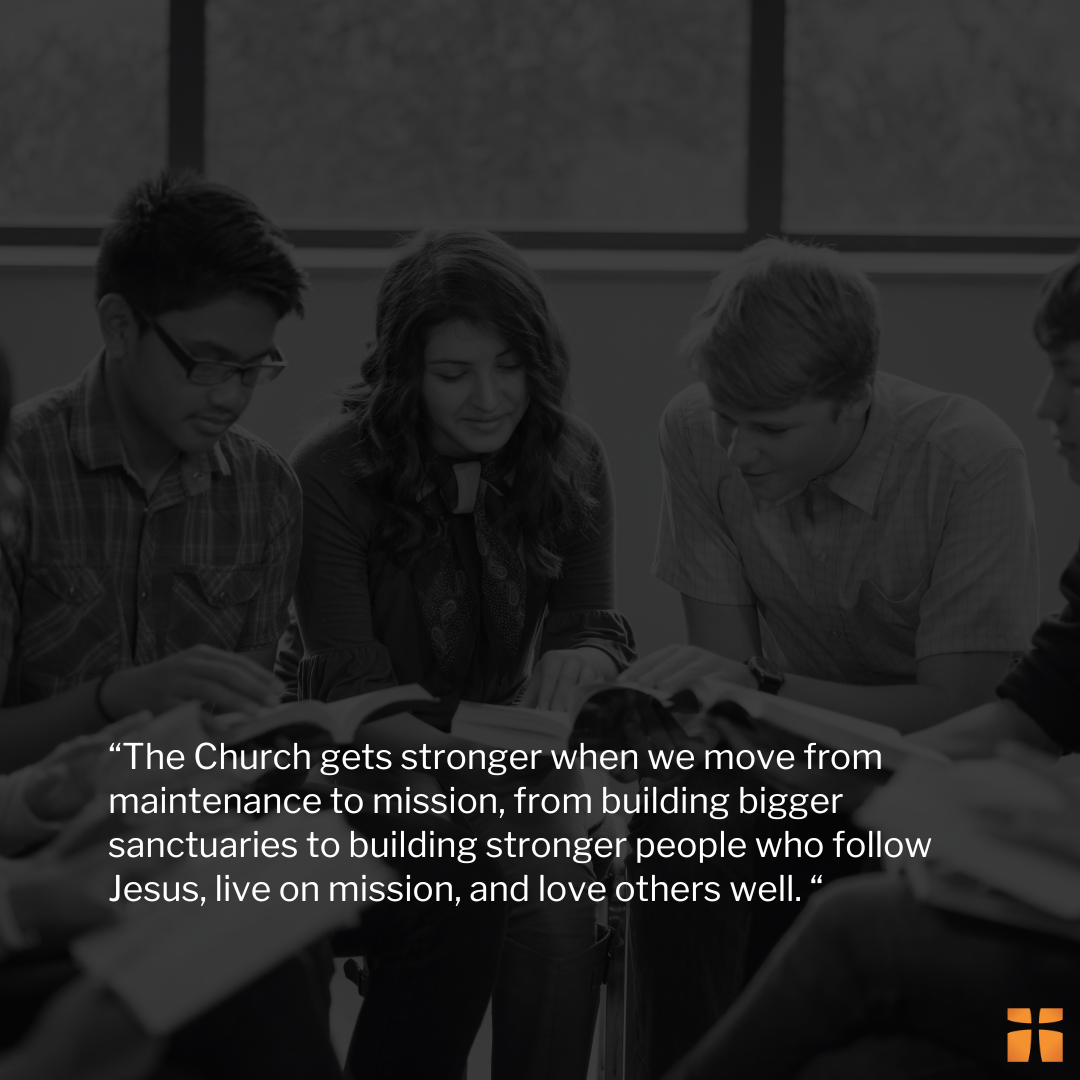
After one of those meetings recently, I came to this conclusion: the church already knows how to be busy with programs and events that fill the calendar. But what makes the Church strong is when people go deeper with God, not just show up. The Church gets stronger when we move from maintenance to mission, from building bigger sanctuaries to building stronger people who follow Jesus, live on mission, and love others well. And the Church gets stronger when we support pastors and elders, develop and equip leaders, and address unhealthy systems and structures.
Another example is that recently when I was at a community-wide pastors breakfast (known as a "gospel city movement"), another pastor from a much different denomination challenged me to be more disciplined in my daily faith routines and habits. It was a challenge that I really needed to hear!
How Should Christians Approach Interfaith Dialogue?
Christians can approach interfaith dialogue with humility, truth, and mission-minded love without pretending all religions teach the same thing.
Furthermore, there is even benefit in participating in inter-faith (meaning across other religions) gatherings. Although teaming up or at least meeting with someone of another faith (or even no faith at all) may not have the same kind of Christian or evangelistic results that inter-denominational work might, it can still be good for us. For example, meeting with someone that is of a different religion helps us learn how to find common ground with others, it challenges us to learn how to ask good questions, it teaches us how to listen more than we talk, it helps us to solidify what we actually believe about truth (as opposed to just going along with what we have always been told), and it helps us learn how to draw realistic lines in our life.
In addition to all these things, I have discovered that regularly being around and building relationships with people of other religions or not religions at all challenges me to live more on mission for Jesus! In fact, there is a friend that I see multiple times a week right now because of recreational basketball that is a self-proclaimed agnostic. Knowing who he is and what he belives or doesn't believe keeps me "on my toes," keeps me honest in my conversations with him, keeps me from loosing my cool and hurting my witness on the basketball court!
Why Christians Should Step Outside Comfortable Walls
Christians grow in faith, mission, and discernment when they build relationships with people who do not think, worship, or believe exactly as they do. Whether we are gathering with Christians from other denominations or speaking with people from other faiths, the goal is not to blur truth but to practice humility, clarity, love, and mission.
Only being with people that are like us and that think like us isn't good for us. It keeps us close-minded and unchallenged in our thinking. But if we want to grow in our faith, in our understanding of Scriptural truth, as a missionary or disciple-maker, and as a leader, we need to step outside our comfortable walls and learn to love, listen to, and speak truthfully with people who do not think exactly like us.
Frequently Asked Questions about Christian Unity and Interfaith Dialogue
- What is the difference between interdenominational and interfaith dialogue?
Interdenominational dialogue happens between Christians from different denominations. Interfaith dialogue happens between people from different religions or belief systems. - Should Christians gather with believers from other denominations?
Yes. Christians can gather with believers from other denominations when they share the gospel of Jesus Christ, while still being honest about secondary doctrinal differences. - Does Christian unity mean all denominations should agree on everything?
No. Christian unity does not require agreement on every secondary issue. It does require shared faith in Christ, humility, love, and commitment to the gospel. - How can interfaith dialogue help Christians?
Interfaith dialogue can help Christians listen well, ask better questions, clarify what they believe, and engage others with truth and grace. - Why is church unity important for mission?
Church unity matters because Christians can often serve communities, make disciples, and witness to the gospel more effectively together than they can in isolation.
For Further Reading
- How Many Christian Denominations Are There Today?
- What Does Body of Christ Mean in Relation to the Church?
- How to Pursue Unity among Believers
- What Does Ecumenical Mean in Christianity?
- How Should Christians Respond to Other Religions?
- Bible Verses about Unity
Photo Credit: SWN Design via Canva Pro