What we are witnessing in the Middle East is not an isolated conflict, but part of a larger biblical and prophetic framework that Scripture has long foretold.
While world events unfold before our eyes with breathtaking speed, Scripture reminds us that history is not random. God is working out His purposes. Prophecy is being fulfilled. The nations may rage, but the Lord sits enthroned.
Centuries before our day, Israel stood at the center of God's redemptive plan. In Genesis 12:2–3, God promised Abraham land, descendants, and a blessing —a covenant that has never been rescinded. Yet Israel has also remained the focus of persistent opposition and hatred throughout history, and that ancient pattern continues in full force today.
Not only Iran and much of the globe, but even voices within our own nation have aligned against the Jewish people. It is an age-old story. Tragically, portions of the church have taken that same posture through the false lens of replacement theology — the view that the church has displaced Israel in God's redemptive plan. Yet Scripture references Israel's land and the Jewish people nearly 350 times across both Testaments, while the word "Christian" appears only three times in the New Testament. The evidence of God's enduring covenant with Israel is overwhelming. In short, this article explains the current Middle East conflict through a biblical lens, highlighting Israel’s role in Scripture, the significance of Iran, and how Christians should respond spiritually and practically.
What Is Happening Between Israel and Iran Right Now?
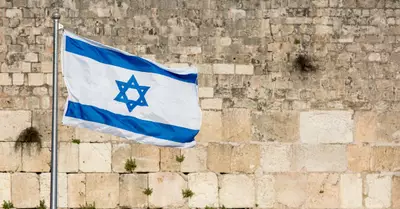
Israel became a nation in 1948, fulfilling Ezekiel's prophecy of national rebirth — yet not without a thread of threatened annihilation running from that day to this. Iran, along with its violent proxies Hamas and Hezbollah, has maintained a singular goal: the destruction of the Jewish state. Iran's Supreme Leader has repeatedly called for Israel's elimination, calling it a "cancerous tumor" that must be removed.
Since the catastrophic Hamas attacks of October 7, 2023 — when over 1,200 Israelis were massacred, and more than 250 taken hostage — a coalition of Israel and its allies has systematically dismantled Iran's forward military capability. The threat of Iran's nuclear program had to be confronted.
The following timeline provides essential context.
- In 2023–2024, Israel conducted targeted strikes on Hezbollah leadership in Lebanon, killing Secretary-General Hassan Nasrallah in September 2024, effectively decapitating the organization.
- In April 2024, Iran launched an unprecedented direct strike on Israeli soil — over 300 drones and ballistic missiles — marking the first time Iran attacked Israel directly rather than through proxies. Israel and allies intercepted 99% of the projectiles.
- In June 2025, a coordinated U.S.-Israel campaign struck Iran's missile infrastructure, naval assets, and fighter jet capabilities, severely degrading its ability to project regional military power.
- On February 28, 2026, the United States and Israel launched a massive preemptive strike (Operation Epic Fury) against Iran’s nuclear and military infrastructure. The threat of a nuclear-armed Iran was not theoretical — it was imminent, with Iran enriching uranium to near-weapons-grade levels (60–90%), repeatedly violating IAEA agreements.
Why Is the Strait of Hormuz So Important to the World?
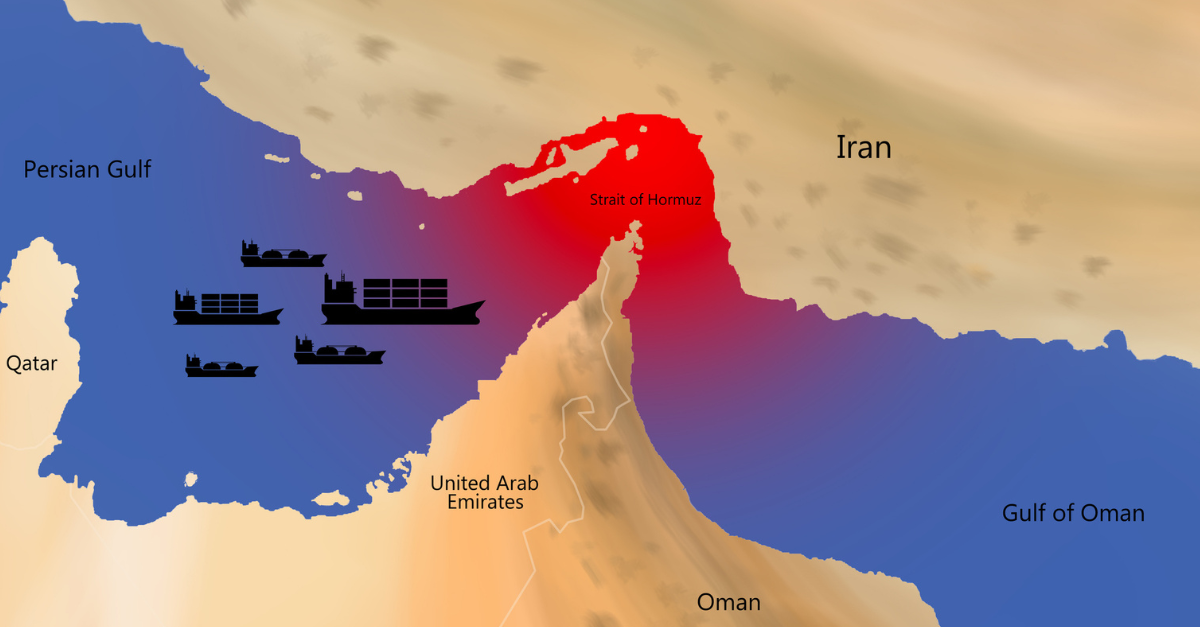
At the center of current negotiations sits a geography lesson with global economic implications: the Strait of Hormuz, a 21-mile-wide chokepoint between Iran and Oman through which approximately 20% of the world's daily oil supply passes. To understand why this matters, roughly 21 million barrels of oil move through this strait every day — fuel bound for Japan, South Korea, India, China, and much of Europe. A closure of the Strait would spike global fuel prices within days, triggering economic shockwaves far beyond the Middle East. Analysts estimate oil could surge to $150–$200 per barrel within weeks of a sustained closure.
Iran has twice before threatened or simulated Strait closures as geopolitical leverage — in 2012 and 2019 — demonstrating this is a practiced strategy, not an idle threat. The United States Fifth Fleet is headquartered in Bahrain, in direct proximity to the Strait, due to strategic vulnerability. The nations most exposed to a Strait closure — Japan, South Korea, India — have so far declined President Trump's call to join a coalition task force, placing their economic interests above the alliance. Their hesitation reveals how deeply this conflict touches global interdependency.
Iran is currently using the Strait as leverage against the military losses it has sustained. Economic control — who may buy and sell — has become the final card in Iran's hand. Yet even as pressure mounts, a negotiated deal may be within reach. President Trump has issued a 5-day extension, though communication channels between parties remain fluid. The outcome of these negotiations will affect every person on earth who fills a gas tank or heats a home.
What Does the Bible Say About Israel and the End Times?
For those who know their Bibles, watching these events is not alarming — it is clarifying. The Middle East, particularly ancient Persia (modern Iran), stands at the center of end-times prophecy. God's Word has been pointing to this moment for 2,500 years.
Israel's Restoration: Already Fulfilled
According to Ezekiel 36–37, four things must happen before the great end-time war — the War of Gog and Magog — can come to pass. American-Israeli author and evangelical scholar Joel C. Rosenberg, drawing on these chapters in books including Epicenter and The Ezekiel Option, identifies all four as already accomplished:
- God would restore Israel as a unified nation (Ezekiel 37:21–24) — fulfilled in 1948.
- God would regather the Jewish people from the nations (Ezekiel 36:24) — an ongoing fulfillment, with over 7 million Jews now living in Israel, gathered from more than 100 countries.
- God would renew the land to fruitfulness (Ezekiel 36:8–11) — Israel, once barren, is now a global agricultural exporter, engineering water from the desert.
- God would rebuild its cities (Ezekiel 36:33–35) — fulfilled in the modern development of Tel Aviv, Jerusalem, Haifa, and hundreds of new communities.
A Future Coalition Against Israel: Already Forming
Ezekiel 38–39 describes a coming invasion of Israel led by a figure called "Gog" from a land to the far north, leading a named coalition of nations. The list includes Persia — modern Iran — along with nations identifiable as Russia, Turkey, Libya, Sudan, and others. This coalition attacks Israel when it is "regathered" and "dwelling securely" (Ezekiel 38:8, 11).
Look at today's headlines: Russia and Iran are deepening their military and economic cooperation. Turkey’s rhetoric toward Israel has taken a posture of becoming sharply critical and confrontational. Libya and Sudan remain destabilized. The nations named in Ezekiel 38 show a striking resemblance to this potential convergence. This is not a coincidence but may be a prelude to the coming battle—one that Scripture foresaw unfolding in the latter days.
And when God intervenes in that coming battle, His stated purpose is unmistakable:
"I will magnify Myself and sanctify Myself, and I will make Myself known in the sight of many nations; and they will know that I am the Lord." — Ezekiel 38:23
God is not a passive observer of Middle Eastern politics. He is the Author of the final chapter.
The Church's Responsibility Toward Israel
Understanding these prophetic realities carries an obligation for the Church. Scripture does not allow us to be merely academic observers. Romans 11:11–12 teaches that Israel's stumbling has brought salvation to the Gentiles — we are debtors. Romans 15:27 explicitly states that Gentile believers "owe it" to support the Jewish people materially and practically.
- Replacement theology — the teaching that the Church has permanently replaced Israel in God's plan — is not simply a theological error. It is a spiritually dangerous attitude that cuts believers off from understanding where we are in redemptive history, and historically, it has provided theological cover for anti-Semitism within the Church. Christians who hold to God's Word must clearly reject it.
- We can pray for the peace of Jerusalem (Psalm 122:6) — not as a religious formality, but as an act of covenant alignment with God's purposes.
- Immerse yourself in scripture to stay informed. Read Ezekiel 36–39, Daniel 9–12, and Revelation 16–19 with a map of the modern Middle East beside you.
- Support Israel through your church or other organizations that serve the Jewish people and Jewish-Christian reconciliation, such as the International Fellowship of Christians and Jews or Bridges for Peace.
- To stay centered in God’s truth and aware of the season we live in, refuse replacement theology wherever it surfaces — gently, but firmly, pointing back to Scripture's own testimony.
How Should Christians Respond to the Middle East Conflict?
1. Be Grounded in Scripture
Although war in the Middle East has marked every generation of history, we are living in an extraordinary moment of prophetic fulfillment. The nations named in Ezekiel's visions are aligning. The technology for the "mark" described in Revelation 13 — the buying and selling — exists today. Israel is a nation, and Jerusalem is under Jewish sovereignty for the first time in 2,000 years.
Scripture is life-giving, truth-telling, sin-correcting, and knowledge-teaching — the supreme Textbook for navigating all aspects of life. Without a systematic, regular time in God's Word, we face life without a compass and lack understanding of the geopolitical chaos around us. Jesus warned in Matthew 24:5 that many would come in His name, claiming false authority and deceiving many. He warned that false prophets would "perform great signs and wonders to deceive, if possible, even the elect" (Matthew 24:24).
The antidote is not anxiety. The antidote is the Word—the eternal Word of God (Psalm 119:89). And, "the one who stands firm to the end will be saved” (Matthew 24:13).
2. Keep Watch
We cannot set dates for the end times — Jesus was explicit about that (Matthew 24:36). But we can know the season. In the days of Noah, the people around him laughed as he built an ark in a rainless land. They heard the warning. They ignored the signs. They perished in the flood they could have been prepared for.
Jesus told the parable of the ten virgins (Matthew 25:1–13) — five who kept their lamps filled with oil and were ready when the bridegroom came, and five who were not. The door closed. The message of the parable is not fear — it is readiness. Keep your lamp full. Stay awake. The season is upon us. The stage is set.
3. Pray Faithfully and Specifically
Prayer is not passive. In moments of prophetic urgency, intercession is a weapon. With both compassion and strategic awareness, pray:
- For the peace of Israel — and the wisdom of her leaders in decisions of war and negotiation.
- For freedom from the evil of the Iranian regime, while remembering that the Iranian people are themselves victims of a death cult that has ruled them by terror since 1979.
- For the underground church in Iran: an estimated 1.5 million secret believers worship there today, making Iran home to one of the fastest-growing underground Christian movements in the world. God is moving in the enemy's house. Pray that this Easter brings more Iranian souls into freedom in Christ.
- For the protection of those in harm's way, and innocent civilians — the men, women, and children caught in the crossfire of ancient hatreds.
- For the Church — that she will be faithful to God's Word, understand the times, stand without fear, and keep her eyes fixed on the One who sits on the throne.
Israel has God's watchful eye. History has God's sovereign hand. And the Church has God's Word — a lamp for our feet and a light for our path, even in the darkest hour.
We will not be moved by what our eyes see. We will be anchored by what His Word says. And we will watch, and pray, and stand firm — until He comes. Stay rooted in God’s Word, share this article with others seeking clarity, and continue growing in biblical understanding of the times we are living in.
Photo Credit: ©Unsplash/ engin akyurt