
Biblical forgiveness means releasing others from the debt of sin, just as God forgives us through Christ. It’s not ignoring wrongs but choosing grace, healing, and reconciliation.
The reality of forgiveness stands at the center of the biblical message, a necessary element of the redemption God offers through Christ. Without it, there’s no reconciliation with the Father. While the Old Testament introduces and describes God’s mercy and forgiveness, the New Testament writes about it with awe. The blood of Jesus shakes heaven and earth (Hebrews 12:24-26).
God reveals his love through his forgiveness, and further exploration on the topic helps us understand how greatly the Father desires to have a relationship with us.
What Is Forgiveness in the Bible?
Forgiveness means releasing a person from the debt or guilt of sin, and it is motivated by love and grace. The common Hebrew word is nasa, meaning “to lift,” “carry away,” or “remove.” Another main Hebrew word is salah, pointing to the pardoning aspect of God’s forgiveness. The New Testament uses a couple of Greek words for forgiveness. Aphesis means “release” or “remission” regarding sins. Another word, charizomai, contains the ideas of graciously giving and forgiving, rooted in the Greek word for grace, charis.
Biblically, forgiveness begins with God. As the ultimate creator and judge, human sins offend his holiness and create a separation between him and humans. Even wrongs against another person transgress God’s righteousness and design. However, in his mercy, God offers forgiveness through the atoning work of Jesus. Forgiveness requires a sacrificial payment (Isaiah 53:5-6, Hebrews 9:22), and God provided this through Christ’s death on the cross.
For Christian theology, forgiveness operates on two levels. First, it’s judicial: God declares sinners righteous through faith in Christ and his blood, removing the penalty of sin. Second, it’s relational: forgiveness restores a relationship with the Father through the Son (1 John 1:9), removing the gap caused by sin.
As forgiven people, Scripture calls us to extend our forgiveness to others, as God has to us (Ephesians 4:32, Matthew 6:14-15). Forgiveness doesn’t excuse sin but releases personal bitterness and offense so relational restoration can happen. Christians entrust God with justice and change, not responding with our limited idea of retaliation.
Bible Verses about Forgiveness
The theme of forgiveness runs through the Bible. The first few chapters of Genesis detail the sin of humanity and the tragic separation that followed between humanity and God. The rest of Scripture tells the story of our reconciliation, with forgiveness being a key theme. Below are some Bible verses on God's forgiveness.
Exodus 34:6-7
“The Lord, the Lord, the compassionate and gracious God, slow to anger, abounding in love and faithfulness, maintaining love to thousands, and forgiving wickedness, rebellion, and sin.”Numbers 15:22-29
(Reference to the sacrificial system addressing unknown and unintentional sins.)Psalm 32
(David’s song celebrating the joy of God’s forgiveness.)Psalm 32:1-2
“Blessed is the one whose transgressions are forgiven, whose sins are covered.”Psalm 51
(David’s confession and plea for mercy and cleansing.)Psalm 51:16-17
“You do not delight in sacrifice, or I would bring it; you do not take pleasure in burnt offerings. My sacrifice, O God, is a broken spirit; a broken and contrite heart you, God, will not despise.”Psalm 103:10-12
“He does not treat us as our sins deserve … for as the east is from the west, so far has He removed our transgressions from us.”Isaiah 1:18
“Though your sins are like scarlet, they shall be as white as snow.”Isaiah 43:25
“I, even I, am he who blots out your transgressions, for my own sake, and remembers your sins no more.”Isaiah 55:7
“Let the wicked forsake their ways and the unrighteous their thoughts. Let them turn to the Lord, and he will have mercy on them, and to our God, for he will freely pardon.”Micah 7:18
“Who is a God like you, who pardons sin and forgives the transgression of the remnant of his inheritance? You do not stay angry forever but delight to show mercy.”
See more Bible verses about forgiveness HERE.
How Did Jesus Teach Forgiveness?
As the embodiment of God, whose name includes forgiving people, Jesus taught much regarding forgiveness. He revealed it as a divine gift and the way for us to live.
Like in the Old Testament, Jesus clearly connected repentance to forgiveness. The Gospel accounts record the Good News of salvation, the cornerstone of Jesus' teaching (Mark 1:14-15, Luke 5:32). “From that time Jesus began to preach and say, ‘Repent, for the kingdom of heaven is at hand.’” (Matthew 4:17) He taught how turning from sin and unto the Father’s love opened the way for God’s forgiveness. He forgave those who repented, like the sinful woman who washed his feet (Luke 7:36-50). Through his life, death, and resurrection, Jesus offers complete forgiveness to all who truly repent and follow him.
Jesus’ teachings always included stories, and several illustrated the Father’s forgiveness. The Parable of the Prodigal Son shows a father joyfully and fully welcoming back his wayward, wasteful, and sinful son (Luke 15:11-32). Jesus reveals God’s overwhelming desire and willingness to forgive and restore anyone who will turn back to him. The Parable of the Unforgiving Servant teaches both elements of forgiveness, God’s and our responsibility to do the same (Matthew 18:21-35). A master forgave his servant’s massive debt, but the servant refused to forgive a fellow servant a far lesser debt. The master condemned the unforgiving servant, warning Jesus’ disciples that withholding forgiveness will end in judgment.
Christ further taught how our forgiveness of others is interconnected with God’s forgiveness of us. After teaching on the Lord’s Prayer, Jesus says, “For if you forgive other people when they sin against you, your heavenly Father will also forgive you. But if you do not forgive others their sins, your Father will not forgive your sins.” Once again, as forgiven people, we must extend the same to others, even to an extreme.
The ultimate act of forgiveness and reconciliation came on the cross. Jesus' death and resurrection offered a sacrifice once and for all to reconcile the whole world through himself. Even while under great pain and reviling, Jesus prayed on the cross regarding the ones who pounded the nails in his hands and feet: “Father, forgive them, for they do not know what they are doing.” (Luke 23:34)
How Do We Forgive When It’s Difficult?
When God calls us to forgive, it means we will experience someone doing us wrong. Upon being wounded, the human part of us wants to retaliate and punish in return, seeking a form of justice. The last thing we want to do is forgive.
And yet God commands exactly that. Because there’s a greater justice, one which seeks reconciliation and redemption, fighting instead the source of sin: Satan and his work. Jesus came to destroy the plans and acts of the devil (1 John 3:8). God’s forgiveness addresses the real enemy.
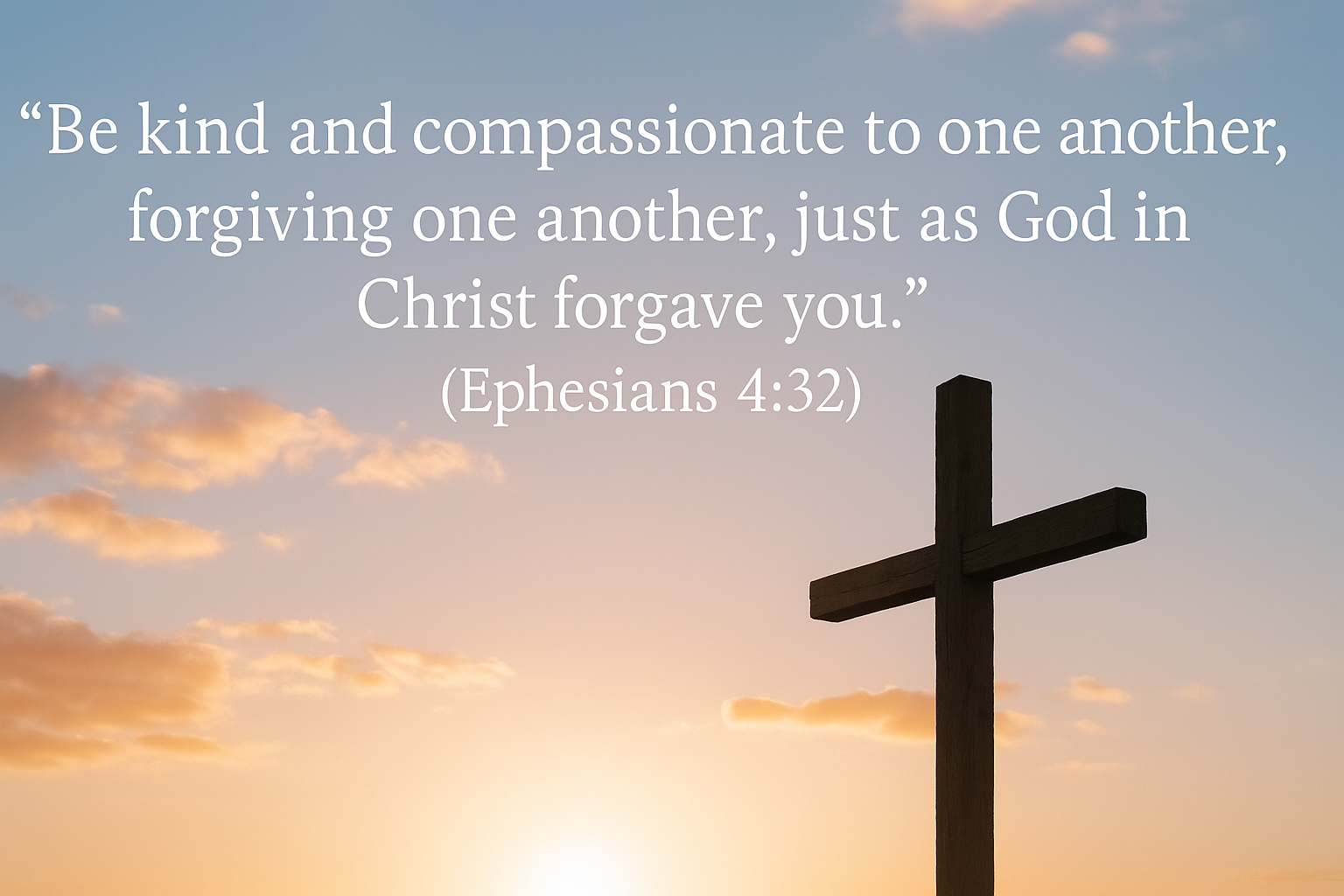
So the Bible calls us to this. “Be kind and compassionate to one another, forgiving one another, just as Christ in God forgave you.” (Ephesians 4:32) Jesus becomes the model. We didn’t deserve his forgiveness. We rebelled in sin and deserved eternal punishment, one he could have easily meted out. Instead, he absolved us, bearing the punishment himself. With the help of the Holy Spirit, we can forgive others with the same grace.
When we feel like forgiveness is impossible, we start by remembering God’s great and complete forgiveness of us through his wholly innocent blood. He no longer holds our sins against us (Psalm 103:12). His undeserved mercy teaches us to offer the same to those who sin against us.
Next, we realize we need God’s power to grant his forgiveness. We don’t have this power in ourselves; it’s a work of the Spirit within. “For it is God who works in you to will and to act in order to fulfill his good purpose.” (Philippians 2:13) We pray humbly, asking God to shape our hearts, dying to ourselves and finding grace to eternal life in Christ. Sometimes, the act of forgiveness starts with simple obedience, choosing to release even when we don’t feel like it. Continuing to trust God and praying to bless those who hurt us, he transforms our hearts to be more like him through this process.
Finally, forgiveness means trusting God’s judgment. We don’t seek our own revenge but leave room for God to act (Romans 12:19). The Lord knows all things and works for the greatest good; his response to us and others will be perfect and just. We release our limited knowledge unto him. Forgiving the offender allows God to work for redemption and reconciliation. It becomes up to the offender to accept and repent.
Can We Forgive and Still Set Boundaries?
We can forgive others even when they don’t repent or desire a change. Forgiveness frees our hearts from bitterness and resentment, which only lead to more sin and pride, ultimately giving a toehold for the devil (Ephesians 4:27). Instead, forgiveness leaves the door open to reconciliation but doesn’t guarantee it. Reconciliation depends upon both parties.
Therefore, we can forgive and set boundaries. In fact, both reflect biblical wisdom and love. Forgiveness doesn’t dismiss the need for healthy boundaries, especially when someone’s actions continue to harm others. For example, forgiving an abusive person doesn’t mean allowing them back into intimate relationship without evidence of healing and transformation. Boundaries can protect both parties to have space for God to work.
Jesus didn’t entrust himself to some people because he knew their hearts and motives (John 2:24-25). He loved them and spoke truth to them, but used great caution. Paul counseled believers to distance themselves from an unrepentant sinner, not out of condemnation but to encourage repentance (1 Corinthians 5:11-13).
At the same time, we must make sure we aren’t setting unfair boundaries, or ones that will cause permanent rejection. We use wisdom to set the right boundaries to stand in truth while leaving opportunity for future restoration and reconciliation, aligning with God’s heart. Paul later encourages the church to forgive and restore the formerly unrepentant sinner, the one he mentions in his previous letter to them (2 Corinthians 2:6-8).
What if I Can’t Forgive Myself?
Some people struggle with forgiving themselves. They know the verses and hear the teaching, yet guilt and shame remain.
First, we must remember the devil lies to us, and this is one of his lies. If we desire to be forgiven, no one is so unique or has done something so bad that God can’t or won’t forgive them.
Second, it’s not our job to forgive ourselves. The Bible never commands it. Instead, we die to ourselves and give our lives wholly to God. Scripture calls us to receive God’s forgiveness, telling us it’s ours.
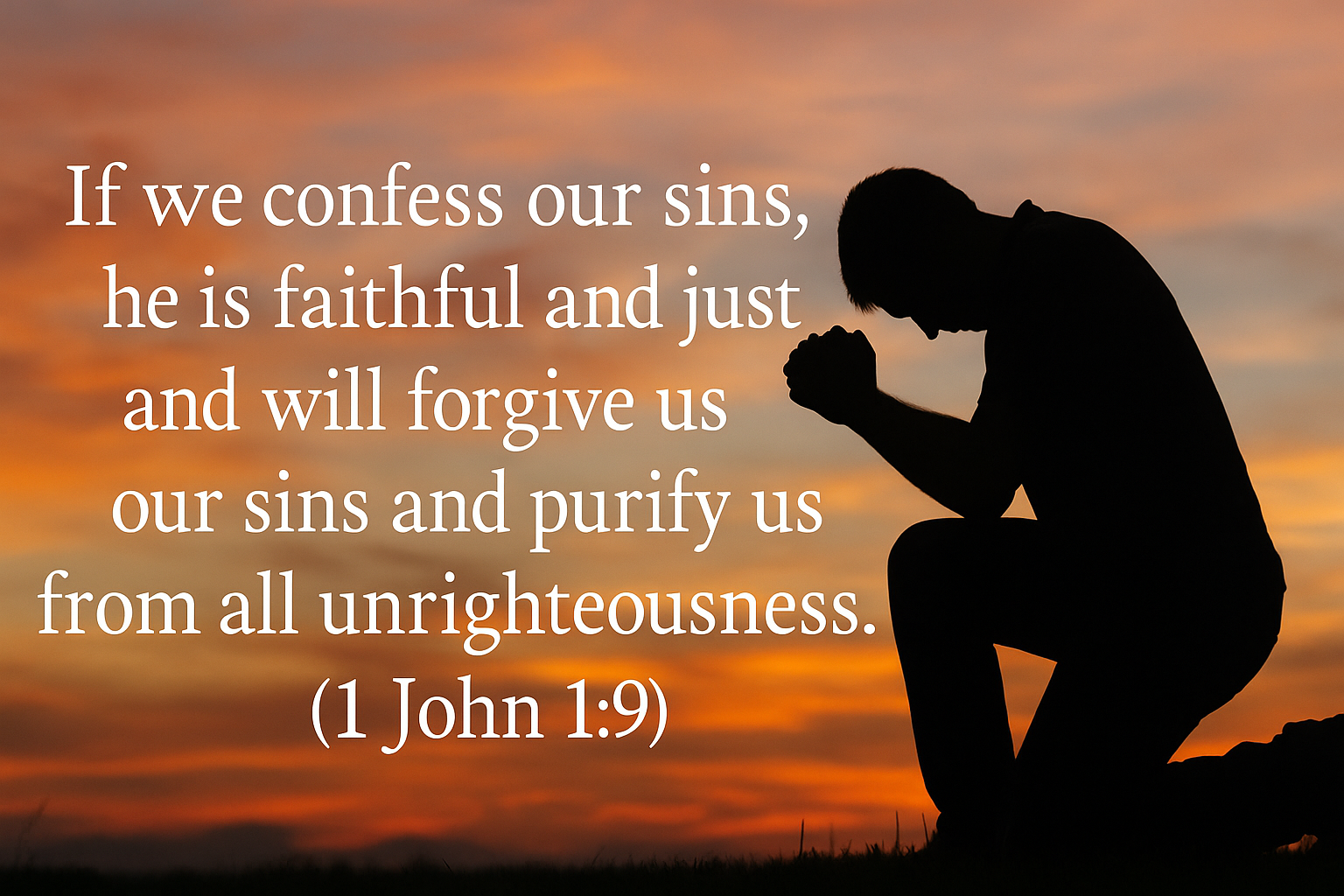
“If we confess our sins, he is faithful and just and will forgive us our sins and purify us from unrighteousness.” (1 John 1:9)
Our role is to confess and believe, then the Father removes our guilt through Christ’s work on the cross. When we struggle to forgive ourselves, the deeper issue might be that we’re trying to earn something we can’t. Rest in the finished work of Christ.
Third, we might feel this way because we continue to struggle with the same sins and can’t seem to find victory or relief. Again, the solution isn’t more striving on our part but more humility and acknowledging that God must work in and through us for his purposes. Allow him to convict, and rely upon his grace and power to walk in the Spirit.
Fourth, we should understand the difference between condemnation and conviction. Conviction of the Spirit is healthy and loving, warning against harmful behavior and pointing us toward the righteous way of God. Condemnation offers no chance for change and feels hopeless. In Christ, God convicts, not condemns. “There is now therefore no condemnation for those who are in Christ Jesus.” (Romans 8:1) We’re not greater than God, nor more holy. If he doesn’t condemn us, we shouldn’t continue to live under self-condemnation. His grace is sufficient.
This becomes a process, enduring by continuing to bring our lingering guilt before the Father’s love and asking him to speak his words to us with truth. The Body of Christ also helps with this. As we open up with trusted believers about this struggle, they also remind us of God’s love and encourage us. Over time, we rewire and renew our thinking for transformation.
God longs for us to live in the freedom his forgiveness provides. He sets us free to live free (Galatians 5:1). Holding onto guilt keeps us in bondage, allowing Satan to manipulate us. God wants us to walk in joy and peace, knowing we’ve been justified, forgiven, and accepted into the heavenly family through Christ.
Peace.
Read more Bible verses about forgiveness.
Photo credit: Unsplash/alirezaesmaeeli