
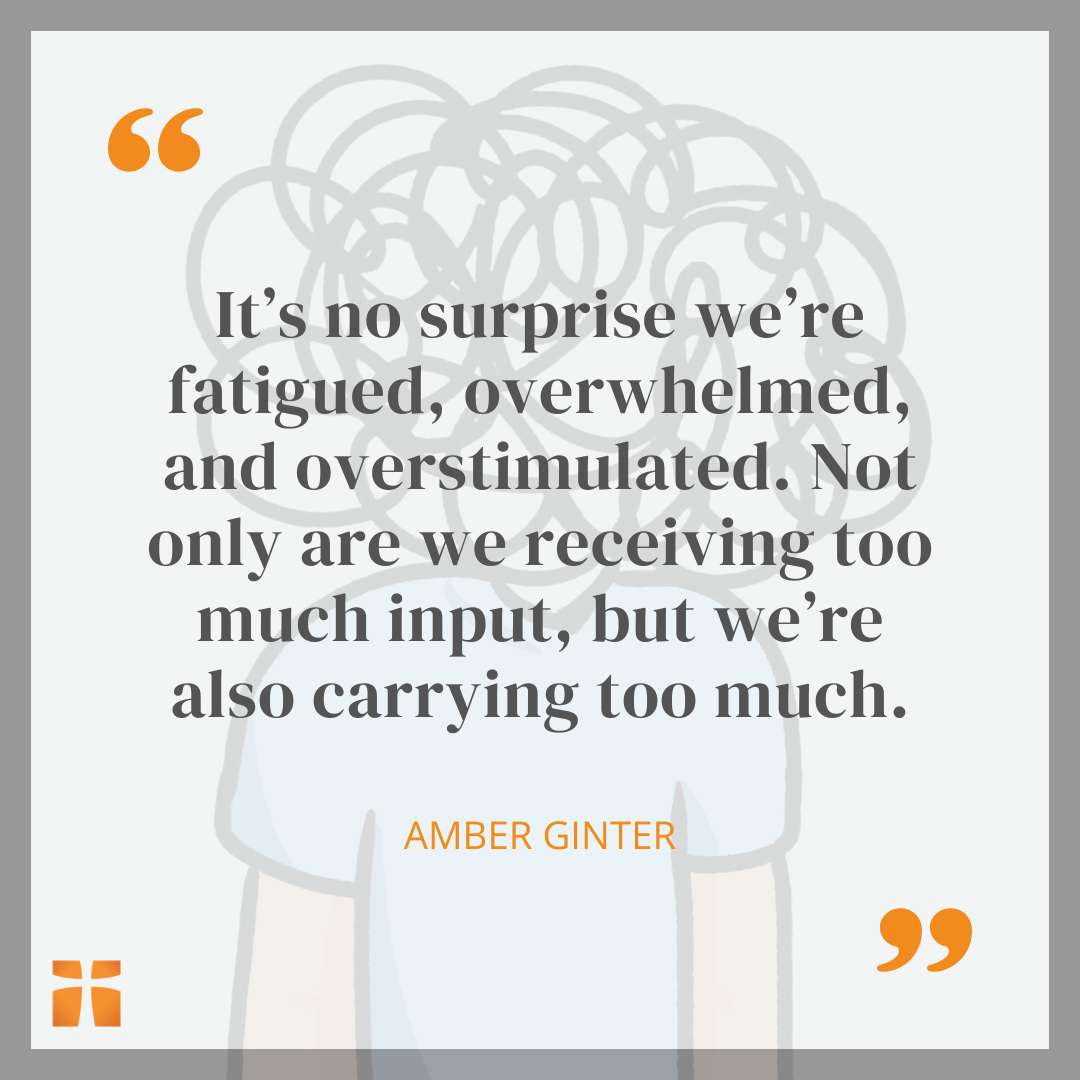
There’s a feeling in the air that most of us can’t name. I’m not talking about oxygen, but something deeper within. From the constant buzzing of our phones to external noise, endless conversations, and thoughts racing a million miles a minute, it’s no surprise we’re fatigued, overwhelmed, and overstimulated. Not only are we receiving too much input, but we’re also carrying too much.
When we think about taking a break, we just can’t. We can’t afford to do less or put our productivity in jeopardy. But the bigger question is the source of this chronic condition: Are we overwhelmed because life is too heavy, or because our minds were never meant to hold this much at once?
Overstimulation is more than feeling busy or tired. It is what happens when constant sensory, digital, emotional, and mental input exceeds our ability to process it well. This article explores why so many people feel chronically overwhelmed, what Scripture says about stillness, and how Christians can begin to quiet the noise in practical and spiritual ways.
What Does It Mean to Feel Overstimulated?
Feeling overstimulated means your mind and body are carrying more input than they can process peacefully. It often includes sensory overload, mental fatigue, emotional reactivity, and the sense that even small demands now feel too heavy. In a world of constant noise, notifications, multitasking, and pressure, overstimulation has become one of the most common forms of modern overwhelm.
What Does Overstimulation Actually Mean?
By definition, overstimulation isn’t just being overwhelmed, though that’s certainly part of it. Overstimulation is a combination of sensory and cognitive overload. It’s feeling pressured by an immense number of noises, screens, and notifications, but also mentally burdened by so much information and too many decisions. Typical signs include irritability, difficulty focusing, emotional reactivity, and shutdown or avoidance.
Sadly, despite these warning signs, modern life keeps us stuck in these patterns of overstimulation, even if the best parts of us genuinely do want to change. From the constant digital input of our phones, social media, the news, and the internet to a multitasking culture, we lack any silence or margin in our schedules. We’re always “on” mentality; therefore, overstimulation quickly turns into overwhelm.
When input exceeds processing capacity, our stress only continues to build. Our emotional backlog forms, and suddenly, even small things feel big because our systems are already maxed out.
Contrary to culture, God speaks in another way: Not in the noise or chaos, but in stillness.
What Does the Bible Say About Stillness?
In 1 Kings 19, God spoke to Elijah not in an earthquake or fire, but in a still small wind. Verses 11-13 read this way: “ The Lord said, “Go out and stand on the mountain in the presence of the Lord, for the Lord is about to pass by.” Then a great and powerful wind tore the mountains apart and shattered the rocks before the Lord, but the Lord was not in the wind. After the wind, there was an earthquake, but the Lord was not in the earthquake. After the earthquake came a fire, but the Lord was not in the fire. And after the fire came a gentle whisper. When Elijah heard it, he pulled his cloak over his face and went out and stood at the mouth of the cave. Then a voice said to him, “What are you doing here, Elijah?” (NIV).
My favorite part about this passage is that God could’ve revealed Himself to Elijah any way He wanted. Elijah was fearful and exhausted after all. And yet, God chose to speak in a whisper. In the quiet stillness. Perhaps to tell us 2 things: 1. God often speaks to us in the way we need it most, and 2. Who are we to say how He will speak?
In Psalm 46:10, we see a similar message: “Be still, and know that I am God.” While God certainly will continue to speak to us even in noisy and stressful times, I believe that we hear Him most when we take time to slow down and actually listen. God often meets us in the quiet and not the chaos, perhaps to help calm the storm raging within.
What Is the Spiritual Cost of Overstimulation?
While I’m sure you already know this, there’s a huge spiritual cost to constant input. Not only do we struggle to hear and commune with the Lord, but we also struggle to be present with others. The cost of constant input isn’t just physical and mental, but emotional and relational, too. We grow disconnected from our own self-awareness, and our minds prioritize shallow processing of emotions rather than taking time to sit in them, pause, and reflect. Suddenly, we start living reactive lives instead of intentional ones. People don’t see that we’re followers of Jesus; they see that we’re followers of being busy and overstimulated.
It’s convicting, I know. But I believe we tend to resist slowing down because we fear missing out. We’ve grown uncomfortable with silence and value productivity as our worth. Instead of separating ourselves from what we do, what we do becomes who we are. Before we know it, we’re avoiding deeper emotions, struggling to make time for God, and constantly anxious and depressed. The good news is, we weren’t created to live this way, even if this way is the only way we’ve ever known.
4 Practices That Cut Through the Overwhelm
If you’re struggling with feeling overwhelmed and overstimulated, I want you to know you’re not alone. Most of us fight this battle daily. But there are a few practices that I’ve found to be helpful and effective:
- Reduce input
It sounds obvious, but if we want to silence or reduce the input, we have to start by limiting the devices causing the overload. For me, this looks like creating boundaries with my phone, email, and laptop. That means not checking my email after 6 pm unless it’s an emergency, not using my phone after 9 pm, and reducing how much time I spend on my laptop in the evening. I also try to end my day with silence before bed, and add in small moments to pause throughout, especially on stressful days. Often, this just looks like 5 minutes of prayer or a quick walk with my dog without my phone, but these things help over time. - Increase processing
Even though we are overstimulated 99.9% of the time, taking time to process is important. This can happen in a variety of ways, but for me, I love journaling, taking time to pray, and reflecting on what the Lord is teaching me in this season. Increasing processing may look different for you, but what matters is that you take time to do it honestly with the Lord. Sometimes that means engaging in a prayer walk, and other times it means praying on the go. Do what works for you. - Regulate your body
As complex beings created by God, we’re bio-psycho-social-emotional-relational beings. This means we aren’t just a body, but we also aren’t just a brain. Engaging all senses and every part of our bodies is important in learning to regulate ourselves. For me, I enjoy regulating my body by exercising, dancing, taking long walks, making time for deep breathing, and choosing to rest when I know my body needs it most. - Create margin
At the end of the day, we can do all of these things and still not silence the overstimulation in our minds. Why? In order to reduce the noise, we have to create margin in our lives. Doing this is difficult, but essential to our healing. Instead of scheduling all of my “free time,” I block “Amber’s Day Off” once a week in my calendar. This is white space in my schedule, where once a week I prioritize the Sabbath.
Why Stillness Matters More Than We Think
Stillness matters because without it, we lose the ability to notice what is happening inside us and around us. Constant input trains us to live reactively, but stillness helps us become present again — to God, to others, and to our own souls. It is often in the quiet that we begin to recognize what is truly exhausting us and what God may be inviting us to release.
How Can Christians Respond to Overstimulation?
Friends, if these tips work for you, great. If not, don’t give up. Everyone is different, and these are just a few tools to keep in your toolbox and try when you need them most. Remember: Not everything needs to be removed from your schedule or life; some things need to be quieted. It’s nothing to be ashamed about, because we all struggle.
Regardless of how you may feel at this moment, you’re not weak; your brain is overloaded. God designed limits for a reason, and He wants you to embrace His way. What noise is keeping you from peace? What would it look like to choose stillness on purpose? Reflect on these questions today.
Frequently Asked Questions About Feeling Overstimulated
- What does it mean to be overstimulated?
Being overstimulated means your mind and body are receiving more sensory, emotional, and mental input than they can process well, which can lead to irritability, fatigue, shutdown, or emotional reactivity. - Why do I feel overstimulated all the time?
Many people feel overstimulated because modern life offers constant input through phones, screens, multitasking, conversations, decisions, and very little true margin or silence. - What does the Bible say about overstimulation?
The Bible does not use the word overstimulation, but it consistently points believers toward stillness, listening, trust, and the kind of quiet where God’s voice can be heard more clearly. - How can Christians respond to overstimulation?
Christians can respond by reducing input, increasing honest processing, regulating the body, creating margin, and choosing stillness on purpose rather than living under constant noise and pressure.
For Further Reading
- How to Guard Your Mind in the Digital Age
- Why Slowing Down Might Be the Most God-Honoring Choice You Make This Year
- Sabbath Rest Offers Relief in a World That Never Logs Off
- 4 Ways Information Overload Stunts Your Spiritual Growth
- Reclaim Your Peace and Replace Infinite Scrolling
Photo Credit: ©Getty Images/jesadaphorn