
The idea of living with a “dimmer” is gaining attention as people seek relief from constant stimulation, stress, and burnout. Rather than swinging between extremes of hustle and collapse, this approach encourages intentionally lowering intensity—through softer lighting, fewer notifications, calmer routines, and more realistic expectations. Advocates say living on a dimmer helps regulate the nervous system, reduce anxiety, and create space for deeper focus and rest. In a culture that celebrates brightness and busyness, choosing a gentler setting may be a healthier, more sustainable way to live.
A few weeks ago, one of my friends texted me that her New Year's goal was to be on her phone less. As a twenty-something, I wasn’t surprised. This generation grew up with social media and technology and doesn’t know what it’s like to live without it. What did surprise me, however, was her dedication to the process. Instead of throwing everything out on January 1st, she began intentionally using her phone and socials less. She even created an analog bag so that when she’s on the go, she won’t be tempted to scroll mindlessly. She’s found a way to “dim” the noise in her life. And I think my friend is on to something.
While this idea of “dimming the noise” isn’t new, it’s been building traction for a few decades. I am about 8 years older than my friend, but I remember the days before technology, and I honestly kind of miss them. Life was slower. Easier. I had more self-esteem and fewer comparisons. I wonder if a part of all of us wishes to go back to those days. Because if our bodies and minds are asking for less intensity and more gentleness, how might God be inviting us to slow our pace, quiet our surroundings, and rest more fully in His presence?
How Does Living On a “Dimmer” Help Us to Slow Down?
By definition, living on a dimmer is similar to dimming the lights in your bedroom as you prepare to go to sleep. It’s not an all-or-nothing mentality, but it’s also not something you physically do and mentally forget about overnight. Instead of having an “on” and “off” switch, we can learn to respond to burnout, overstimulation, and chronic stress in healthier, more manageable ways. And rather than swinging between extremes (no social media at all, or social media all the time, for example), this concept lowers intensity. Sahil Bloom explains the Dimmer Switch Mentality this way:
“Traditional wisdom says you have to live life with an On-Off Switch Mentality: If you want to do well, you can have two areas switched ON, but if you really want to win, you can only have one area switched ON. The other areas are switched OFF by default. The problem with this approach: If you leave an area OFF for too long, it becomes very difficult (if not impossible) to turn it back ON. My solution is the Dimmer Switch Mentality: It says that each area of your life exists on a dimmer switch. If you want to focus on building one area, you turn that switch up, but rather than turning off the others, you just turn them down low.”
What I love about Bloom’s definition is that living with a dimmer can be practical and easy to implement. For example, even using softer lighting or quieter environments when working or studying is a great habit to build. Instead of turning off all of your notifications, just limit them to a few of your favorite or most important apps. Rather than deleting Instagram altogether, try creating digital boundaries and tech limits on how much time you spend scrolling every day.
Other ideas could include creating a slower morning routine (even if it means getting up a little earlier), aiming to make your mornings as calm as possible, or setting realistic expectations for yourself. The popularity of this trend doesn’t just come from wellness, mental health, and lifestyle spaces, but a desire to live a simpler life we were all created for.
Why Is the 'Dimmer' Shift to Slow Down Gaining Traction?
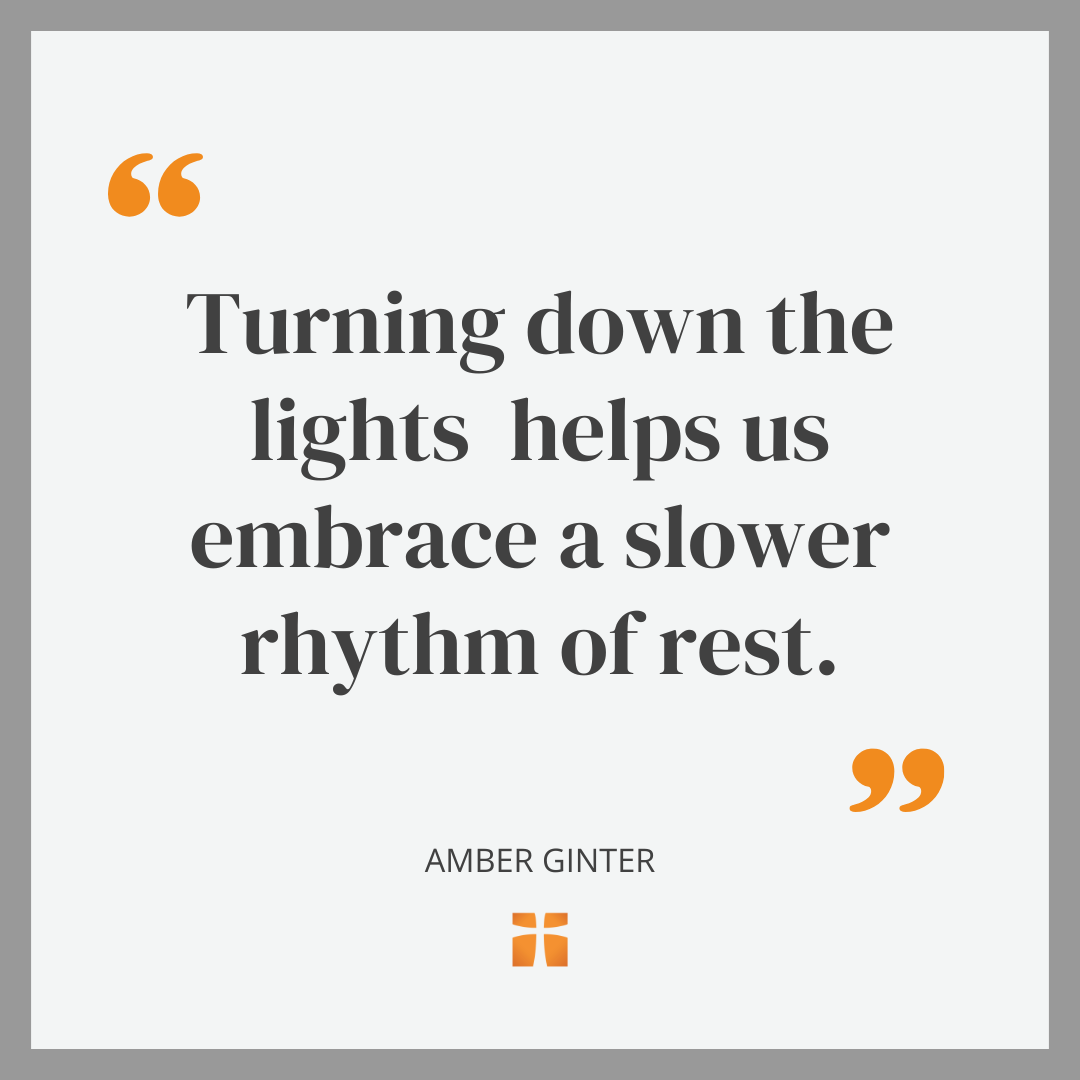
Despite its trending qualities, living life on a dimmer is gaining traction because it works. While anxiety, burnout, and nervous system fatigue are rising, turning down the lights (physically and practically) helps us embrace a slower rhythm of rest. Especially post-pandemic, many of us need to reassess our lifestyle choices. Do we have to communicate by phone 24/7, or could we meet in person, for example? And are our actions contributing to the constant overstimulation of society, or can we find a practical way to better regulate?
VeryMindWell defines this phenomenon best. Instead of swinging from all-or-nothing thinking or extremes (otherwise known as Dichotomous thinking), a dimmer enables us to approach life calmly and realistically. This matters because dichotomous thinking is directly known to increase anxiety, depression, and sensory overload. Instead of re-evaluating the situation, the brain then shuts down completely.
“Many people experience dichotomous thinking sometimes, but it can be a problem when extreme conclusions about yourself, others, or circumstances interfere with your emotional stability, relationships, and decisions. If most of your thoughts break down to black or white, good or bad, and all or nothing, then it is possible that you have a strong tendency towards dichotomous thinking. This extreme thinking can lead to serious overreactions or emotional responses, and may result in significant consequences if you tend to behave impulsively in response to your extreme feelings. Whether it's breaking off a relationship or poor work performance, dichotomous thinking can affect your quality of life.”
3 Ways to "Dim" Into God’s Rhythm of Rest
In a world that screams busy, productivity, and hustle culture, the dimmer approach offers a break from dichotomous thinking. Instead of normalizing productivity obsession, constant availability, and stimulation, we can learn to defy this social pressure that encourages us to stay “on” 24/7. How can we practically do this?
1. Try to limit the time you spend on screens.
Instead of relaxing in the evening with your phone, break the time in half. Scroll for 30 minutes if you want, but then spend the last 30 minutes reading a good book again. Remember, this is about moderation and balance, not swinging from one pendulum to the other.
2. Next, learn to say “no.”
This is really difficult for most of us, but respect your boundaries. God desires for you to take care of your Temple, and you can’t pour from an empty cup. When you’re feeling stressed, burned out, or fatigued, say “no.” You can also try scheduling 5 or 10-minute breaks into your day if you’re likely to avoid taking them.
3. Remember what Jesus says about rest, stillness, and the limits of our humanity.
God commanded the Sabbath not because He was tired and needed a nap, but because He knew that we would need it. Psalm 46:10 encourages us to find peace in chaos, especially when the noise of the world is loud, because He loves to give rest to His children:
"Be still, and know that I am God; I will be exalted among the nations, I will be exalted in the earth” (NIV)!
God desires us to live less intense and more intentional lives because that’s what’s best for us. And I get it. 99.9% of us don’t live this way. Myself included. But it’s something I’m learning to surrender daily. Because I want to embrace and delight in the fullness of the rest He gives. The wisdom of the Scriptures isn’t a critique, but a love offering of grace and truth. It’s an exchange of constant striving for rest as restoration, not disengagement.
5 Things Living On a Dimmer Requires of You
If you’re looking for and longing toward this better, slower, and more intentional way of life today, I want you to know you’re not alone. You’re in such good company to receive the true and abundant rest that Jesus has for each of us. But living on a dimmer will require something of you.
1. It will require you to reframe slowing down as intentional and necessary, rather than lazy or optional.
2. It will require you to pursue long-term healing over temporary quick-fixes.
3. It will require you to try one small step at a time rather than a complete and total overhaul.
4. It will require you to be gentle with yourself, offering that same gentleness to those around you.
5. It will require constant strength and dependence on the Lord to do what we can’t do for ourselves.
Because dimming the lights and this life aren’t about living less, but more. More freely. More fully. More lightly. More intentionally. We aren’t withdrawing from a noisy world, but learning how to navigate it with wisdom. It’s learning to live well in an overstimulated world, even if no one will join you. And dimming down the lights, when your soul craves for something more than this earth can offer.
A Prayer to Slow Down and Dim Our Daily Lives
Dear Jesus,
So many of us are living in a constant state of anxiety, fear, overwhelm, and an addiction to productivity. We feel ashamed and tired, and we have nowhere else to go. When we feel this way, please remind us that you extend your never-ending love and grace towards us. Help us to live more freely and abundantly in the grace you give us, and show us how we can practically dim the light and loudness in our lives. As we do this, reveal your Spirit to us. Allow us to receive the rest you’ve promised your children and share that rest with a culture that needs it as desperately as we do. We love, praise, and thank you, Jesus.
Amen.
Photo Credit: ©iStock/Getty Images Plus/Daniel de la Hoz