
Table of Contents
- Why Our Culture Makes Biblical Contentment Difficult
- Why Greed Is a Heart Issue, Not Just a Money Issue
- How Greed Disguises Itself in Everyday Life
- What Does Biblical Contentment Say?
- How to Learn Contentment in Every Circumstance
- Frequently Asked Questions about Biblical Contentment
- For Further Reading
A king fell into a deep and paralyzing melancholy. His royal physicians consulted, deliberated, and finally delivered their verdict: if the king could find one truly contented man and wear his shirt, he would be cured. Messengers were dispatched across the kingdom. They searched among the wealthy, the celebrated, and the powerful — men who seemed to have everything the world considers sufficient for happiness. But none were truly content. Finally, in a remote corner of the land, a messenger found him: a man who claimed he was perfectly, genuinely, completely satisfied with his life. The king rejoiced. The cure was near. But when the messenger arrived to claim the shirt, the contented man had none. (Encyclopedia of 7700 Illustrations)
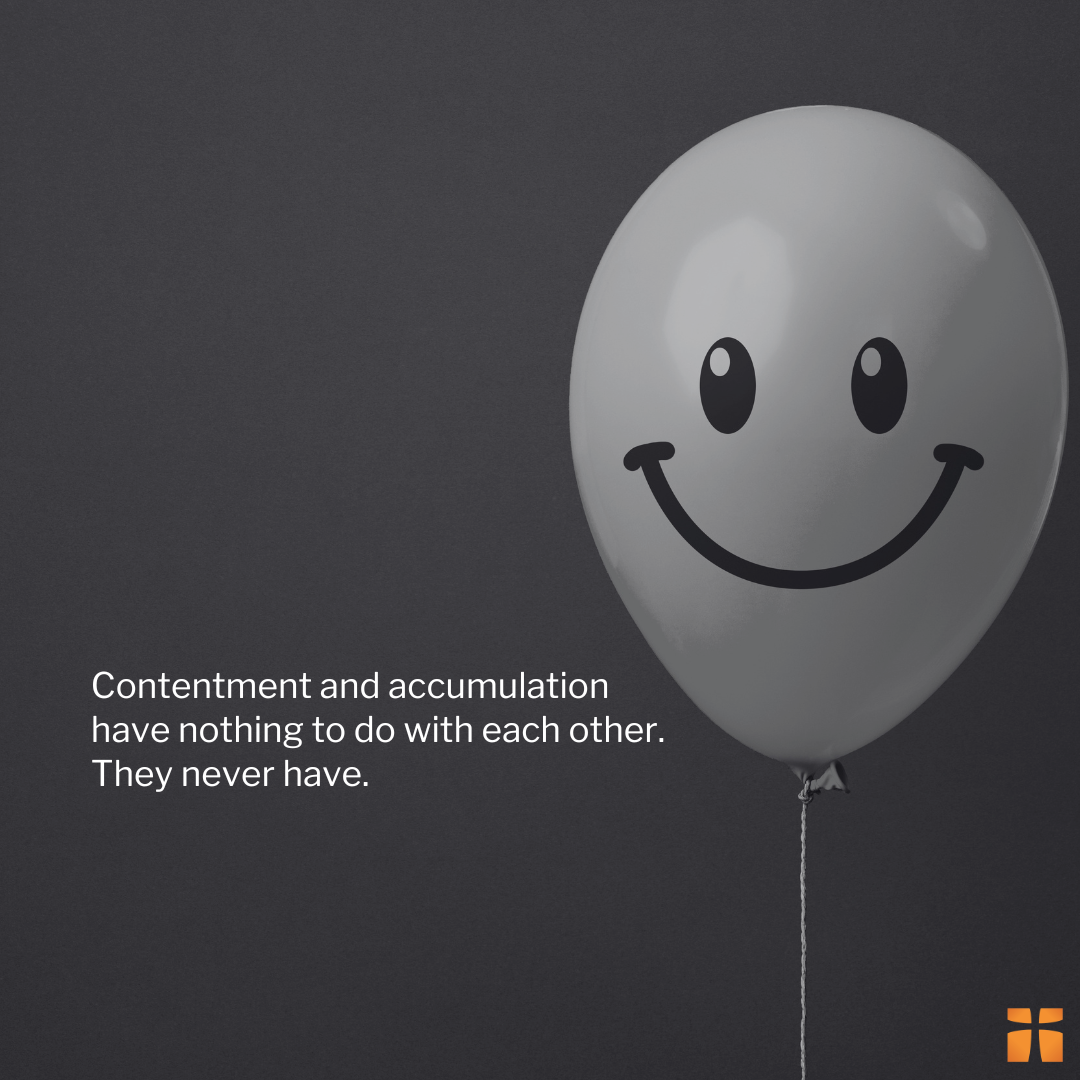
Centuries later, my son Tom traveled to Africa on a mission trip. He and his wife brought clothing to give to children in need — children who played and giggled in the dust with a joy that seemed completely unbothered by their threadbare circumstances. Tom gave a shirt to an eight-year-old boy, who received it with delight. But the next day, the boy wasn't wearing it. When Tom asked why, the answer was simple: "I gave it away. Someone needed it more." A king's kingdom could not produce one contented man. A child with almost nothing gave away the only shirt he had. Contentment and accumulation have nothing to do with each other. They never have. Biblical contentment is not found in having more, but in trusting that God’s presence, provision, and promises are enough.
When my husband and I moved from the Midwest to Arizona, we gave away or sold nearly everything we had spent decades acquiring. Years earlier, a pastoral move had required transporting thousands upon thousands of pounds of belongings. This time was different. We pared life down to roughly fifteen hundred pounds. And something unexpected happened. Standing in our lighter, quieter space, I realized — we still had enough. More than enough. The experience exposed something in my own heart I hadn't wanted to see: how easily contentment slips away. How "just looking" quietly awakens desires we never actually needed. As my husband often says, "How many shirts does a guy really need?" The contented man had none. And he was the happiest man in the kingdom.
Why Our Culture Makes Biblical Contentment Difficult
We live in a culture addicted to more. More possessions. More comfort. More recognition. More success. More influence. Closets overflow while gratitude shrinks. Shopping has become entertainment. We replace things that still work simply because something newer has caught our attention. And greed — which rarely announces itself honestly — finds the perfect hiding place inside a culture that celebrates accumulation as achievement.
Scripture does not treat greed as a minor personality flaw; although it seemed a lesser sin category until the recent years of growing fraud, corruption, and deception in our world. Now I get it. Greed has deep roots beyond just wanting more ice cream. The Bible's warnings against this particular vice run from the wisdom literature straight through to the apostles. Proverbs 28:25 says, "A greedy man stirs up strife, but the one who trusts in the LORD will be enriched." Paul goes further — uncomfortably further. In Ephesians 5:5, he writes: "No immoral, impure or greedy person — such a person is an idolater — has any inheritance in the kingdom of Christ and of God." In Colossians 3:5, he calls greed idolatry outright. And Revelation 22:15 places “idolaters and everyone who loves falsehood” outside the holy city. Greed belongs in that family because it deceives the heart into believing that fulfillment can be found apart from God.
How could wanting more carry eternal consequences?
Why Greed Is a Heart Issue, Not Just a Money Issue
Because greed is not really about money. It is a restless craving of the heart that quietly competes with trust in God. It worships acquisition, self, comfort, and control in the place reserved for God alone. And it rarely arrives wearing its own face. Greed disguises itself as ambition. Security. Ministry achievement. Reasonable success. Wherever the pursuit of more begins to outweigh love for God and love for people, idolatry has already begun — even if the bank account is modest and the lifestyle is respectable. Jesus was direct: "No one can serve two masters… You cannot serve both God and money" (Matthew 6:24). And He broadened the warning beyond finances: "Be on your guard against all kinds of greed" (Luke 12:15). Not some kinds. All kinds.
How Greed Disguises Itself in Everyday Life
It appears as financial corruption in the headlines — and our nation has seen plenty of it. Billions of dollars intended for vulnerable families, hungry children, and medical care have been diverted into personal enrichment and fraudulent schemes. Greed, given enough room, eventually ends up on the front page. But Scripture is less concerned with the headlines than with the quieter version — the one that takes up residence in ordinary hearts. The comparison that breeds discontentment. The promotion that becomes an obsession. The marriage that feels insufficient next to someone else's. The life that seems too small. That last disguise may be the most dangerous of all.
Greed is not always about possessing more things. Sometimes it is the refusal to be satisfied with life, the spouse, the calling, or the circumstances God has actually given. In difficult seasons, people seek relief in things God never intended to satisfy the soul — in escape, in attention, in emotional shortcuts, in forbidden relationships. Proverbs 4:23 urges: "Guard your heart, for everything you do flows from it." The battle is always internal before it is external. A restless heart, left unchecked, will destroy integrity, relationships, family, and the spiritual life — not always with a dramatic fall, but with a slow, quiet drift away from trust.
Greed says: What I have is not enough. I deserve more. My happiness depends on getting what I want. My security comes from what I can accumulate.
What Does Biblical Contentment Say?
Contentment says something entirely different. It says: God is enough. What he has provided today is sufficient. People matter more than possessions. My treasure is eternal. Hebrews 13:5 connects the two directly: "Keep your lives free from the love of money and be content with what you have, because God has said, 'Never will I leave you; never will I forsake you.'" Contentment is not rooted in circumstances. It is rooted in presence — the presence of the One who never leaves.
How to Learn Contentment in Every Circumstance
The apostle Paul learned this in the hardest possible classroom. Writing from a prison cell, he said: "I have learned to be content whatever the circumstances" (Philippians 4:11). Contentment is not a personality type. It is not a natural temperament. It is learned — through gratitude, through trust, through surrender, and through the long, slow work of remembering God's faithfulness. He sustained Israel in the wilderness with manna for forty years. He preserved a widow's oil and flour when her final meal seemed imminent. Jesus reminded His followers that if the Father feeds the birds of the air, He will certainly care for His children. Then He made this promise:
"Seek first his kingdom and his righteousness, and all these things will be given to you as well." - Matthew 6:33
- A culture built on more will never know peace.
- Greed continually whispers, Just a little more.
- Jesus gently says, Come to Me.
The gospel frees us from the exhausting slavery of accumulation, because in Christ we already possess the riches that matter most — riches that cannot be lost, stolen, devalued, or outgrown. The king's messengers searched the whole kingdom for a contented man and finally found one. But he had no shirt to give. He had discovered something the king's wealth had never provided: that enough is not a number. It is not a closet size, a bank balance, or a title. It is a Person. Perhaps contentment is not settling for less. Perhaps it is finally discovering what — and Who — is enough.
Frequently Asked Questions about Biblical Contentment
- What is biblical contentment?
Biblical contentment is the settled trust that God’s presence, provision, and promises are enough, even when circumstances are difficult or desires remain unmet. - What does the Bible say about greed?
The Bible warns that greed is dangerous because it competes with trust in God. Scripture even describes greed as idolatry when desire for more takes God’s place in the heart. - Is contentment the same as settling for less?
No. Contentment is not giving up hope or ambition. It is learning to trust God fully instead of believing peace depends on having more. - How can Christians learn contentment?
Christians learn contentment through gratitude, surrender, remembering God’s faithfulness, guarding the heart, and seeking God’s kingdom before earthly gain. - Why does wanting more never satisfy?
Wanting more cannot satisfy because the heart was made for God. Possessions, success, comfort, and recognition may be good gifts, but they cannot replace the presence of Christ.
For Further Reading
- Contentment in the Bible: The Secret to Lasting Fulfillment
- What Does it Mean to Be Content in All Circumstances?
- What Is Greed? Definition and Bible Verses about Greed
- What Did Jesus Say about Greed in Luke 12:15?
- Why Can’t We Serve Two Masters?
Photo Credit: ©GettyImages/Tero Vesalainen