Key Points
- Spiritual immaturity is not just a lack of Bible knowledge; it is a stalled ability to endure discomfort, receive correction, and grow as a disciple of Christ.
- Hebrews 5 warns believers against remaining on “milk” when they should be growing into deeper discernment and maturity.
- Immature faith often becomes dependent on personalities, emotional experiences, and constant reassurance rather than on lasting spiritual formation.
- Signs of spiritual immaturity can include being easily offended, resisting inconvenience, avoiding correction, and repeating the same struggles without growth.
- The Church must call believers beyond comfort and entertainment into maturity, responsibility, sacrifice, and Christlike resilience.
In human growth, maturity is expected. When it does not happen, we call it arrested development—a halt or stagnation in emotional or psychological growth. A person may age chronologically while remaining internally stuck, repeating the same patterns, reacting with the same emotional tools, and unable to move forward maturely. Spiritually, we see a striking parallel. Spiritual immaturity is not simply a lack of Bible knowledge; it is a stalled capacity to endure discomfort, receive correction, and become formed into a mature disciple of Christ.
What Is Spiritual Immaturity in the Church?
So we get born again, and like infants, we begin to grow. Tragically, some of us remain trapped in immaturity for decades—revisiting the same elementary struggles, rehearsing the same offenses, circling the same biblical texts, yet never crossing into lasting formation or maturity.
As I travel across nations and cultures, I am increasingly alarmed by this phenomenon, and I am reminded of the writer of Hebrews, who confronts it bluntly: “By this time you ought to be teachers, but you need someone to teach you again the basic principles of God’s word. You need milk, not solid food” (Hebrews 5:12–14).
What Does the Bible Say about Spiritual Maturity?
Milk is appropriate for infants, but it was never meant to be the permanent diet of the believer. Many believers, however, settle into a version of faith that remains immature and repetitive—infantile in its appetites, familiar in its routines, but not formative in its results. They keep circling the same lessons, needing the same reassurances, reacting with the same fragility, and calling it faith, when in truth, very little growth is taking place. The Bereans in Acts 17:11 offer a striking contrast:
“Now the Berean Jews were of more noble character than those in Thessalonica, for they received the message with great eagerness and examined the Scriptures every day to see if what Paul said was true.”
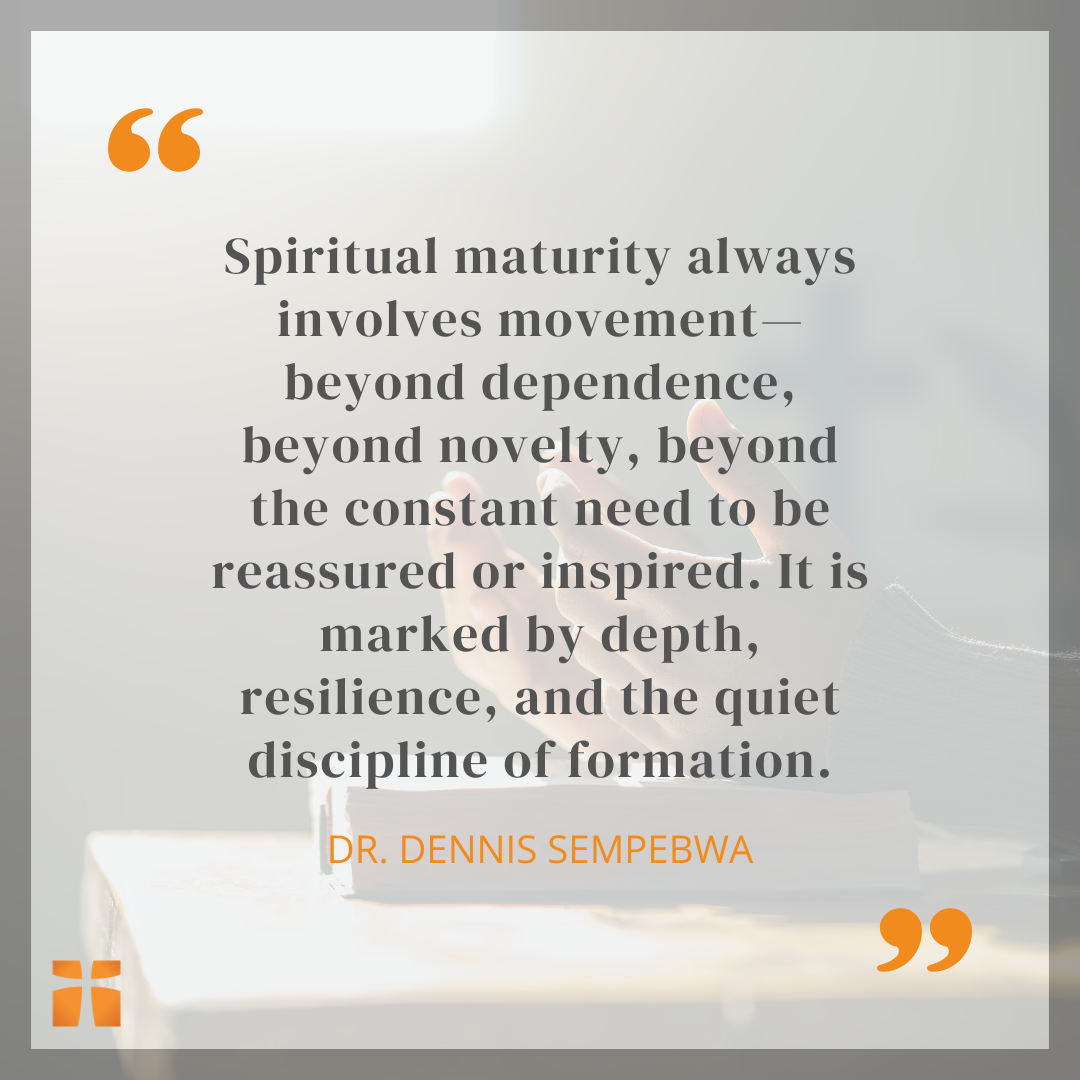
They did not merely listen to preaching, chase personalities, or rely on atmospheres to sustain them. Their faith was active, discerning, and self-feeding. They grew. Spiritual maturity always involves movement—beyond dependence, beyond novelty, beyond the constant need to be reassured or inspired. It is marked by depth, resilience, and the quiet discipline of formation.
How Spiritual Dependency Stalls Christian Growth
I once encountered a man who had faithfully served as the head usher of a large church I visited regularly. That Sunday, I noticed he was missing. Later, I learned the reason: his favorite preacher was speaking at a nearby arena. That evening, he returned glowing with excitement.
“Dr. Dennis,” he said, “you should have heard him. He was incredible.”
When I asked what had been taught, it became clear that nothing particularly new had been introduced. The message centered on the unconditional love of God—a foundational truth of the Christian faith. Yet what made it feel “revelatory” was not the content, but the personality delivering it. This is not growth; it is spiritual dependency. James warns us against becoming mere akroates — Greek for “hearers only” — who admire truth without being transformed by it. When believers, especially ministers, must chase personalities to feel spiritually alive, touched, or moved, maturity has stalled.
Why Immature Faith Becomes Easily Offended
There is something deeply troubling when supposedly mature believers become easily offended by trivial things: The pastor didn’t greet me. The elders keep overlooking me. The pastor’s wife never looks at me at all. The order of service keeps changing. The music doesn’t move me anymore. Faith becomes fragile—easily unsettled, easily bruised, easily offended. I remember a pastor who felt compelled to explain—weeks in advance—why he needed to move his service start time from 11:00 am to 11:15 am. He feared that without sufficient justification, some would leave the church altogether. Their entire Sunday, he explained, had been built around that precise hour. Fifteen minutes felt like a serious disruption. I listened with quiet disbelief.
I remember preaching in Indonesia years ago, where the church had been threatened with multiple suicide bomb attacks. Because of the danger, they literally had to announce a new location for the Sunday morning service around midnight on Saturday night. I was shocked. I thought, Surely nobody is going to come. But they came—all 6,000 of them. And this happened every weekend. My own introduction to Christianity took place in a very different world, yet in a world much like that one—a world of war, pain, persecution, and random military operations where thousands of Ugandans simply disappeared. We walked for hours to church, no matter what. Our services lasted five hours because Sunday belonged wholly to God. Sometimes they lasted even longer. There were no negotiations, no stopwatch, no consumer expectations. We came to give ourselves, not to be accommodated. That contrast is revealing.
The Church Must Call Believers to Spiritual Maturity
Spiritual arrested development does not always announce itself. More often, it hides behind familiarity, comfort, and triviality. It shows up when believers remain perpetually offended by small slights, unsettled by minor changes, dependent on emotional stimulation, and resistant to anything that disrupts their carefully curated religious routines. Spiritual immaturity—arrested development—is not merely about ignorance of Scripture. It has little to do with how much Scripture one has heard and more to do with stunted spiritual capacity. Faith becomes emotionally demanding, easily offended, and allergic to inconvenience. Growth has stalled. The call before the Church is not to find better stimulation, smoother transitions, or more carefully curated worship or service experiences. It is to grow up. To move beyond milk. To endure discomfort. To release petty offenses. To become disciples who are formed rather than entertained—rooted, mature, responsible, and able to carry weight, responsibility, and sacrifice.
“When I was a child, I talked like a child, I thought like a child, I reasoned like a child. When I became a man, I put the ways of childhood behind me.” — 1 Corinthians 13:11
There is grace for infancy, but there is no excuse for a Church that keeps coddling grown believers instead of calling them to maturity.
Frequently Asked Questions about Spiritual Immaturity and Spiritual Maturity
- What is spiritual immaturity in Christianity?
Spiritual immaturity is when a believer remains dependent on basic teaching or emotional reassurance without growing in discernment, obedience, resilience, and Christlike character. - What does the Bible say about moving from milk to solid food?
Hebrews 5:12–14 uses the imagery of milk and solid food to picture spiritual growth. Believers are expected to move beyond the basics and develop mature discernment. - What are the signs of spiritual immaturity?
Signs can include being easily offended, resisting correction, depending on emotional experiences, avoiding inconvenience, and repeating the same spiritual struggles without growth. - How can Christians grow in spiritual maturity?
Christians grow by studying Scripture, practicing obedience, enduring discomfort, releasing petty offenses, receiving correction, and seeking formation instead of entertainment. - Is spiritual maturity only about knowing more Scripture?
No. Biblical knowledge matters, but maturity is shown through transformed character, discernment, humility, perseverance, and love.
For Further Reading
- Why Is Spiritual Maturity Important?
- How Can We Grow Spiritually?
- Why You Can't Base Your Spiritual Maturity Just on How Much You Know
- Are You Living as a Believer or a Disciple?
- What Does Matthew 18 Say about Conflict Resolution within the Church?
Photo Credit: ©GettyImages/RobertCrum