Key Points
- Rising home prices have made homeownership genuinely difficult for many Americans, especially younger adults trying to reach traditional financial milestones.
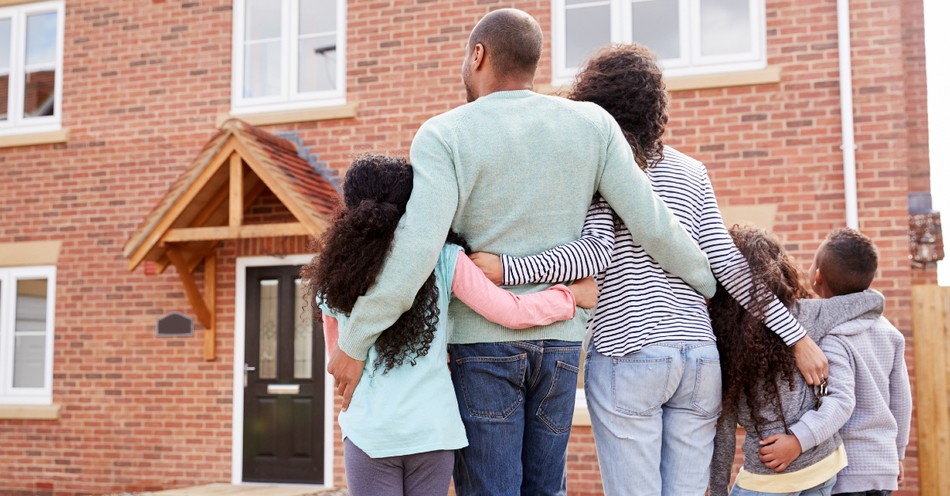
- A desire for a stable home is not inherently materialistic; homes can provide roots, security, family memories, hospitality, and opportunities for stewardship.
- Problems arise when homeownership becomes a measure of adulthood, success, identity, or ultimate security.
- Psalm 90 reminds believers that God Himself is our lasting dwelling place even when earthly circumstances remain unsettled.
- Christians can steward and use whatever home they have now—house, apartment, or otherwise—for rest, growth, hospitality, and service.
Open your favorite “find a house” website—maybe something like Zillow. Do a search for 3 bedrooms, two bathrooms, and let’s say 1800 square feet. Then set the maximum price to whatever you think a normal family ought to be able to afford. Depending on where you live, you might watch a good portion of the map of available houses suddenly disappear. You bump the number up a little, then a little more. And you might find 2-3 houses that about 30 people are fighting for.
Now, in many of the articles I read in researching this, they go back to 1965 and talk about the price of a new home in the US being $20,000. But that’s just crazy talk. For people my age (45) or younger who are looking for houses, we’ve never seen a decent house go for anything near $20K. But we do remember decent houses being anywhere from $100-200K, and that was only a few years ago.
Let’s think about this in connection with a burger. In 1965, a McDonald’s hamburger cost about 15 cents. Compared with the median family income of roughly $6,900, that represented about 0.002% of annual income. The median price of a new home, meanwhile, was about $20,000—roughly 290% of annual family income.
Today, a $3 fast-food burger represents roughly 0.003% of the latest median household income, of $87,460 in 2025. That’s still a microscopic dent in the yearly budget. But the median price of a new home in 2026 is about $410,700—roughly 470% of the latest median household income.
Let’s put that in terms of hours of labor. At the federal minimum wage, the median price of a new home in 1965 represented about 16,000 hours of work. By 2016, it represented more than 42,000 hours. Using the median new-home price from the second quarter of 2026, that figure rises to nearly 56,650 hours of minimum-wage labor. That’s roughly 14,200 more hours than in 2016—the equivalent of almost seven additional years of full-time work.
It’s always a bit dicey when making these kinds of comparisons because there are tons of factors to consider. Houses are different. Financing is different. Our homes are larger. Land is valued differently. So, quite a few factors. But we’re still talking about a massive shift here. It really is difficult to buy a home.
All of this is to say that if a 29-year-old tells you that buying a house feels impossible, we should believe them. And this isn’t just a call to hand them Philippians 4 and tell them to learn to be content. But I do think housing prices are exposing how much weight we’ve learned to put on owning a home.
Why Has Homeownership Become a Measure of Adulthood?
For many Americans, a house isn’t simply the place you put away your socks and sleep at night. It’s a place of status. Our house isn’t merely shelter, it’s a retirement strategy, an investment, and for many a status symbol. It’s the place where you’re going to raise the kids. It’s the center of many of your dreams for life and family. And it still carries with it a kind of unofficial certificate that says, “I’m an adult.”
Even our board games testify to this, right? In the game of Life, one of the first things you have to do after graduating or getting a job is to buy your first house. And in real life, we expect the same kind of “step up” as you go along. You start in a small apartment. Get the starter home (read: opossums get in through the crawl space). Then you get kids and expand. Then the career job, and you expand a little more. Then you pay it off and only have to worry about paying property taxes. That’s the script.
What happens, then, when you get to those milestones and you find that buying a house isn’t anywhere close? That’s where the anxiety comes in. It may not be a fear of being homeless; it’s the fear of falling behind. If our parents bought a house at 26 and we’re 34 and still renting, what will that mean for our kids? If Sheri from accounting is posting pics of her new kitchen remodel, and our landlord won’t let us hang a picture, what does that mean for me as a person?
It's not all just materialism. There is something good about stability and putting down roots. There are good dreams all tied up in this. But sometimes the anxiety that is felt comes from asking a house to tell us things about our identity that it shouldn’t. Am I doing okay? Am I secure? Have I made wise decisions? Is my future safe?
That’s a lot to ask out of drywall.
What Does Psalm 90 Teach Us About Where Home Really Is?
Psalm 90 begins, “Lord, you have been our dwelling place throughout all generations.”
Think about all the places Moses lived. Palace in Egypt. Refugee in Midian. Then wandering around like a nomad in the wilderness for forty years of his life. If anybody could have complained about not getting a permanent address, it was Moses.
And yet his first thought when he considers the passing of generations is not a piece of property. He points to God as the ultimate dwelling place. God Himself has been our dwelling place. Before the mountains existed, before anybody surveyed a property line or poured a foundation, God was there.
If God is truly your dwelling place, then we see that a physical address may not be the most important thing. Yes, in the Bible, actual land and houses are important. They can be a sign of God’s peace and comfort. Heaven isn’t going to be some ethereal place where we float on clouds and play a harp in a toga. It’s probably the kind of place where you can put your hand in the soil and see dirt pour through your resurrected fingers.
But place, at least place here “under the sun”, isn’t going to be ultimate. Abraham receives the promise of a land, and then Hebrews reminds us that he lived there “like a stranger in a foreign country,” dwelling in tents while he looked forward to “the city with foundations, whose architect and builder is God” (Hebrews 11:9-10).
Your house will never ultimately fulfill you. It’s always going to have things that need fixing. Even if it’s your dream home and you’re standing in the empty living room with the set of keys, it isn’t really fully yours. Nothing is. And there is a good chance your water heater will break next Thursday.
I think water heaters break as a reminder that we aren’t actually home quite yet. We want permanence and safety, and think it can be found in a home. But it won’t be found there. It’s found where Moses told us—the Lord is our dwelling place. It’s not that our longing for place is too big. It’s that houses are always going to be too small. God aims to give us something far greater.
Why Shouldn't Christians Shame the Desire for a Home?
I’ve overheard some conversations from the generation that bought their house for 21,000 back in 1965. The assumption is that today’s kids just aren’t working hard enough. Or they are looking for a handout. Or maybe they are just greedy and holding out for a mansion. While I’m sure there are sinful people in every generation, I don’t think that’s the entire story here.
It’s easy to talk about contentment and how home ownership isn’t the end goal from the living room of the house you bought fifteen years ago. This is a real struggle that our brothers and sisters in Christ are experiencing, and we should respond with compassion.
For many of the people I know searching for a home, it isn’t about granite countertops or impressing Sheri from accounting. They just want a bedroom for each of their kids. They want to stop wondering if the landlord will sell the house form underneath them or raise the rent $300. They want a little yard and a place to dig some roots. They want a place.
That is a desire that God put within us from the beginning. Adam and Eve were set within a garden to work it and keep it. That does mean to make it beautiful. It means to take some pride in your place. To improve it. To use your God-given creativity to make a thing called a home. That’s all a beautiful thing.
But it’s a beautiful thing, just like so many other beautiful things, that can get swept up and distorted by our sinful desires. There is a place for talking about Philippians 4 and contentment. There is a conversation about not putting all of your hopes and dreams in a house. But as we do that, let’s not lose sight of the fact that there is a very real and good desire there. We shouldn’t shame them for having that desire.
Christian hope does not require us to pretend disappointment is no big deal. We can tell someone that God is their dwelling place, even as they grieve that the house they hoped to buy is out of reach.
How Can Christians Use the Home They Actually Have?
The call of the gospel on our lives isn’t about what we possess. We could spend years working, borrowing, fixing, remodeling, and protecting a house until eventually the “place” is what is running our family. That’s not God’s intention for “place”. It’s supposed to be shalom. It’s tied to rest.
The demand of the gospel on our lives calls us to use the home that we actually have in this particular season. Scripture says plenty about hospitality, and nowhere does it require an open-concept kitchen. A folding table works. So does a couch with a weird stain that you really hope stays hidden by that throw pillow.
Yes, steward your house well. Fix the toilet. Pay your mortgage. Save up for a roof (note to self—save for a roof). Don’t baptize financial irresponsibility and call it “trusting God”. But stewardship is also kind of messy. It’s remembering what things are for. And your home is supposed to be a place for rest and also flourishing. It’s a place for you to grow. And it’s a place to bring others into. That doesn’t require the dream house.
I hope you get your dream house. But just remember that the calling in the Bible for a “place” and what we do in that “place” isn’t to be shackled by the numbers on the outside of your house…or apartment…or shanty.
Don’t ask drywall to tell you who you are. That’s already established in Jesus. In Christ is where your security is found.
Frequently Asked Questions
Why has buying a home become harder for many Americans?
Home prices have risen substantially over time, while affordability is also affected by income, mortgage rates, property taxes, insurance, location, and the available supply of homes.
Is it wrong for Christians to want to own a home?
No. Wanting stability, room for family, roots in a community, and a place to practice hospitality can all be good desires. The spiritual danger comes when a house is expected to provide identity or ultimate security.
What does Psalm 90 mean when it says God is our dwelling place?
Psalm 90 contrasts the temporary nature of human life with God's permanence. Our deepest security is found in the eternal God rather than any earthly location or possession.
Does biblical contentment mean giving up on buying a house?
No. Contentment allows Christians to pursue good goals while refusing to make their peace, identity, or worth dependent upon achieving them.
How can Christians use their current home faithfully?
Whether they own or rent, believers can create places of rest, welcome others, practice hospitality, steward what they have wisely, and use their space to serve people.
For Further Reading
- What Young Adults Living at Home Reveal about Family, Independence, and Grace
- Why “Give Us Today Our Daily Bread” Matters in an Anxious Economy
- What America’s Retirement Anxiety Reveals about Trusting God with Tomorrow
- 4 Things Contentment Is and 4 Things Contentment Is Not
- 6 Ways to Rethink Biblical Hospitality in a Busy World
Photo Credit: GettyImages/monkeybusinessimages
Mike Leake is husband to Nikki and father to Isaiah and Hannah. He is also the lead pastor at Calvary of Neosho, MO. Mike is the author of Torn to Heal and Jesus Is All You Need. His writing home is https://mikeleake.net and you can connect with him on Twitter @mikeleake. Mike has a new writing project at Proverbs4Today.