Key Points
- Saudi Arabia, Pakistan, and Turkey signed the Mecca Joint Defense Agreement, pledging that an attack on one member will be regarded as an attack on all three.
- The pact brings together Saudi financial influence, Pakistan’s nuclear and ballistic missile capabilities, and Turkey’s military power.
- Israel is watching closely because the alliance could affect regional security, Saudi normalization, Gaza’s future, and Turkey’s ambitions in Syria.
- Psalm 83 and Ezekiel 38 offer a prophetic framework for understanding hostile alignments against Israel, but Christians should handle these passages with humility.
- Christians should respond by staying informed, praying for the peace of Jerusalem, and interceding for believers across the Middle East.
What Is the Mecca Joint Defense Agreement?
Last month, three major Islamic nations—Saudi Arabia, Pakistan, and Turkey—signed a mutual defense pact. This Mecca Joint Defense Alliance expands upon an earlier bilateral pact between Saudi Arabia and Pakistan signed in late 2025 and will operate similarly to NATO. An armed attack against one member will be regarded as an attack against all three.
The agreement’s significance became even clearer on August 31, when the three countries established a permanent secretariat in Saudi Arabia and committed to greater military coordination, joint defense production, and technological cooperation. The secretariat will initially be led by a Pakistani secretary-general, giving the new partnership an institutional structure rather than leaving it as a symbolic declaration.
Turkey claims the pact is not directed against any one country. However, the nations involved mirror ancient prophetic warnings in Scripture of nations that will one day come against Israel, which should make Christians take note.
Why Are Saudi Arabia, Pakistan, and Turkey Aligning Now?
Why did these three nations unite now? The immediate answer is Iran. Since the United States and Israel launched preemptive strikes on Iran in February, Iran and its proxies have fired missiles and drones at the Gulf states, threatened Saudi infrastructure, and disrupted shipping through the Strait of Hormuz and the Red Sea.
Yet the agreement also reflects a deeper shift. Saudi Arabia has increasingly questioned whether it can depend exclusively upon the United States for its security. The limited American response to Iran’s 2019 attack on Saudi oil facilities shook that confidence, while the current war has exposed Gulf countries to retaliatory strikes from Iran and its proxies following US and Israeli assaults.
The Key Players
Each country brings strengths to the alliance. Saudi Arabia brings to the table financial clout, sway in the Sunni world, and control over Islamic holy sites. Pakistan offers nuclear-armed strength and ballistic missile capabilities. And Turkey has a strong military that makes its own weapons and often involves itself with neighboring countries. Their leaders claim that together, their unique capabilities—money, nuclear/ballistic technology, and military power—will aid them in creating an intimidating coalition against their foes. What they don’t say is that such a union could create serious challenges to Israel’s security and impact the stability of the entire Middle East.
The pact also brings together countries with different priorities. Saudi Arabia still considers Iran and its proxies its most immediate security threat. Turkey increasingly speaks and acts as though Israel is the greater regional danger. For example, Turkish President Recep Tayyip Erdogan recently said, “Zionism threatens not only me, not only our party, not only our alliance; it threatens everyone.” [1]
Pakistan seeks influence in the Middle East while balancing relationships with China, Iran, the United States, and its principal rival, India. Moreover, it is no friend to Israel either. Pakistani defense minister Khawaja Asif recently called for a “united military front” of the Islamic world against Israel. [2] These compelling interests could eventually limit the alliance—develop into alignments that raise broader regional concerns.
What Does This Pact Mean for Israel’s Security?
For Israel, one immediate question is whether the agreement closes the door on Saudi participation in the Abraham Accords. It certainly makes normalization more difficult in the near term, but it does not prove that Saudi Arabia has permanently rejected it. The Saudis appear to be hedging by strengthening their position with Turkey and Pakistan and simultaneously continuing to seek security, technology, and economic benefits from the United States.
Turkey’s growing regional ambitions present a more immediate concern for Israel. President Erdogan has intensified his attack on Israel and Zionism while expanding Turkish influence in Syria. Turkey has become a principal supporter of Syria’s post-Assad government, and Israel has acted militarily to prevent a threatening Turkish presence from developing near its northern border. A direct confrontation between Israel and Turkey in Syria could become the first serious test of the pact’s mutual defense language.
Gaza presents another striking contradiction. Saudi Arabia, Turkey, and Pakistan are all members of President Trump’s Board of Peace, established to oversee Gaza’s transition and reconstruction. Yet Turkey has long provided political support to Hamas. At the same time, Pakistan has insisted that any troops it sends to Gaza must serve as peacekeepers and not be responsible for forcibly disarming Hamas. These three countries could therefore use both the Board of Peace and their new defense partnership to exert greater influence over Gaza’s future—an influence that does not align with Trump’s vision for the region and denies Israel the security it has fought long and hard to achieve after the brutal October 7, 2023, attack.
Qatar is not a member of the Mecca agreement, but it should not be overlooked. It maintains close relations with Turkey, has hosted Hamas leaders, and has played a central role in Gaza negotiations. Some analysts see Qatar, Turkey, Pakistan, and the new government in Syria as parts of a broader emerging Sunni alignment, with Saudi Arabia maintaining one foot inside that grouping while preserving its relationships elsewhere.
Israel, meanwhile, has discussed a proposed “hexagon of alliances” involving Israel, India, Greece, Cyprus, and additional Arab, Gulf Arab, African, and Asian countries.
How Should Christians Think about Prophecy without Speculation?
These developments deserve careful attention. But as Christians, we must resist two opposite errors: ignoring the spiritual forces that shape world events or treating every new headline as a precise fulfillment of biblical prophecy. Scripture gives us patterns by which to understand the nations, but it also calls us to handle prophetic passages with humility.
With that as our framework, let’s endeavor to understand the significance of this geopolitical development and how these modern players connect to the broader biblical narrative—specifically in Psalm 83 and Ezekiel 38.
How Do Psalm 83 and Ezekiel 38 Frame Israel and the Nations?
Psalm 83 describes a coalition of diverse familial and regional powers that will set aside their historical differences to form a single coalition against God’s people, Israel:
They have taken crafty counsel against Your people [Israel], and consulted together against Your sheltered ones. They have said, “Come, and let us cut them off from being a nation, that the name of Israel may be remembered no more.” For they have consulted together with one consent; they form a confederacy against You: The tents of Edom and the Ishmaelites; Moab and the Hagrites; Gebal, Ammon, and Amalek; Philistia with the inhabitants of Tyre; Assyria also has joined with them. (vv. 3–8)
In this passage, the psalmist highlights several key regional powers of the ancient Near East—including Edom, Moab, Ammon, Philistia, and Assyria—and how they unite with a common goal: to get rid of Israel, that she would “be remembered no more.”
While these ancient names might seem distant to modern Bible readers, the modern emerging alliance among the three major Islamic powers is especially interesting considering who they were in the ancient world.
Saudi Arabia & the Ishmaelites
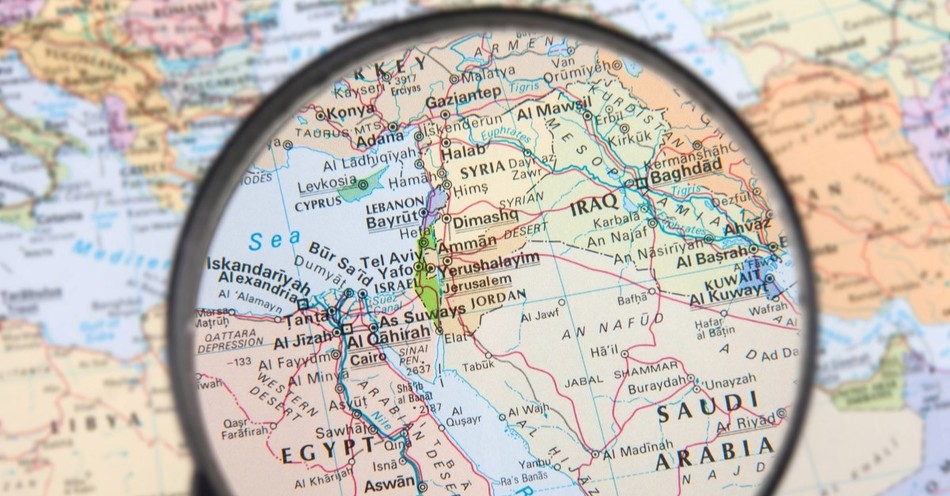
Notice that Psalm 83:6 lists the Ishmaelites alongside Edom. Historically and biblically, the Ishmaelites lived in the northern and central Arabian Peninsula—which, geographically, is modern Saudi Arabia.
Assyria and Turkey
The ancient, powerful Assyrian Empire covered parts of what we now call Iraq, Syria, and Turkey. Psalm 83:8 says that Assyria will one day join this group of enemy nations. Today, Turkey sits in that same northern land where Assyria once ruled.
Pakistan & the Eastern Alignment
Though the ancient name for the area of Pakistan is not named in Psalm 83, the fact that it is aligning with Saudi Arabia and Turkey is still concerning because it fits a patten described in Ezekiel 38:5–6, which warns that countries from the east and far away will unite against Israel in the end times:
Persia, Cush and Put will be with them, all with shields and helmets, also Gomer with all its troops, and Beth Togarmah from the far north with all its troops—the many nations with you.
These biblical prophetic themes—where northern, eastern, and southern powers align in the end times against God’s people—make this recent agreement between Saudi Arabia, Pakistan, and Turkey even more interesting. It also reveals an enduring biblical reality: nations form alliances, and Israel repeatedly becomes a focal point of conflict. Yet no human confederacy can cancel God’s covenant promises or overturn His purposes for Israel.
The prophets also give us a vision beyond war. Isaiah 19:23–25 envisions a day when Egypt and Assyria will worship alongside Israel and God will declare, “Blessed is Egypt My people, and Assyria the work of My hands, and Israel My inheritance.” God’s ultimate purpose is not endless hostility in the Middle East, but redemption, reconciliation, and the establishment of His kingdom.
Why Should Christians Pay Attention to This Alliance?
A nuclear-backed, financially stable, and militarily capable bloc could shift the balance of power away from Israel’s Qualitative Military Edge (QME)—a framework and codified requirement under US law designed to ensure that Israel maintains military superiority over potential regional adversaries.
The decision to sign this agreement in Mecca is also significant. Its location invokes more than military cooperation; it appeals to Islamic solidarity and gives the pact religious weight. Likewise, Jerusalem is never merely a strategic question in the Muslim world. Islamic claims over God’s Holy City and Israel’s eternal capital can unite governments whose political interests otherwise diverge.
The governments of Turkey and Pakistan, though geographically distinct, allow religious ideas to shape their laws. This makes life prejudiced and even dangerous for smaller groups of people who have different beliefs—like Christians—and results in them being prohibited from practicing their faith safely.
Lastly, a hardline Sunni partnership could stall—or worse, reverse—the momentum of regional normalization efforts, such as the Abraham Accords.
Thus, this agreement could have repercussions for believers and policymakers alike.
I’ve been engaged with Israel and the broader Middle East for over 40 years and have seen Western leaders repeatedly make the mistake of trying to understand the region through the lens of economic and military power, completely forgetting how deeply people’s religious beliefs drive their choices and alliances.
How Can Christians Respond as Watchmen on the Wall?
This recent alliance might look alarming. But God’s plan is perfect and good, and we can rest in that truth. His purposes will prevail.
However, we must not be passive observers. We must keep our eyes on Israel, stand firm, and remain informed. Most importantly, we must be vigilant watchmen on the wall (Ezekiel 33:6; Isaiah 62:6–7)—and as God’s Word commissions, “pray for the peace of Jerusalem” (Psalm 122:6), for wisdom for Israel’s leaders, and for believers in Saudi Arabia, Turkey, Pakistan, Iran, Syria, and Gaza. We are called to be spiritually discerning so that we can pray in agreement with God’s Word and stand faithfully with His purposes for Israel and the nations.
Get involved with the ICEJ USA at: icejusa.org/get-involved
Frequently Asked Questions about the Mecca Defense Pact, Israel, and Bible Prophecy
- What is the Mecca Joint Defense Agreement?
The Mecca Joint Defense Agreement is a mutual defense pact between Saudi Arabia, Pakistan, and Turkey that treats an armed attack on one member as an attack on all three. - Why does this pact matter for Israel?
The pact matters because it brings together major regional military, financial, and nuclear-capable powers whose policies and alliances could affect Israel’s security and regional normalization efforts. - Does this agreement prove Bible prophecy is being fulfilled?
Christians should be careful. The agreement may echo biblical patterns involving nations and Israel, but every new headline should be handled with humility rather than treated as a precise fulfillment of prophecy. - What passages does the article connect to this alliance?
The article connects the alliance to Psalm 83 and Ezekiel 38, while also pointing to Isaiah 19 as a reminder of God’s future purposes of redemption and reconciliation. - How should Christians respond?
Christians should stay informed, pray for the peace of Jerusalem, pray for Israel’s leaders, intercede for believers across the Middle East, and watch world events with biblical discernment.
For Further Reading
- What Christians Should Understand about the Middle East Conflict
- How to Pray for the Peace of Jerusalem
- How Christianity’s Jewish Roots Help Christians Resist Antisemitism
- Dangerous Trends in Jewish-Christian Relations
- The Uncomfortable Truth about the Rise in Global Antisemitic Sentiment
[1] https://www.meforum.org/mef-online/the-new-crescent-mecca-pact-gives-rise-to-a-sunni-bloc-posing-new-challenges-for-israel
[2] Ibid
Photo Credit: Credit:©GettyImages/Popartic