
Every February, Black History Month invites us to honor a legacy of courage, resilience, and resistance. It invites us to pause and reflect—honestly and prayerfully—on both the past and present struggles for justice. Not just with words, but with humility. Not just with remembrance, but with love that moves us toward our neighbors.
This time brings a tension between joy and grief. And for Christians, that tension is not something we should avoid. It is something we prayerfully enter with humility, truth, and the love of Christ.
This year marks the 100th anniversary of Carter G. Woodson starting what would later become Black History Month—creating space for stories that had long been ignored, erased, or minimized. Black History Month allows us to honor those who paved the way: men and women, activists, educators, and leaders, who stood firm in faith, challenged injustice, and shifted atmospheres where opportunity once did not exist.
They were atmosphere changers. They made room where none existed. And their legacy still speaks.
And yet, while much progress has been made, the journey is not complete. This month reminds us that the past still echoes in our present, and our reflection should move beyond mere celebration, for a community created in the image of God that, unfortunately, has not always been seen or treated that way.
We Are All Created in the Image of God
Scripture is clear about human worth.
“Then God said, ‘Let us make man in our image, after our likeness.’” - Genesis 1:26
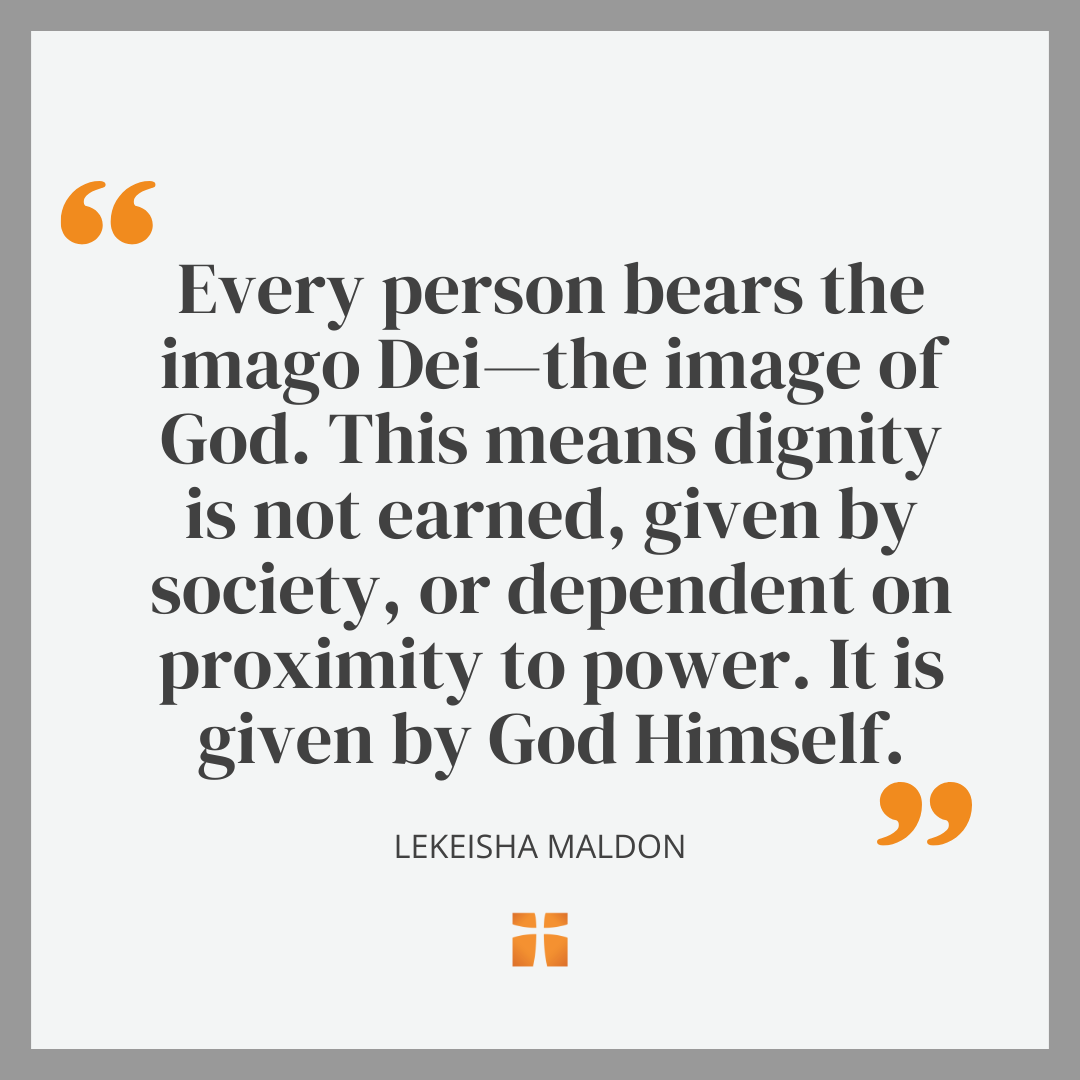
Every person bears the imago Dei—the image of God. This means dignity is not earned, given by society, or dependent on proximity to power. It is given by God Himself.
When any group of people is overlooked, devalued, or treated unjustly, it is not simply a social concern—it is a theological one. To deny dignity to another and ignore the pain it’s caused is to misunderstand the heart of God.
Why the Perspective of a Christ Follower Stands Out
Black history is more than a month. Because while we have come far, there is still work to do. But as Christians, our lens is different. We do not define justice based solely on emotion, trends, or personal experience—though those realities matter deeply. We seek justice as those submitted to God’s truth. Truth about what has been. Truth about what is. And truth that encourages transformation instead of division.
Justice, in Scripture, is never detached from God’s character. It is not something we invent; it is something we seek to live out daily based on what His word declares. God shows no partiality. Scripture calls favoritism sin (James 2:1-9). We are commanded to love our neighbor as ourselves (Matthew 22:39)—not selectively, not conditionally, but fully. This is why the apostle Paul reminds us in Romans 12:15 “to rejoice with those who rejoice and weep with those who weep.” As members of one body, indifference should have no place in the life of a believer.
How Do We Pray for Justice?
Prayer is often where this work begins—but prayer is more than asking God to fix what is broken. Prayer is the place where God reshapes us. When we pray for justice, we are not only asking God to change circumstances or systems. We are asking Him to give us hearts that look like His. Hearts that listen. Hearts that tell the truth. To reveal the areas that need changing. And hearts that are willing to love as Christ loved us.
Prayer invites us to see others the way God sees them—not as issues to debate, but as image-bearers to love.
Scripture consistently condemns partiality and calls God’s people to reflect His compassion. God defends the vulnerable, loves the sojourner, and measures faith not by words alone, but by our love expressed in action. And yet, the pursuit of justice does not stand apart from the gospel—it flows directly from it.
The Gospel Is the Bigger Story
Our lived experiences matter. The pain we carry matters. Our history matters. But there is an even greater story unfolding—the story of the gospel. A Creator who saw humanity fractured by sin and sent His Son to redeem, reconcile, and restore. In Christ, dividing walls are torn down. Hostility loses its power.
The gospel does not deny our lived experiences or the pain our community has felt. It speaks into them. It reminds us that while our stories matter, there is a greater story unfolding—a story of redemption, reconciliation, and restoration. God sent Jesus into the world not to ignore injustice, but to defeat sin at its root and gather us all into one redeemed family.
Holding Pain without Losing Hope
Our experiences shape us. The pain many carry is real. History has left marks that cannot be dismissed with empty phrases or rushed toward resolution. But our story is not one that ends in despair. Our hope is not dependent on human systems getting everything right. It is anchored in Jesus, who is faithful, just, and present. And promised to right every wrong. Our hope is anchored in a sovereign Savior who sees what others overlook. A Savior who promises that greater works are possible when we walk in step with His Spirit.
How Can We Keep Moving Forward in Love?
So, how can Christians reflect on Black History Month faithfully? Not with defensive and bitter hearts. Not with silence. Not with shallow statements or performative gestures. But with prayer that changes us. With humility that listens before it speaks. With obedience that does justice, loves mercy, and walks humbly with God (Micah 6:8). With true biblical love. Because if we claim to love God yet refuse to love our brother or sister—especially when their suffering makes us uncomfortable—Scripture challenges us to examine our hearts (1 John 4:20).
God never commands His children to do what they cannot, if they do it His way by His grace. In every command, then, lies a possibility for change and for growth in Christ.[1] Justice begins with a heart that is transformed by God. A heart that tells the truth. A heart that refuses partiality. A heart that loves deeply, honors fully, and hopes boldly.
Black History Month invites remembrance—but it also invites response. Not rooted in human standards, but anchored in a hope that does not disappoint. A hope grounded in Christ, who promises that greater works are possible when we walk in His way, by His Spirit, for His glory.
A Prayer to Honor Black History Month
(contributed by Meg Bucher)
Father,
Thank you for the beautiful way you remind me of your definition of justice. In a world that is screaming for justice from every direction, it is good to remember what you say about it. Please, keep these truths at the top of my mind and rooted in my heart both as I honor Black History Month and step out into the world each day. Help me to see my neighbors as you see them. Help me to see everyone as you see them, God. I want to live deeply rooted in love for the people you have placed in my life, acknowledging that each is your beautiful, purposeful creation. Jesus, thank you for sacrificing everything so that I can live my life to the full. Able to see from a renewed perspective and love beyond my human capacity. Use my life, Lord, as a conduit of your love. Teach me to love better, understand more deeply, and to love courageously all the people you have placed in my life. Thank you for every legendary story and brave person who has fought and is fighting for justice. Bless those who are righteously standing for justice and fighting for their neighbors in love.
In Jesus' Name,
Amen.
[1] Jay E. Adams, Romans, Philippians, I Thessalonians, and II Thessalonians, The Christian Counselor’s Commentary (Cordova, TN: Institute for Nouthetic Studies, 2020), 106.
Photo Credit: ©GettyImages/Rawpixel