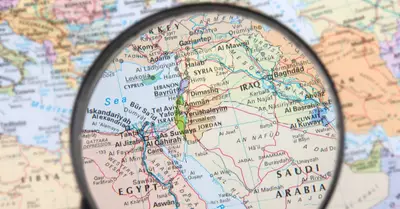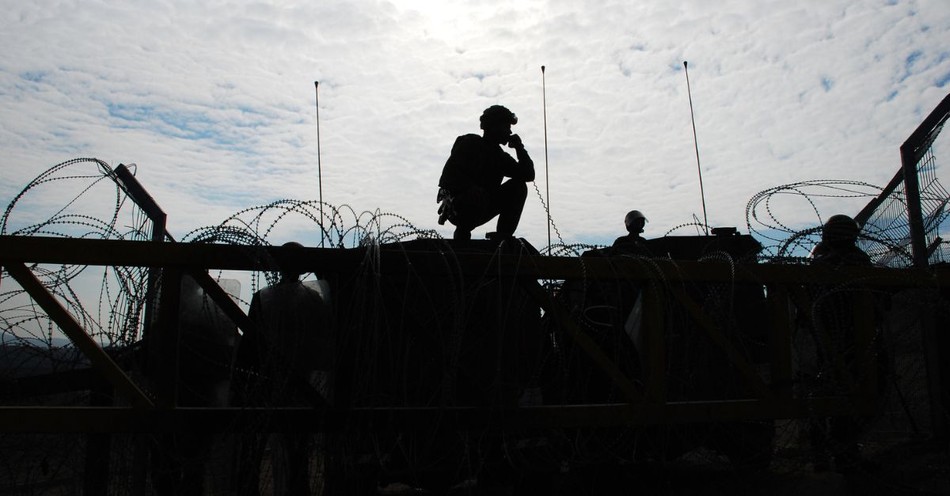
The church must pursue peace without surrendering biblical realism about evil. Please permit me to say something about the current war in the Middle East—not as a pundit, but as a Christian, and as a man who grew up in Africa close enough to war to know that it is never theoretical.
What Does the "Wars and Rumors of Wars" in the Bible Mean?
I am a naturalized American now, but I still carry memories many in the modern West have been spared: violence, instability, whispers that turned out not to be rumors at all, and the quiet, devastating ways war reshapes families, economies, and the human soul. I have also read enough history to know what war does. It destroys, yes—but it also reorders nations, redraws maps, exposes illusions, and reveals what a people are truly made of. So let me say this plainly: war is not new. It has never been new. And it is not going away. Jesus himself told us,
“You will hear of wars and rumors of wars.” - Matthew 24:6
Scripture says it. History confirms it. Human nature proves it. War is not some ancient problem we have finally outgrown. Even in the American story, Congress has declared war 11 times across five separate conflicts, while U.S. forces have been used abroad in hundreds of other instances since 1798. And yet something has changed. This present conflict is exposing more than geopolitical tension. It is exposing a dangerous way of thinking.
The Danger of Misunderstanding Evil in the Modern World
The deeper crisis is not merely the outbreak of conflict abroad, but the condition of mind in the societies watching it. Much of the modern world—especially the West—has come to assume that war is always preventable if only the right people sit at the right table long enough. We imagine that with enough diplomacy, enough summits, enough institutions, enough pressure, and enough carefully chosen words, sworn enemies will suddenly become reasonable. As though evil is merely a misunderstanding. As though darkness can be dialogued into light.
But Scripture never speaks that way. The Bible does not treat evil as a failure of communication. It treats it as a reality in a fallen world—moral, spiritual, and sometimes civilizational. Paul reminds us that “we do not wrestle against flesh and blood” only, but against powers and principalities (Eph. 6:12). Jeremiah tells us that the human heart is deceitful above all things (Jer. 17:9). James traces conflict not merely to systems “out there” but to desires at war within us (James 4:1–2). That is not a call to panic. It is a call to sobriety.
What Is Presentism and Why Is it Dangerous?
One of the great delusions of our age is presentism—the quiet assumption that because we are modern, connected, educated, and technologically advanced, the old truths about human nature no longer apply. We have trade, treaties, global media, international bodies, shared platforms, and instant communication, and so we flatter ourselves into believing that humanity has somehow evolved morally. We assume that because the world is more connected, it must also be more reasonable. But connectivity is not character. Information is not wisdom. Exposure is not transformation.
The human condition remains stubbornly ancient. Scripture is unsentimental about this. It does not flatter us; it diagnoses us. Paul warns of “perilous times” marked by disordered loves, pride, brutality, and moral confusion (2 Tim. 3:1–5). The psalmist reminds us not to put our trust in princes (Ps. 146:3). The Bible never suggests that progress can cure sin. So Christians should not be shocked when nations still lust for dominance, rulers still seize territory, strongmen still interpret restraint as weakness, and propaganda still recruits the crowd. This is not cynicism. It is biblical realism.
Pursuing Peace without Losing Moral Clarity
The West seems particularly ill-prepared. Some readers will instinctively recoil at language like this and assume I am advocating violence or normalizing war. I am doing neither. I am not calling Christians to celebrate war. I am calling them to reject delusion. At this point, some will still ask, But how can a Christian speak this way without advocating war? The answer is simple: to acknowledge the persistence of war is not to sanctify it. To recognize evil is not to endorse violence. A doctor does not celebrate disease because he refuses to deny its presence. In the same way, the Christian need not be a militarist to be morally serious. He can grieve bloodshed, pray for peace, and still reject the childish fiction that all aggressors can be reasoned into goodness.
The gospel commands us to love peace. “If possible, so far as it depends on you, live peaceably with all” (Rom. 12:18). Our Lord blesses the peacemakers (Matt. 5:9). We are to pray for rulers and authorities, “that we may lead a peaceful and quiet life” (1 Tim. 2:1–2). But the pursuit of peace is not the same as the denial of evil. Peace is holy; naivety is not. There is a difference between being peaceable and being unprepared—between being hopeful and being blind.
What makes the modern West especially vulnerable is not a lack of intelligence, but a loss of moral clarity. We have grown suspicious of hard categories: evil, aggression, conquest, judgment, consequence. We prefer therapeutic language to moral language. We recast malice as pain, rebellion as misunderstanding, and danger as dysfunction. And when reality refuses to fit our softer vocabulary, we do not know how to respond. So we lurch between outrage, tribalism, conspiracy, and paralysis. Add social media to that equation, and things worsen. Complexity is flattened into storylines, truth is reduced to reaction, and whole populations are discipled by their feeds. Paul warned of people being “tossed to and fro” by every wind (Eph. 4:14). In our day, many are tossed not only by doctrine, but by headlines, algorithms, and emotionally charged narratives.
How to Be Wise, Courageous, and Hopeful in Troubled Times
Christians are not called to hysteria. But neither are we called to innocence. Jesus said, “In this world you will have tribulation. But take heart; I have overcome the world” (John 16:33). That is one of the most honest sentences in all of Scripture. It offers no sentimental promise of a painless age. It gives something stronger: truth without illusion, and hope without denial. So the Christian posture must be marked by discernment, not frenzy. “Test everything; hold fast what is good” (1 Thess. 5:21). It must be marked by sobriety, not slogans. “Be watchful … be sober-minded” (1 Pet. 5:8). It must be marked by prayer, but not prayer soaked in fantasy. We pray for peace, restraint, protection, wisdom among leaders, and mercy on the innocent. But we do not pray as those who have forgotten what Scripture says about the world. And it must be marked by courage without bloodlust. The Christian does not romanticize war, but neither does he surrender his mind to wishful thinking.
We are not called to fear, but to steadiness. “God gave us a spirit not of fear but of power and love and self-control” (2 Tim. 1:7). Nor are we called to place our confidence in chariots and horses, whether ancient or modern, military or political. “Some trust in chariots and some in horses, but we trust in the name of the Lord our God” (Ps. 20:7).
Standing Firm with Truth in an Age of Delusion
Wars will happen whether we like them or not. Scripture says so. History confirms it. Human nature proves it. The question is whether we have the moral clarity and spiritual maturity to face such moments without collapsing into delusion. Because once delusion takes the place of sound judgment, the threat is no longer merely military. It becomes civilizational. And if, as many Christians confess, we are indeed living in the last days, none of this should surprise us. Scripture did not prepare the church for ease. It prepared her for endurance. Not with fear, but with truth. Not with rage, but with discernment. Not with fantasies of a painless world, but with the steady confidence of a people who were told in advance that turbulence would come—and that Christ would be with them in the midst of it.
The church must not be naïve in an age like this. She must be prayerful, clear-eyed, historically grounded, biblically formed, and spiritually awake. For the issue before us is not simply whether wars will continue. They will. The issue is whether believers will still possess enough scriptural ballast, enough moral seriousness, and enough theological depth to stand firm when they do. And that, it seems to me, is the real test of this hour.
Photo Credit: ©Getty Images/Joel Carillet