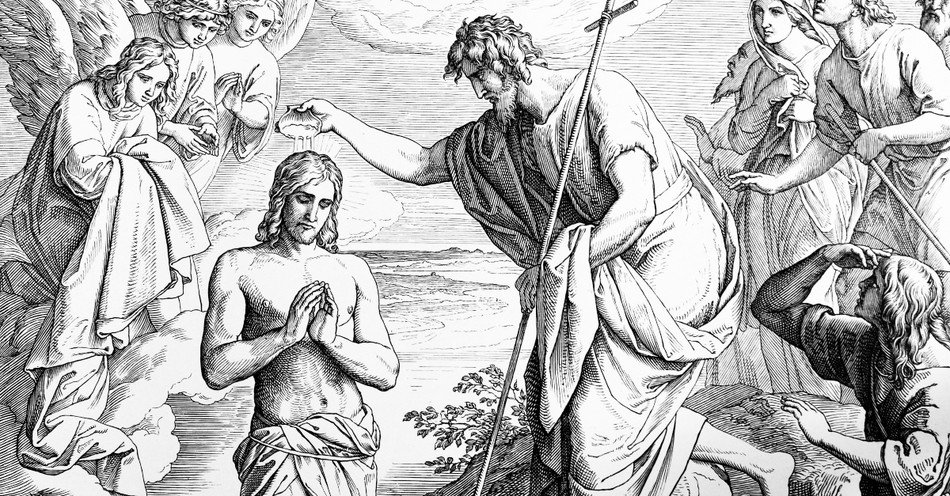
One of the most important events in the earthly life of Jesus took place when John the Baptist baptized Him. We know and trust God’s timing is perfect, and Jesus’ baptism occurred at the time God willed it, when Christ reached a certain age. How old was Jesus when He was baptized? The Bible tells us Jesus was “about thirty years of age” (Luke 3:23).
What Does the Bible Say about Jesus’ Baptism?
The Bible gives a direct account of Jesus’ baptism in Matthew 3:13-17, Mark 1:9-11, and Luke 3:21-22. The Gospel of John 1:29-34 references John the Baptist’s proclamation of his own baptisms in comparison with Jesus being the One who baptizes with the Holy Spirit.
Vern Poythress gives us an excellent look at the significance of the baptism of Jesus. He says, “The Gospels set the baptism of Jesus in the context of the age-long unfolding of the history of redemption, which takes place according to the plan of God." Many references to the Old Testament prophecies and foreshadowings include Leviticus 1:9; 8:6; 11:32; 15:5–33, Isaiah 40:3; Malachi 3:1; Psalm 103:19; Psalm 2:7; Isaiah 42:1, etc.
Jesus’ baptism isn’t a singular, stand-alone event. It’s part of the redemptive plan that begins in Genesis and is consummated in Revelation 21-22 with the glorious second advent and reign of the Lord Jesus Christ.
How Does Jesus’ Baptism Fulfill Old Testament Prophecy?
The Scriptures are all about Jesus, the One who is, who was, and who is to come (Revelation 1:4, 8; 4:8). He is the “Alpha and the Omega, the first and the last, the beginning and the end” (Revelation 22:13). He, the Founder and Perfecter of our faith (Hebrews 12:2), the Author of Scripture (2 Timothy 3:16-17; Hebrews 1:1-2) connects all the prophecies about Himself and their fulfillments (see also Luke 24:13-35).
And Jesus’ baptism by John specifically fulfills two of Old Testament prophecies (Isaiah 40:3; Malachi 3:1; 4:5-6 cf. Matthew 11:10, 14; 17:10-13; Luke 1:17).
We need to regard Numbers 4:1-3, “The LORD spoke to Moses and Aaron, saying, ‘Take a census of the sons of Kohath from among the sons of Levi, by their clans and their fathers’ houses, from thirty years old up to fifty years old, all who can come on duty, to do the work in the tent of meeting…’” (Emphasis mine). Verse three tells us that the minimum age for the Levitical priests was thirty. They took care of God’s house and performed all the priestly duties commanded by God in Exodus, Leviticus, and Numbers. In Numbers, they were overseeing the temporary tabernacle, which was replaced by the Jerusalem temple built by King David’s son, Solomon.
The Numbers passage looks ahead to Jesus stepping into His priestly role, and Jesus’ baptism at age thirty begins the fulfillment of His role as our Great High Priest (Hebrews 4:14; 10:21). His baptism inaugurates Him as a priest as required by the Old Testament command of age and lineage. This is why Luke immediately follows his narrative of Jesus’ baptism with His genealogy.
The importance of all of this expands as Luke’s genealogy concludes with “Adam, the son of God” (Luke 3:38). Luke is setting his readers up for a magnificent revelation—Jesus is the second and better Adam (Romans 5:12-21; 1 Corinthians 15:45-49). Adam, as the federal head of humanity, represents all of us. He was a priest before God. He, according to Sinclair Ferguson, “was the priest of the original creation, the one who supremely and representatively led and expressed the worship of God that the whole animal creation expressed in their own beautiful, but limited, way.” But Adam sinned against God and fell to the devil’s temptation in the Garden of Eden.
After His baptism, as Jesus left the Jordan, He was driven by the Spirit into the wilderness for a time of testing by the devil (Luke 4:1-2, 3-13). Here we learn that where Adam failed to resist Satan, Jesus triumphed. Our Lord Jesus, as the human son of Eve, negated what Adam did when He crushed the head of the serpent (Genesis 3:15 in this verse, bruise means crush). Luke demonstrates that Jesus, the second and better Adam, is our perfect Priest who will represent us perfectly.
Why Did Jesus Wait Until He Was an Adult to Be Baptized?
Galatians 4:4-5 gives us some understanding concerning the age at which Jesus was baptized, “But when the fullness of the time came, God sent forth His Son, born of a woman, born under the Law, so that He might redeem those who were under the Law, that we might receive the adoption as sons.” The answer lies in God’s will and how Jesus His Son submits, “For I have come down from heaven, not to do My own will, but the will of Him who sent Me” (John 6:38).
Therefore, when the time was right, and when Jesus was of priestly age according to Old Testament Law, Jesus was baptized by John. He submitted to His father’s will and fulfilled Old Testament prophecy. Jesus began His ministry soon after He was baptized (at least forty days later), and Jesus’ baptism served as the inauguration of His ministry and the powerful presence and coming of the kingdom of God. This is highlighted by God’s declaration when Jesus came up out of the water as His beloved Son with Whom He is well pleased (Isaiah 42:1; Matthew 3:17).
Jesus’ Baptism Age and the Infant vs. Believers’ Baptism Debate
As we have seen, Jesus was baptized according to God’s perfect timetable, when He was about thirty years of age. That truth doesn’t lessen the often-heated debate swirling around infant vs. believers’ baptism.
Baptism is an important Christian doctrine and practice. Reformed believers consider baptism one of the Lord’s ordinary means of grace (“These are the means God ordinarily uses to grow and sustain His people. There is nothing special about the means themselves; rather, God, by his Spirit, uses them as He has promised in His word”).
Dr. Ray Pritchard states, “When we enter the waters of baptism, we are publicly declaring the message of salvation: that Jesus died for our sins, was buried, and rose again to bring us new life. This act is a powerful symbol of our identification with Him.
All this being said, should Jesus’ age at His baptism affect the age at which believers are baptized? The debate looms. Should infants be baptized? This subject is too strong and complicated to answer in a paragraph. We can, however, list just two arguments for and against. Clarence L. Haynes gives us some thoughts (unless noted, all quotes are from his linked article):
For:
1. Infant baptisms symbolize God’s covenant and a welcoming into the family of God. It acts as a “seal” toward a future decision.
2. Infant baptism adherents say it aligns with the “biblical principles of faith and grace.”
Pastor Kevin DeYoung says, “We baptize infants because they are covenant children and should receive the sign of the covenant.” This conforms to the Old Testament circumcision law.
Against:
1. Baptism is a conscious act which follows a comprehending person’s decision to follow Christ as Savior and Lord. An infant has no cognitive means to make that choice.
2. Baptizing an infant doesn’t guarantee their salvation. Only the Lord draws to Himself whom He will, and we cannot “pre-arrange” salvation.
The previous two “arguments” are the main ones which fuel the debate. Many other articles delve into this subject more fully.
What Happened at and after Jesus’ Baptism?
The Bible tells us that John the Baptist spoke about Jesus the Messiah to the crowds that came out to be baptized by him (Luke 3:7). They wondered whether he could be the Christ (Luke 3:15). He proclaimed, "I baptize you with water, but He who is mightier than I is coming, the strap of whose sandals I am not worthy to untie. He will baptize you with the Holy Spirit and fire. His winnowing fork is in his hand, to clear his threshing floor and to gather the wheat into his barn, but the chaff he will burn with unquenchable fire" (Luke 3:16). Matthew and Mark tell us Jesus came to the Jordan from Galilee to be baptized by John. John initially refused, but Jesus told him it was “to fulfill all righteousness,” and John relented.
“And after being baptized, Jesus came up immediately from the water; and behold, the heavens were opened, and he saw the Spirit of God descending like a dove and coming upon Him, and behold, there was a voice out of the heavens saying, 'This is My beloved Son, in whom I am well-pleased'” (Matthew 3:16-17).
After His baptism, “Then Jesus was led up by the Spirit into the wilderness to be tempted by the devil” (Matthew 4:1). Mark 1:13 clarifies Jesus’ time of fasting and temptation, “And He was in the wilderness forty days, being tempted by Satan. And He was with the wild animals, and the angels were ministering to Him.”
Satan attempted to sway Jesus the same way he swayed Adam to sin. But in His perfect righteousness, Jesus answered Satan’s every attempt with the Word of God. “And when the devil had finished every temptation, he left Him until an opportune time” (Luke 4:13).
Jesus then began His ministry. “And Jesus returned to Galilee in the power of the Spirit, and news about Him spread through all the surrounding district. And He was teaching in their synagogues, being glorified by all” (Luke 4:14-15).
The Significance of Baptism for Jesus and for Us
As we saw above, Jesus submitted to John’s baptism, “to fulfill all righteousness” (Matthew 3:15). What this means is that Jesus’ baptism inaugurated His ministry and fulfilled God’s redemptive plan as prophesied throughout the Old Testament (once again see Luke 24:13-35 and also John 1:31-34). Jesus, of course, needed no repentance or cleansing. The ESV Global Study Bible tells us, “He underwent baptism to identify with the sinful people he came to save through his substitutionary life and death” (2 Corinthians 5:21; Hebrews 5:1-10).
In Luke 20:1-8, the Jewish leaders question Jesus about His authority. Jesus responded with a question, “Was the baptism of John from heaven or from men?” The Jews had no answer because they reasoned if they said it was from heaven, Jesus would ask about their unbelief. And if they said, “from men,” they thought they’d be stoned by the people because the people believed John was a prophet. So, they answered that they didn’t know. Jesus answered in kind, “Neither will I tell you by what authority I do these things.”
At first, we wonder why this account is included here. But we have learned that Jesus’ baptism brought about His Kingly authority as well as His role as Priest. At Jesus’ baptism, the Spirit descended upon Him and God anointed Him as His chosen One. As Priest, He has authority as caretaker of God’s house (which the Jewish leaders thought was their role alone).
Later, as seen in Matthew 21:12-17, Mark 11:15-19, Luke 19:45-48, and John 2:12-25, Jesus confronts the evil practices in the physical temple and overturned the tables of the buyers and sellers, thereby cleansing it. This act pointed toward Jesus as King and Priest cleansing the true temple—His church and all the new creation. He will completely purge all evil, making the world fit to house God’s glory (Hebrews 9:8-10; 1 Corinthians 3:16-17; Revelation 22). The significance of Christ’s baptism expands in its magnificence as we investigate the context of the whole Bible.
Jesus’ baptism is important because it inaugurated His ministry and His anointed role as Prophet, Priest, and King (Revelation 1:5) as part of God’s redemptive plan enacted before history began.
Our baptism is important because it publicly declares that we identify with Christ—His death, burial, and resurrection.
Photo credit: ©Getty Images/gldburger

This article is part of our catalog of resources about Jesus Christ and His life, teachings, and salvation of mankind! Discover more of our most popular articles about the central figure of Christianity:
When was Jesus Born? Biblical & Historical Facts
What Language Did Jesus Speak?
Why Is Christ Referred to as Jesus of Nazareth?
How Old Was Jesus When He Died?
What Did Jesus Look Like?
What was the Transfiguration of Jesus?
Jesus Walks on Water - Meaning & Significance
Why Is it Important That Jesus Was Jewish?