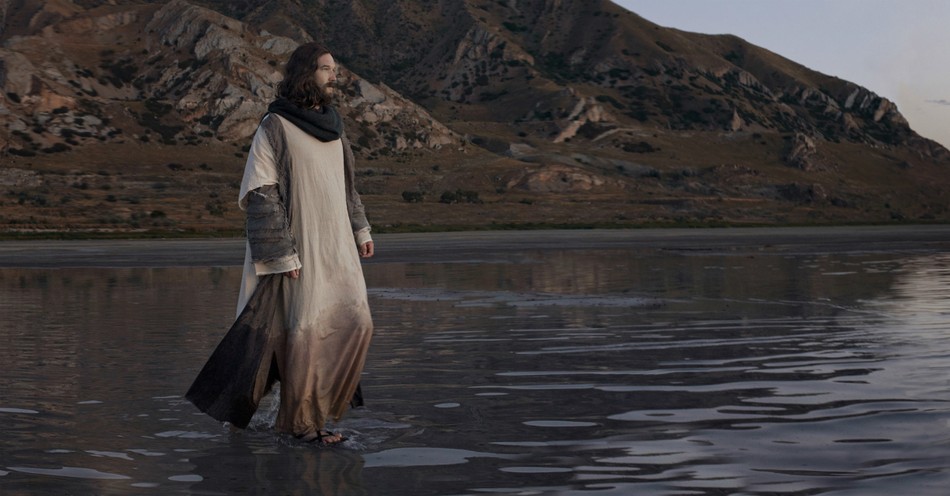
John 1:14 tells us about Jesus’ earthly appearance, “And the Word became flesh, and dwelt among us, and we beheld His glory, glory as of the only begotten from the Father, full of grace and truth.” When Jesus reached thirty years of age, he was baptized by John the Baptist and officially began his earthly ministry, which lasted about three years. He was then crucified, died, and resurrected after three days. Jesus did not go straight to heaven after his resurrection, however, which may cause us to wonder how many days Jesus stayed on earth after his resurrection and before his ascension.
Does the Bible Say How Many Days Jesus Remained on Earth after His Resurrection?
Acts 1:3 states this about Jesus, “After He had suffered, He also presented Himself alive to them by many convincing proofs, appearing to them over a period of forty days and speaking about the kingdom of God.”
But why did He remain for forty days? Why didn’t Jesus ascend to heaven immediately after His resurrection? It’s not an issue of Jesus staying on earth; it’s what He did while he remained. Significance, however, may also be found in the time being forty days. In the Bible, forty days is analogous to a time of temptation and testing, and now Jesus instituted a new age of redemption, reflecting the Old Testament “forty” themes we see below.
Insight into the time Jesus spent on earth after His resurrection may lie in the history of biblical events that spanned forty days and/or years.
- The Great Flood (Genesis 7:4-14; 8:5-7) – God sent the rain from above and from the fountains of the deep for forty days and forty nights. He saved eight people, Noah and his family. When the mountain tops became visible, Noah waited forty days before sending a raven to go “to and fro until the waters were dried up from the earth.”
- Moses, the Exodus, and Mt. Sinai (Exodus 2:11; Acts 7:23; Exodus 16:35; Acts 7:36, 42; 13:18; Exodus 34:28) – Moses was about 40 years-old when he “decided to visit his own people—the Israelites.” Moses led the people of Israel during forty years of wilderness wanderings. During the wilderness time, God directed Moses to the top of Mt. Sinai for forty days and forty nights, where he fasted and received the Ten Commandments.
- 1 Kings 19:1-18 – It took Elijah forty days and forty nights to travel from Beersheba to Mt. Horeb as he escaped what he thought was his demise at the hands of Jezebel, Ahab’s wife.
- Numbers 13:1-25 – The Lord had Moses send twelve spies to scout the land of Canaan. They returned after forty days.
- Matthew 4:1-2; Mark 1:12-13; Luke 4:1-13 – Immediately after John baptized Jesus, the Spirit drove Him into the wilderness for forty days to fast and afterward to endure Satan’s temptations.
Each of the events listed above incorporates testing, trial, and in some cases, a time of fasting.
Hebrews 3:7-19 gives us further insight into Christ’s forty days of fasting and endurance, and how that ties together His “many proofs” (Acts 1:3) during His forty days on earth after resurrection.
It reads:
“Therefore, as the Holy Spirit says,
“Today, if you hear His voice,
do not harden your hearts as in the rebellion,
on the day of testing in the wilderness,
where your fathers put Me to the test
and saw My works for forty years.
Therefore I was provoked with that generation,
and said, ‘They always go astray in their heart;
they have not known My ways.’
As I swore in My wrath,
‘They shall not enter My rest.’”Take care, brothers, lest there be in any of you an evil, unbelieving heart, leading you to fall away from the living God. But exhort one another every day, as long as it is called 'today,' that none of you may be hardened by the deceitfulness of sin. For we have come to share in Christ, if indeed we hold our original confidence firm to the end. As it is said,
‘Today, if you hear His voice,
do not harden your hearts as in the rebellion.’For who were those who heard and yet rebelled? Was it not all those who left Egypt led by Moses? And with whom was He provoked for forty years? Was it not with those who sinned, whose bodies fell in the wilderness? And to whom did He swear that they would not enter His rest, but to those who were disobedient? So we see that they were unable to enter because of unbelief.”
Paul’s magnificent defense of the faith in 1 Corinthians 15:12-58 tells us the supreme importance of Christ’s resurrection—He lives. And because He lives, we who believe in Him live. Jesus took those forty days to show His disciples the miracle of His resurrection. His miraculous works while He walked the earth before and after His crucifixion and death confirmed the truth He taught and confirmed—Who He is—the One who came from God (John 3:2).
We learn more when we see what Scripture says He did during those forty days.
What Did Jesus Do During the Days After His Resurrection?
Jesus’ forty-day interval on earth after resurrection was a bridge between the Old Covenant and the New Covenant. It was the end of His earthly reign and the beginning of His heavenly reign. The Bible tells us that Jesus first spent time with and gave direction to His disciples. “While He was with them, He commanded them not to leave Jerusalem, but to wait for the Father’s promise—the Holy Spirit, Who would give them power, and they would be witnesses “in Jerusalem, in all Judea and Samaria, and to the ends of the earth” (Acts 1:4-9).
We will see more about Jesus’ interactions in the section below, and in them, we see that His most impactful proof was that He is alive. Those forty days may be called a period of proving for Jesus and testing for the Jews. Many people beheld Him in the flesh. Would they believe or not?
In the interaction between Jesus and the two disciples on the road to Emmaus (Mark 16:12-13; Luke 24:13-32), Jesus affirmed the truth of God’s Word in the prophecies that foretold His coming as the Messiah. Luke 24:27 says, “And beginning with Moses and all the Prophets, He interpreted to them in all the Scriptures the things concerning Himself.” Moses spent forty days on Mt. Sinai to receive the law before leading the nation of Israel. Jesus used His forty days to teach His disciples how to interpret the Old Testament Christologically—with Christ (Jesus Himself) at the center.
Jesus, knowing He would soon ascend to heaven to be at the right hand of the Father, took precious time with His disciples to reiterate the themes and truths He had taught during His earthly ministry. In this, He strengthened and encouraged them.
Jesus' forty days on earth after resurrection encourage the church. We are joyful that He is alive, and we are witnesses for Him through the Bible’s words about His life, death, resurrection, and return.
After His forty days, Jesus ascended to heaven near Bethany from the Mount of Olives.
Who Witnessed Jesus Alive After the Resurrection?
A chronological list of those to whom Jesus appeared includes:
- Mary Magdalene at the tomb in the garden (John 20:14-15; Mark 16:9).
- The other women who had come with Jesus from Galilee, including Mary Magdalene, Mary the mother of James, Joanna, and Salome (Matthew 28:9-10; Mark 16:1-8; Luke 24:1-12; John 20:1-10).
- Just as He appeared to Mary Magdalene individually, Jesus appeared to Peter, alone (1 Corinthians 15:5; Luke 24:34).
- Jesus walked along the road to Emmaus with two disciples who discussed all the life-changing events that happened in Jerusalem (Mark 16:12-13; Luke 24:13-32).
- As the disciples kept themselves secure in an upper room, Jesus suddenly emerged and stood among them, but Thomas wasn’t among them at that time (John 20:19-24).
- Again, Jesus stood among the disciples when Thomas was with them (John 20:26-29). He erased Thomkas’ doubts when He had him touch his body where the nails were.
- When Peter and the disciples went fishing in Galilee, at the Sea of Tiberias, Jesus was on the shore and revealed Himself to Peter, John, Thomas, James, Nathanael, and two others as they were on the boat (John 21:1-14).
- The disciples met with Jesus on a mount in Galilee and received the Great Commission (Matt. 28:16-20).
- Jesus revealed Himself to more than five hundred brothers at one time, probably in Galilee (1 Corinthians 15:6).
- James the apostle was another one to whom Jesus appeared personally (1 Corinthians 15:7).
- To all the apostles assembled together (1 Cor. 15:7).
- Jesus gathered all the apostles at Mount Olivet at His ascension (Luke 24:50-51; Acts 1:9-10).
- To Stephen, when he was being stoned to death (Acts 7:56).
- To Paul, who met the Lord Jesus on the road to Damascus (1 Cor. 15:8; Acts 9:3-5; 22:6-10).
It’s good to read the whole passage Paul wrote about Jesus’ appearance to some others and himself, “…He appeared to Cephas, then to the twelve. Then He appeared to more than five hundred brothers at one time, most of whom are still alive, though some have fallen asleep. Then He appeared to James, then to all the apostles. Last of all, as to one untimely born, He appeared also to me” (1 Corinthians 15:5b-8).
A humble Paul refers to himself as one “untimely born” only in the sense that he was not with the other apostles when they walked with Jesus before His crucifixion and death. He adds, “For I am the least of the apostles, unworthy to be called an apostle, because I persecuted the church of God” (1 Corinthians 15:9). Yet his apostleship is not refuted.
What Jesus’ Post-Resurrection Presence Means For Us
Throughout the Gospel of John, we read why we can believe in Jesus and trust that he is the promised Messiah. John 9:13-41 relates the occasion where Jesus healed a man born blind. The Jewish religious leaders questioned the man and put him out of the synagogue when he refused to follow their belief that Jesus was not from God. And we read, “Jesus heard that they had put him out, and after finding him, He said, 'Do you believe in the Son of Man?' He answered and said, 'Who is He, Lord, that I may believe in Him?' Jesus said to him, 'You have both seen Him, and He is the one who is talking with you.' And he said, 'Lord, I believe.' And he worshiped Him” (John 9:35-38).
John’s purpose for writing his gospel is stated in John 20:29-31, “Jesus said to him, 'Because you have seen Me, have you believed? Blessed are those who did not see, and yet believed.' Therefore, many other signs Jesus also did in the presence of the disciples, which are not written in this book; but these have been written so that you may believe that Jesus is the Christ, the Son of God; and that believing you may have life in His name.”
Belief in Jesus—Who He is, what He’s done, doing, and will do—is the key to Jesus’ post-resurrection presence. The entire Bible is entirely about Jesus. Remember, since we are His church, He is still here with us (Matthew 28:20).
Photo credit: ©GettyImages/Kristi Linton

This article is part of our catalog of resources about Jesus Christ and His life, teachings, and salvation of mankind! Discover more of our most popular articles about the central figure of Christianity:
When was Jesus Born? Biblical & Historical Facts
What Language Did Jesus Speak?
Why Is Christ Referred to as Jesus of Nazareth?
How Old Was Jesus When He Died?
What Did Jesus Look Like?
What was the Transfiguration of Jesus?
Jesus Walks on Water - Meaning & Significance
Why Is it Important That Jesus Was Jewish?