
Key Points
- Scams often work by creating urgency, fear, curiosity, or greed so people react before they have time to think.
- Modern scams are increasingly sophisticated, using impersonation, official-looking messages, and AI-generated audio or video.
- Biblical wisdom teaches us to slow down, test what we hear, and give thought to our steps before responding.
- Not every provocation deserves a response; sometimes silence, verification, and self-control are the wisest choices.
- Helping vulnerable loved ones recognize scams is a practical way to love others and protect them from shame and isolation.
Scams have a familiar pattern. They mimic something real — a bank, a government agency, a delivery service, even someone we know — and then attach an urgent message that demands our attention.
Your account has been compromised. Your payment didn't go through. Your package is waiting. Someone needs your help.
The message may create fear. It may promise a benefit. It may stir curiosity or greed. But the goal is almost always the same: get us to react before we have time to think.
Fraud is deception intended to trick someone for personal or financial gain — identity theft, financial fraud, healthcare fraud, and more. In a very real sense, it is taking something from another person by manipulating what they believe.
And the scale of it is staggering. Americans reported $15.9 billion in fraud losses in 2025, and the FBI logged $893 million in losses tied specifically to AI-generated scams — a 1,210 percent surge in a single year. Three seconds of recorded audio is now enough to convincingly clone a person's voice, which is exactly how "family member in distress" phone scams have exploded: a grandchild's panicked voice on the line, asking for bail money or a wire transfer, that isn't actually a grandchild at all. An FBI Cyber Division official told the Wall Street Journal that AI-generated fraud "can look very official and very legitimate to even the most trained individuals." This isn't a matter of being gullible. It's a matter of facing deception built by people with real skill and real tools.
Why Are AI Scams Becoming Harder to Spot?
Scams have grown far more sophisticated than the crude come-ons of a decade ago. They arrive by phone, by text, by email — sometimes with logos and language that look remarkably like the real thing. They impersonate businesses, government agencies, financial institutions, and service providers. They are built to sound convincing, and above all, urgent.
Sometimes they work.
Not long ago, I encountered an online scam convincing enough that I called my bank about it — and stayed on the phone with the caller while I drove to the bank to "verify" what I'd been told. The people on the other end had the process down to a science. By the time it was over, my computer had been compromised, and I paid several hundred dollars to have it professionally cleaned up.
I know better. And I still found myself caught inside a carefully built deception.
That experience left me with a question that reaches well beyond cybersecurity: how do we recognize what's real when someone is deliberately trying to keep us from thinking clearly? Scripture, it turns out, has quite a lot to say about that.
Why Do Scam Texts Pressure Us to React Quickly?
Scams depend on speed. The message manufactures a problem and then hands us an immediate solution. The text warns that our account will be closed unless we click now. The caller insists something is wrong and that we fix it this minute.
Fear creates urgency. Urgency short-circuits reflection. That's why one of the simplest defenses against a scam is also one of the hardest to practice in the moment: don't respond right away.
Hang up. Don't click. Don't reply — not even to argue, joke, or tell the sender off. It feels harmless to fire back a sarcastic reply or to let a curious child chatter at a scammer on the phone, as when my son once handed his phone to his three-year-old mid-call. It's tempting to see that as simply turning the tables. But cybersecurity researchers warn that any response — even "STOP," even a joke — confirms to a scammer that a real, attentive person is on the other end of that number. That confirmation has value. It can move a number onto a list sold to other fraud operations, inviting more attempts rather than fewer. The engagement we intend as harmless entertainment can make us a more attractive target, not a safer one.
Silence, oddly enough, protects us better than a clever comeback does.
What Should Christians Do Before Clicking or Replying?
Instead of reacting, we can create space to verify. Does this message actually make sense? Is this really how this bank or agency would contact me? Can I call the number printed on the back of my card instead of the one in the text? Can I go straight to the organization's website instead of clicking the link I was sent?
That space — between the message and the response — is exactly what a scammer is trying to eliminate. They want our emotions to make the decision. Wisdom asks us to think before we act.
How Does Biblical Wisdom Help Us Discern Deception?
Proverbs 14:15 puts it plainly: "The simple believe anything, but the prudent give thought to their steps."
That verse feels remarkably suited to life on a smartphone. The prudent person doesn't believe everything that lands in a text, an email, or a social media post — not because every sender is assumed dishonest, but because not everything deserves our immediate trust.
There's a real difference between cynicism and discernment. Cynicism says, trust no one. Discernment says, test what you hear, consider your steps, and don't hand over your judgment just because someone sounds convincing. The digital world is crowded with things competing for our attention — some selling, some frightening, some baiting our curiosity or our anger. Scam texts simply make that strategy unusually obvious. Where the message says act now, wisdom says slow down.
Why Doesn’t Every Scam Text Deserve a Response?
It's easy to understand why messing with a scammer feels satisfying — the absurdity of the message, the chance to get the last word against someone trying to deceive us. But perhaps the more useful question for a Christian isn't "Can I outwit this person?" but "Is this response actually forming wisdom in me?"
Our digital habits shape us, even in small moments. Every impulsive reply is practice at being impulsive. Every pause to consider, verify, and choose our response deliberately is practice in self-control. That doesn't make every joking reply to a scammer a moral failure — but it's worth noticing what the habit is training in us. Proverbs tells us to guard our hearts because what happens within us eventually shapes how we live. In a digital world, guarding the heart increasingly means guarding our attention and our reflexes — refusing to let fear, greed, curiosity, or anger make the decision for us.
How Can Scam Awareness Become Love for Others?
This isn't only about personal self-protection. Not everyone has the same experience with technology or the same instinct for spotting a sophisticated scam. Older adults, teenagers, people under financial stress, and people who are isolated or lonely are often the most vulnerable to this kind of manipulation — and scammers know it.
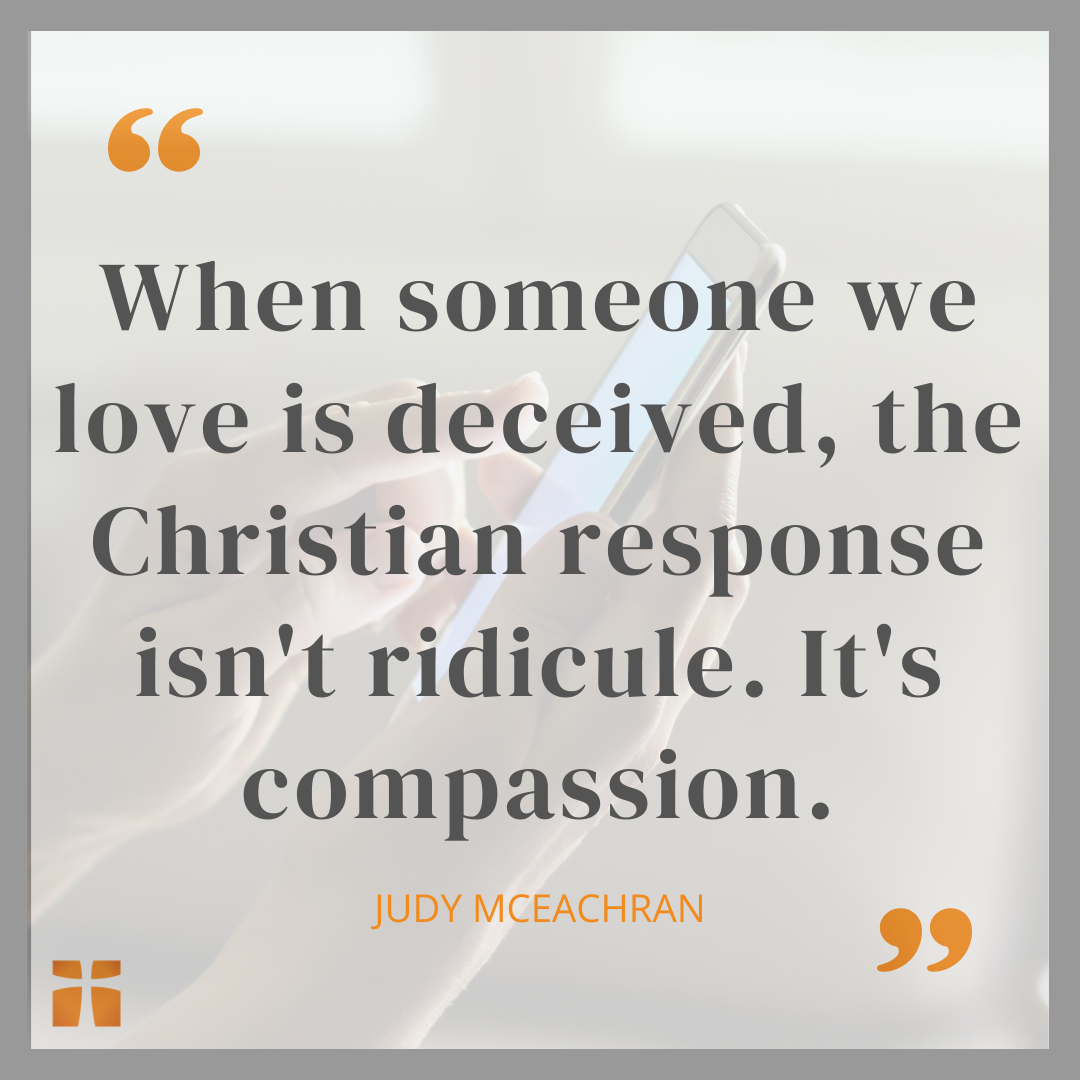
When someone we love is deceived, the Christian response isn't ridicule. It's compassion. A person who has fallen for a scam doesn't need to hear, "How could you possibly believe that?" They need someone willing to sit beside them, help them understand what happened, and make it safe to recognize the warning signs next time — without shame.
One simple, concrete step is worth passing along to the people we love most: agree ahead of time on a spoken "safe word" known only within the family, so a frantic call claiming to be a grandchild or a spouse can be quickly verified. It's a small practice — but it turns love of neighbor into something a family can actually put into action together, before a crisis ever arrives.
That's where cybersecurity awareness becomes something more than self-defense. It becomes an expression of love for one's neighbor. We can help our parents recognize a suspicious message before they act on it. We can talk with our children about how online manipulation works. We can make it safe for a friend to say, "I think I've been tricked," instead of hiding it out of embarrassment. Deception thrives on isolation and shame; wisdom thrives on people who slow down, ask questions, and watch out for one another together.
How Can We Practice Wisdom One Message at a Time?
The next suspicious text may look perfectly ordinary. It may even look convincing. It may claim something is wrong, offer something we want, or simply tempt us to click out of curiosity.
We don't have to react. We can pause, verify, and seek wise counsel before responding — or decide not to respond at all.
In a world increasingly engineered to provoke quick reactions, that pause is itself an act of wisdom.
The prudent give thought to their steps. Sometimes wisdom looks like knowing exactly what to do. And sometimes it looks like knowing when not to do anything yet.
Frequently Asked Questions about Scam Texts, Wisdom, and Digital Deception
- Why do scam texts create urgency?
Scam texts create urgency because fear, curiosity, or greed can push people to react before they have time to think, verify, or ask for wise counsel. - What does Proverbs 14:15 teach about scam texts?
Proverbs 14:15 teaches that wisdom does not believe every message immediately, but gives thought to each step before acting. - Should Christians respond to scam texts?
In most cases, no. A wise response is to avoid clicking, replying, or calling the number in the message and instead verify through a trusted source. - How can scam awareness become love for others?
Scam awareness becomes love for others when we help vulnerable family members, friends, teenagers, and older adults recognize deception without ridicule or shame. - What is one practical way families can prepare for AI voice scams?
Families can agree on a private safe word or phrase so a frightening call claiming to be a loved one can be verified before anyone sends money or shares information.
For Further Reading
- What Does the Bible Say about Wisdom?
- What Is Biblical Discernment and Why Is It Important?
- What Does “Guard Your Heart” Mean in the Bible?
- How to Guard Your Mind in the Digital Age
- What Does the Bible Say about Self-Control?
Photo Credit: ©GettyImages/Yuliya Taba