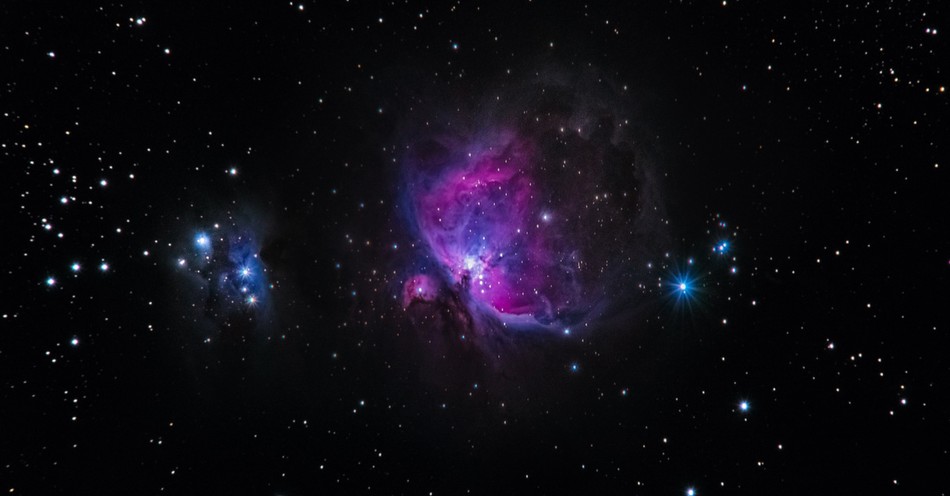
In just seven nights of observation, the Vera C. Rubin Observatory in Chile uncovered something extraordinary. Astronomers identified asteroid 2025 MN45, nearly half a mile wide—larger than most skyscrapers—and spinning faster than any asteroid of its size ever recorded. Every 113 seconds, this massive object completes a full rotation, hurtling through space at a speed that should cause it to tear itself apart. And yet, it doesn’t.
Most asteroids are fragile “rubble piles,” loose collections of rock and debris held together by gravity alone. At such extreme rotational speeds, gravity would fail. The asteroid should disintegrate. The fact that it doesn’t tell scientists something remarkable: 2025 MN45 must be solid rock—precisely composed, internally coherent, and strong enough to withstand forces far beyond what chance assemblies allow. This discovery is not an anomaly. It is a revelation.
And it is only the beginning. During this early survey alone, astronomers identified nearly 1,900 previously unseen asteroids. When the Rubin Observatory begins full operations, it will generate 20 terabytes of data every night, vastly expanding humanity’s view of the cosmos and unveiling complexity we have never observed before. Each new discovery presses an ancient question into modern consciousness: How did all this come to be?
When Knowledge Increases, Wonder Should Too
The universe is vast beyond human comprehension. And paradoxically, the more we learn about it, the more astonishing it becomes. Scientific advancement does not diminish mystery; it intensifies it. What we are witnessing is not chaos turning into order. It is an order revealing itself more clearly.
Science excels in describing how things work. But it cannot answer why anything exists at all. Why should it matter to obey laws? Why should those laws be mathematically elegant? Why should human minds be capable of understanding them? The telescope may point outward toward a spinning asteroid—but the meaning of what it reveals points us backward to a declaration made long before humanity had lenses, equations, or observatories.

“In the Beginning, God…”
Long before humanity could measure rotational speeds or calculate gravitational thresholds, Scripture opened with a statement as audacious as it is definitive: “In the beginning, God created the heavens and the earth” (Genesis 1:1). This is not merely the Bible’s opening sentence. It is its foundation.
Before time existed, before matter formed, before the first asteroid began its relentless spin—God spoke, and creation obeyed. The same power that sustains asteroid 2025 MN45 at impossible speed is the power that brought the cosmos into existence in the first place.
Three thousand years ago, David stood beneath a night sky unpolluted by artificial light. He had no telescope, no instruments to measure what he saw, but he understood its meaning: “The heavens declare the glory of God; the skies proclaim the work of his hands, Day after day they pour forth speech; night after night they reveal knowledge” (Psalm 19:1,2).
What David perceived by starlight, modern science now confirms with precision. The heavens are still declaring. Every astronomical discovery is another verse in creation’s endless hymn of praise.
The Scale of the Designer
Astronomers estimate that the Milky Way alone contains over 100 billion stars—one galaxy among millions more. Some estimates place the number of stars in the observable universe at one septillion (1,000,000,000,000,000,000,000,000)—one followed by twenty-four zeros. That boggles my brain!
Isaiah anticipated this cosmic scale when he asked: “Lift up your eyes and look to the heavens: Who created all these? He who brings out the starry host one by one and calls forth each of them by name” (Isaiah 40:26).
Genesis 1 tells us God created the stars on the fourth day. Scripture insists He knows them all by name. This is not poetic exaggeration—it is a declaration of divine intelligence beyond human scale.
The universe stretches an estimated 93 billion light-years across, yet God is neither overwhelmed nor distant. The same God who names the stars also numbers the hairs on your head (Matthew 10:30).
I’m convinced. Creation does not whisper. It shouts.
Creation Is Not Silent—It Preaches
The Bible consistently presents creation as a witness. Paul makes this explicit: “Since the creation of the world God’s invisible qualities—his eternal power and divine nature—have been clearly seen, being understood from what has been made” (Romans 1:20).
Creation does not merely exist. It reveals. This revelation is not vague spirituality or generic theism. Scripture identifies the Agent of creation clearly: “For in him all things were created: things in heaven and on earth, visible and invisible…all things have been created through him and for him” (Colossians 1:16).
Jesus Christ was not absent at creation. He is its source, sustainer, and purpose as John’s gospel reveals: “In the beginning was the Word (Jesus), and the Word was with God, and the Word was God…through Him all things were made” (John 1:1,3).
From molecular bonds to spinning asteroids, from gravitational constants to galactic structure, creation proclaims intentional design. Random chance does not produce this level of coherence. nor does it sustain it for countless years.
Precision Sustained, Not Accidental
Consider our own sun. Every second, it converts over four billion kilograms of matter into energy, releasing power equivalent to billions of nuclear explosions, yet it does so with perfect stability.
Earth receives exactly what it needs: not so much that life is incinerated, not so little that it freezes. In just ninety minutes, enough sunlight reaches our planet to meet humanity’s global energy needs for an entire year.
Accidents do not generate this kind of precision. Random processes do not maintain this balance for eons. What we observe is engineered stability on a cosmic scale—the sustaining work of a Creator who not only brings worlds into being, but “in him all things hold together” (Colossians 1:17).
Not “God of the Gaps”—God of the Whole
Some dismiss arguments like these as “God of the gaps”—an appeal to God wherever science has not yet provided an explanation. But this misunderstands the claim entirely.
This is not a retreat into mystery where knowledge fails. It is the recognition that science itself rests on foundations it cannot explain—rational laws, mathematical order, and intelligible structure.
As scientific understanding increases, the case for design strengthens rather than weakens. The more finely tuned the universe appears, the more improbable unguided chance becomes.
Even if natural processes describe how complexity develops, they cannot explain why the system exists at all or why laws exist in the first place.
Genesis 1:1 establishes God not as a competing explanation within nature, but as the ultimate Cause—the source from which all processes, laws, and mechanisms flow.
Humility Beneath the Heavens
Astronomy has a way of humbling us. We can discover asteroids—but we cannot create them. We can observe the laws of physics, but we cannot alter them. We can study time, but we cannot add a single day to our lives.
Despite our technological prowess, we are not cosmic accidents, nor are we the architects of reality. We are creatures—finite, dependent, and profoundly loved—invited to know our Creator through what He has made.
David captured this humility perfectly: “When I consider your heavens…what is mankind that you are mindful of them?” (Psalm 8:3–4).
From the Heavens to Bethlehem
Creation’s most profound declaration was not merely cosmic—it was personal.
Remember the Star of Bethlehem. Long before astronomers tracked asteroid rotations, God used a star to guide Magi to the young Messiah. The same Creator who set galaxies in motion orchestrated a single celestial event to announce the arrival of the Savior.
The Incarnation—God taking on flesh—was not a departure from creation’s story, but its fulfillment. The God for whom “a thousand years are like a day” (2 Peter 3:8) entered human history at a precise moment, in a specific place, under a guiding star He Himself had created.
The power that holds the asteroid 2025 MN45 together at an impossible speed held the universe together while it took its first breath in Bethlehem.
Creation Points Us to Christ
From a spinning asteroid to a guiding star over a manger, creation has always done what it was designed to do: point people to God.
When God scattered septillion stars across the heavens, He already knew one would herald the birth of the Savior. The Creator became human—without surrendering His sovereignty—to redeem His creation.
The heavens declared God’s glory at creation. They declared His love at the Incarnation.
The God who measured the cosmos measured out our redemption. The God who named the stars took a human name and became like us so we could become like Him and share eternity.
Look Up and See
As Lee Strobel observes, “If God so precisely and carefully and lovingly and amazingly constructed a mind-boggling habitat for His creatures, then it would be natural for Him to want them to explore it, to measure it, to investigate it, to appreciate it, to be inspired by it, and ultimately, and most importantly, to find Him through it” (The Case for a Creator).
The skies are still declaring that this universe is not an accident. Its order is not random. Its Creator is powerful, intentional, and near: “For since the creation of the world God’s invisible qualities—his eternal power and divine nature—have been clearly seen…” (Romans 1:20).
Most of all, they declare this: the Creator of an unending universe clothed Himself in humanity to redeem His creation.
Look up and see. The heavens are still pointing us to Jesus.
Prayer of Thanks to God for the Vastness of His Creation
Almighty God,
As I look up and see the infinite tapestry of Your heavens and the unfolding splendor of Your creation, I bow in awe, praise, and wonder. Humbled by Your love that knows no horizon, I am sheltered by the thundering of Your glory. When I am afraid, my heart will be held safe in Your hands—the hands that fashioned the world and now hold me.
In the name of Jesus,
Amen.
Photo Credit: ©Alexander Andrews/Unsplash