
Key Points
- Postpartum blues, postpartum depression, and postpartum psychosis are different conditions that require different levels of attention and care.
- Postpartum psychosis is rare but serious and requires immediate professional medical attention.
- Christians can carry the burdens of new mothers through prayer, practical help, consistent presence, and encouragement to seek appropriate care.
- Mental illness is not evidence of spiritual failure, and seeking professional treatment does not contradict trusting God.
- Churches can become safer places for struggling mothers when they notice needs early and respond with compassion rather than shame or clichés.
The Lindsay Clancy case has brought renewed national attention to postpartum psychosis, a rare but serious health condition that can drastically distort a new mother’s thinking and perception of reality after giving birth to their child. Though extremely rare, postpartum psychosis is a serious psychiatric emergency that should be dealt with with love, compassion, and concern. It’s not just “mommy blues,” “baby blues,” or even postpartum depression, but a profound break or detachment from reality. Though the discovery of this mental illness can be scary, confusing, and difficult for families to recognize, how can we as the church better recognize, support, and care for those experiencing its whiplash of symptoms? What would it look like if we became better at noticing those in need before they reached a crisis?
Christians should take postpartum mental health seriously because caring for struggling mothers means more than offering encouragement or telling them to pray harder. Biblical compassion calls us to notice suffering, provide practical support, encourage appropriate professional care, and help carry burdens before a family reaches a crisis.
What Is the Difference Between Postpartum Blues, Depression, and Psychosis?
Contrary to the stigma or popular belief that maternal suffering is normal or “just being tired,” postpartum mental health is so much more. Many new mothers are often told, “You’re just exhausted.” “Everyone feels overwhelmed.” “That’s just being a mom.” “You’ll get used to it.” “Get more sleep and exercise.” While some of those statements can be partially true, they’re also insufficient for those suffering. There is a significant difference between typical exhaustion and symptoms of a disorder that require professional, often immediate, medical attention.
Though not every case of postpartum is a psychiatric emergency, every struggling mom deserves to be taken seriously, whether it’s their first child or their tenth. And this is why warning signs matter. According to the MGH Center for Women’s Mental Health, here’s a quick overview:
Postpartum Blues — typically common during the first few weeks post-delivery. Not usually a psychiatric illness, but normal feelings after being pregnant and then not being pregnant. Unlike the name, the most common symptoms of these blues are mood lability, tearfulness, anxiety, or irritability. These symptoms typically don’t interfere with a woman’s ability to function, but if they continue, they can be related to more significant mood disorders like depression.
Postpartum Depression — one of the most common symptoms after giving birth, PPD arrives within two to three months after the baby is born, but can happen any time after delivery. Symptoms include depression, tearfulness, loss of interest in activities, feelings of guilt, shame, or worthlessness, fatigue, sleep disturbances, inability to concentrate, suicidal thoughts, or changes in appetite. Anxiety can also occur and be evaluated using the GAD-7 test.
Postpartum Psychosis — known as the most severe form of postpartum illness happens to 1-2 per 1000 women giving birth and is present as early as 48-72 hours after labor. In most cases, the symptoms are representative of an episode of bipolar disorder, including manic or mixed lows and highs. Besides depressed or elated moods, women with this disorder may also experience delusional beliefs, confusion, erratic behavior, or auditory hallucinations.
How Can Christians Carry the Burdens of New Mothers?
Despite the type of mental struggle women may experience after giving birth, Scripture is clear that we as Christians are to help carry one another’s burdens. When we do this, we fulfill the Law of Christ (Galatians 6:2).
Paul’s words here aren’t encouragement to pray for others from a distance, but to carry their burdens—physically, mentally, emotionally, socially, and spiritually. Practically, and for a new mom, this could mean bringing dinner, offering to cook a meal, holding the baby while she showers, doing laundry, watching the siblings, driving her to appointments, sitting with her while she cries, helping her process, checking in weekly, or helping her find professional support if she needs it. Instead of over-spiritualizing simple needs, sometimes the best thing we can do is serve others with practical means.
Pay attention to what a new mother might need. If you are a mother, remember what you yourself needed. Then, fill that need in your church and beyond. Not because you have to, but because you want to carry one another’s burdens as the Lord would require. And when you do, remember 2 Corinthians 2:3-5: “Praise be to the God and Father of our Lord Jesus Christ, the Father of compassion and the God of all comfort, who comforts us in all our troubles, so that we can comfort those in any trouble with the comfort we ourselves receive from God. For just as we share abundantly in the sufferings of Christ, so also our comfort abounds through Christ.” (NIV).
Why Should Churches Stop Romanticizing Maternal Suffering?
Even in the best churches, there is often an unprecedented amount of pressure on moms to appear grateful, joyful, and capable. Christian culture emphasizes motherhood as a “blessing” without acknowledging the difficulties. It mentions self-sacrifice without boundaries and “trusting God” without practical support or professional care. But trusting God and seeking professional help aren’t opposites.
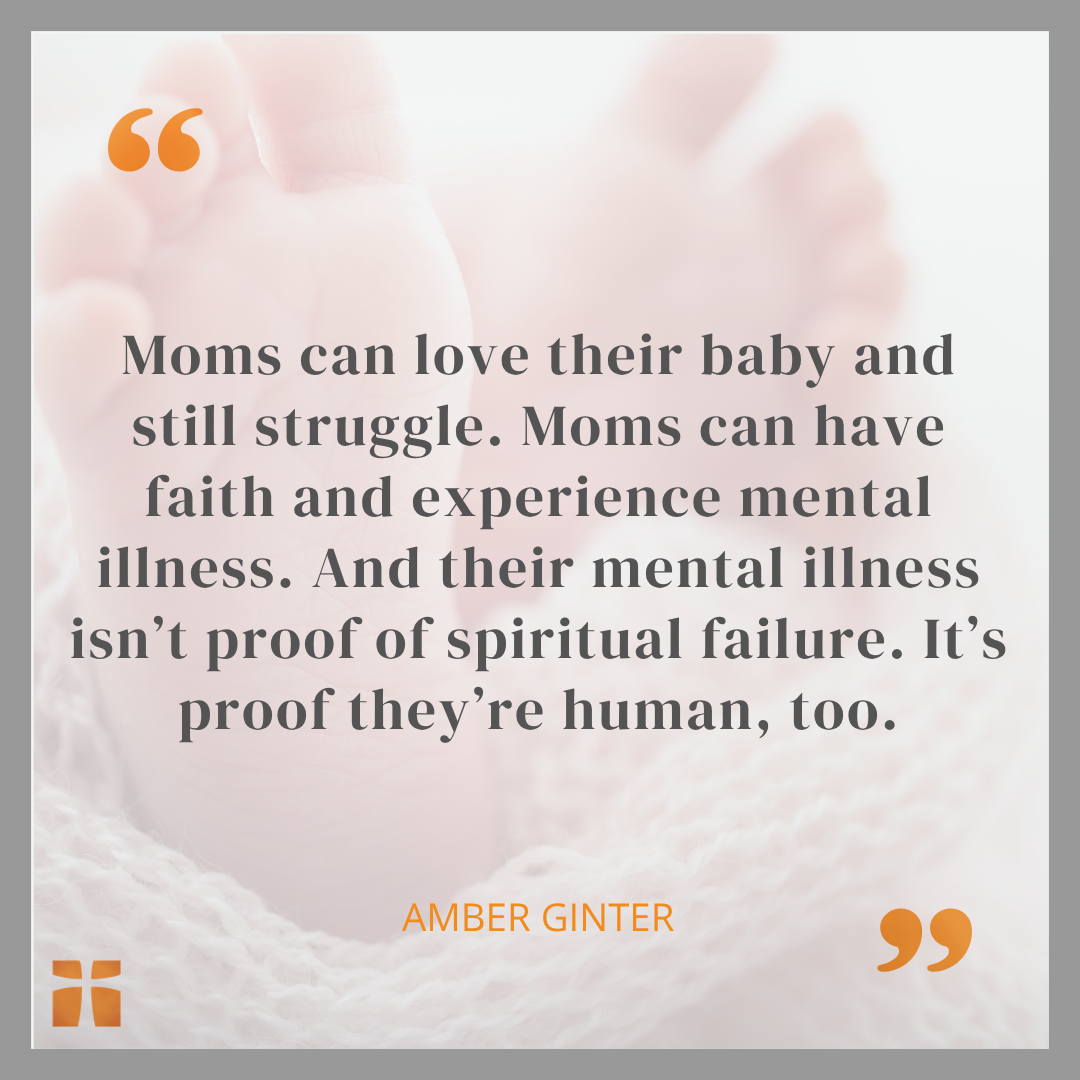
Moms can pray and seek therapy. Moms can trust God and get on medication for their mental health. Moms can love their baby and still struggle. Moms can have faith and experience mental illness. And their mental illness isn’t proof of spiritual failure. It’s proof they’re human, too.
Instead of romanticizing their suffering or simply “checking in” once when you remember, loving those in need means moving beyond encouragement and helping them to access appropriate care. As mentioned above, there are many distinctions between postpartum blues, depression, and psychosis, but all deserve genuine love, attention, and care. If you notice something, don’t stay quiet. Postpartum psychosis, for example, is a condition that requires immediate professional intervention, no questions asked. It’s always better to be safe than sorry. And if someone does appear to be at immediate risk of harming herself, her kids, or someone else, contact emergency services or an appropriate crisis resource rather than trying to manage the situation alone.
How Can We Help Moms Before They Have to Ask?
Just like other human beings, moms are human too (even if you believe yours is a superwoman). One unique challenge that postpartum mental health brings up is that the person who may need care may be embarrassed, anxious, ashamed, exhausted, overwhelmed, and afraid of being judged. It isn’t our job to fix their emotions, but to make sure they feel welcome with us, inside and outside the church. Remind her she isn’t a bad mother and reach out to her before she even dares to say, “I need help.” Because sometimes love notices first.
In many hospitality settings, there’s a common saying we all use: “Let me know if you need anything.” Over the years, I’ve realized the error of this statement: Those who try to act strong will never reach out. They don’t want to be known for needing anything. Instead, try asking specific questions like:
Can I bring dinner on Tuesday?
How about I come over and hold the baby while you take a nap?
Could I sit with you while you make your appointments?
I’m going to call you tomorrow.
I’m getting coffee and wanted to drop something off to you; what would you like?
Instead of allowing the church to become a place where moms have to have it all together, why don’t we make it a place where they can just be human? Where they can learn to say “I’m not okay. I’m struggling. I don’t enjoy this. I’m scared. I need help” without receiving clichés, shame, judgment, or unsolicited advice from a “Karen.”
Why don’t we make it a safe space where prayer, presence, and practical help are offered more than platitudes, guilt-laden statements, or expressions of remorse? What would change in our churches if mothers knew they could come as they were and didn’t have to perform to belong?
How Can the Church Support Moms Facing Postpartum Mental Health Struggles?
In Matthew 11:28, we read that Jesus calls those who are weak and weary to come to Him. This includes new moms, but it also includes all of us who are tired and worn out on life. But Jesus doesn’t shame the weary, and neither should we. Jesus invites them closer, and so should we. Not because the Church is a replacement for medical treatment (it isn’t), but because the Church should be part of a woman’s support system that helps her receive the care she needs when she needs it!
If you’re able, here are a few steps for checking on new moms or women with children who might need a little extra TLC:
Check In Often — Beyond the first few weeks, text or call. Check in. Remember the practice of mentorship and work towards an ongoing relationship.
Ask—it sounds simple, but ask direct and compassionate questions. Don’t be afraid to ask how they’re really doing, if they’re eating and sleeping, and how you could best support them through this journey. If they don’t know, offer suggestions that have helped you or someone you know. Encourage professional help when needed without judgment.
Offer — Offer meals, practical advice, and help however you can. Don’t make someone who is already fatigued carry everything on her own.
Learn — Though we can’t know everything, we can be informed. Learn the warning signs of medical conditions like these and keep an eye on those you know and love. If you’re concerned, speak out. Lead with love and take any concerning symptoms seriously. Then, encourage professional care without shame, from a doctor or therapist to a psychiatrist or an emergency professional crisis line.
The Lindsay Clancy case shook our nation, but underneath the claims is an important notion: We can’t know everything about another person’s mind, situation, or circumstances. We should be careful not to draw conclusions from tragedy. But we can learn that everyone needs someone.
Mothers need people who notice. Families need people who show up. Churches need to be places of refuge where those who are suffering can speak without shame. And those experiencing mental illness need compassion and professional intervention.
You and I can’t always prevent every tragedy, but we can become the type of people who notice when someone is hurting and refuse to let them carry their burden alone.
Prayer For Moms
Dear Jesus, thank you for the gift of moms. Thank you for the work they do in raising and caring for our children. Today we ask for compassion for those who are struggling with postpartum blues, depression, or psychosis. We ask that you comfort them and provide what they need, but also that we as a community of believers will be able to help them. Help us become people who don’t shame others for struggling, but notice and ask difficult questions. Be near to those who are feeling overwhelmed and allow us to help them carry their burdens. We love, praise, and thank you, Jesus. Amen.
Agape, Amber
Frequently Asked Questions
What is postpartum psychosis?
Postpartum psychosis is a rare but severe psychiatric condition that can involve confusion, delusions, hallucinations, dramatic mood changes, and a loss of contact with reality after childbirth. It requires immediate professional care.
Is postpartum depression the same as postpartum psychosis?
No. Postpartum depression and postpartum psychosis are different conditions. Postpartum psychosis is much rarer and can involve a significant break from reality that requires urgent medical treatment.
Can Christians seek therapy or medication for postpartum mental health struggles?
Yes. Seeking appropriate medical or mental health treatment does not have to conflict with Christian faith. Prayer, spiritual support, and professional care can work alongside one another.
How can a church support a mother struggling after childbirth?
Church members can check in consistently, provide meals and childcare, listen without judgment, help with everyday responsibilities, and encourage professional help when appropriate.
What should I do if a new mother appears to be in immediate danger?
If someone appears at immediate risk of harming herself or another person, seek emergency professional help rather than attempting to manage the situation alone.
For Further Reading
- A Mother’s Prayer Guide for Mental Health and Faith
- What Parental Burnout Says About the Cost of Carrying Too Much
- What Does the Bible Say about Struggling with Mental Health?
- Should Christians Take Medication for Mental Illness?
- Are We Supposed to Bear Each Other’s Burdens as Galatians 6:2 Says?
Photo Credit: ©Getty Images/Tatyana Tomsickova Photography