It often begins in the most ordinary places. A trip to the grocery store feels a little heavier at checkout. A pair of shoes costs more than expected. A home repair estimate comes in just high enough to make you pause. There's no announcement, no headline in the moment — just a quiet realization:
Something has changed.
For many Americans, part of that change is tied to tariffs — policies that rarely enter daily conversation yet quietly shape daily life. The news covers the tension. The discomfort. The uncertainty. But rarely does it tell the fuller story. Because behind the headlines, something significant is happening. Something that many Americans — overwhelmed by rising costs in recent years — may have missed entirely. Tariffs, used wisely, are not simply a burden. They may be part of the path back.
What Are Tariffs and Why Do They Matter in Everyday Life?
Tariffs are taxes on imported goods and can affect everyday life by influencing prices, production, supply chains, and trade relationships. While most people do not think about tariffs in their daily routines, they can shape what families pay for goods and how businesses respond over time. That is why understanding tariffs matters, especially in seasons when many households already feel stretched.
First, We Have to Understand Where We've Been
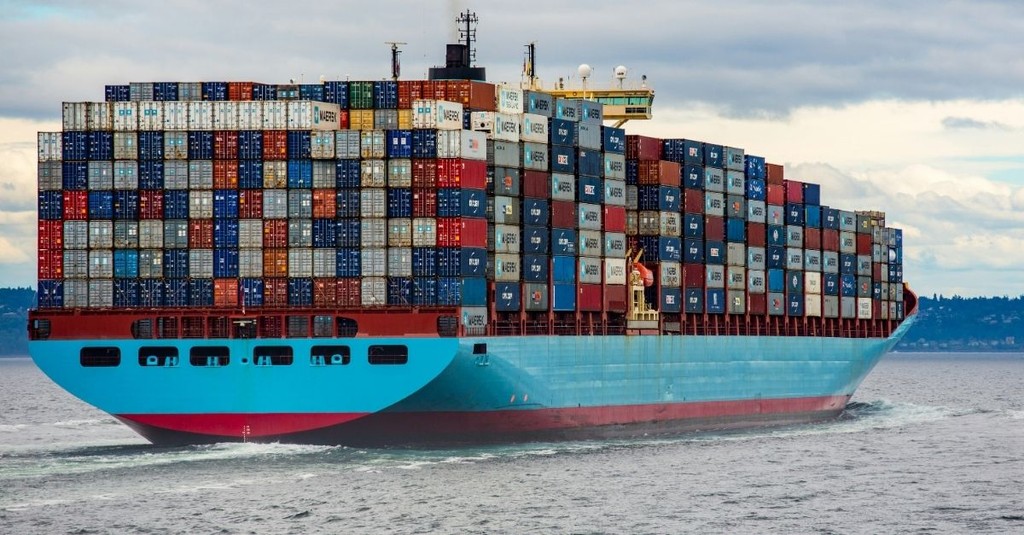
For decades, America exported something it could not afford to lose: its manufacturing base. Trade policies that prioritized cheap imports over domestic production sent factories overseas, hollowed out entire communities, and left American workers competing with countries that had artificially low wages, government subsidies, and almost no labor protections. The result? Millions of good-paying jobs disappeared. Towns built around industries — steel, textiles, electronics — found themselves struggling to survive. And America grew dangerously dependent on foreign nations for goods essential to daily life and national security alike.
Then came the pandemic. When global supply chains collapsed, Americans discovered something jarring: we couldn't produce our own medical equipment. Our own computer chips. Our own basic pharmaceuticals. We had traded resilience for convenience — and the cost was staggering. That vulnerability did not appear overnight. It was the accumulated result of trade policies that did not put American workers first.
Photo Credit: ©Unsplash/Ian Taylor

1. How Tariffs Affect Prices on Everyday Goods
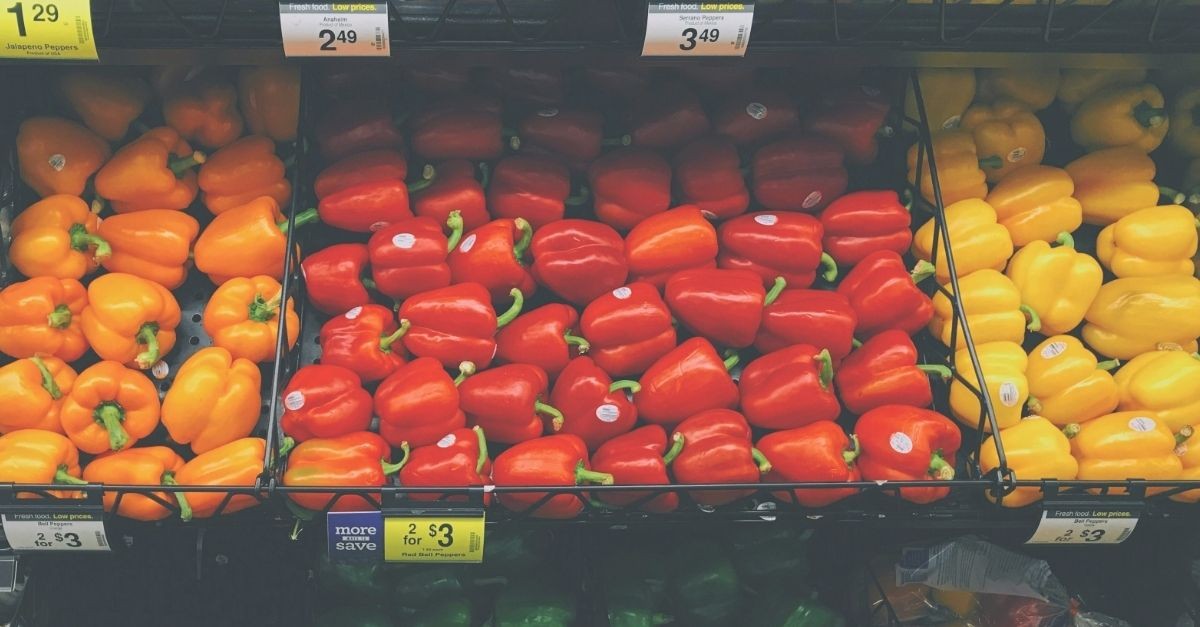
This is the tariff effect most Americans feel first — and most personally. When imported goods incur a tariff, the cost flows through the supply chain and is reflected in the register. Groceries, clothing, vehicles, appliances — in a global economy, nearly everything has an imported component somewhere.
The goal, however, is not permanently higher prices. It is to shift where goods are made — so that over time, American-made products replace foreign imports and dollars stay inside American communities. What feels uncomfortable in the short term is often what produces strength in the long term. A body in physical rehabilitation feels the work. That does not mean the work is wrong.
2. How Tariffs Affect American Jobs and Manufacturing
For the first time in a generation, economic incentives are shifting back toward American production. Companies are investing billions in domestic manufacturing — semiconductors, steel, automobiles, pharmaceuticals — redirecting hundreds of thousands of jobs back into communities that have waited years for a reason to rebuild.
Photo Credit: ©Unsplash/ Rithika Gopal
3. How Tariffs Affect Supply Chains in America
The pandemic exposed a dangerous reality: America could not reliably supply its own healthcare systems, national defense, or everyday families. Current policy is working to repair that vulnerability — so the next crisis does not find us dependent on foreign nations for our most essential goods.
4. How Tariffs Affect Trade Deficits
For years, America imported far more than it exported — a sustained outflow of American wealth that benefited strategic competitors while American workers lost ground. Tariffs are a direct tool for rebalancing that relationship. Rebalancing is not painless. But the status quo was already extracting a cost most Americans were paying without realizing it.
5. How Tariffs Affect America’s Trade Leverage
A nation dependent on others for essential goods negotiates from a position of weakness. Tariffs signal that America is willing to absorb short-term friction in exchange for long-term fairness — creating conditions for trade agreements built on genuine reciprocity rather than one-sided dependence.
Photo Credit: ©Unsplash/Diego Carneiro
How Should Christians Respond to Economic Uncertainty?
Understanding these five realities can bring clarity. But clarity alone does not bring peace. Some may still quietly wonder: "How can I give first to God when I'm uncertain of what's coming? Can I trust Him to take care of my finances?" That question is not new, but deeply human. But it is also one that Scripture has answered — not once, not twice, but across generation after generation of ordinary people facing extraordinary uncertainty. And the answer, every time, is the same. God provides.
Christians do not need to ignore economic realities in order to trust God. We can pay attention, make wise decisions, and still refuse to let fear rule our hearts. Economic pressure can reveal what we depend on most, and that is why seasons of uncertainty often become seasons of spiritual clarity. In moments like these, believers are invited to pray, practice generosity, live with wisdom, and remember that policy may shape circumstances, but only God secures the soul.
The Testimony of History
Consider the Israelites in the wilderness. No grocery stores or McDonald's. No savings accounts. No economic policy to protect them. Nothing but desert, uncertainty, and a God they were still learning to trust. And every morning — without fail — manna appeared on the ground. Enough for the day. Exactly what was needed. Not stockpiled, not hoarded — just given, faithfully, one morning at a time. God was teaching something that tariffs cannot teach, and markets cannot guarantee:
I am your daily provision. Not your economy. Not your policy. Me.
Then there is Elijah — a prophet running for his life, hiding by a brook in the wilderness, with nothing and no one. No human safety net. No backup plan. And God sent ravens. Ravens — unlikely, undomesticated, improbable messengers — carrying bread and meat, morning and evening, until God directed Elijah's next step (1 Kings 17:4-6). The provision was not logical. It was not policy-driven. It was personal. God knew where His servant was. And He sent what was needed through channels no economist could have predicted.
The story doesn't stop there. Elijah was then sent to a widow in Zarephath — herself on the edge of starvation, down to her last handful of flour and a little oil. She was preparing what she believed would be her final meal for herself and her son. But Elijah asked her to give first. And she did. And from that day forward, the jar of flour was not used up, and the jug of oil did not run dry — all through the long days of famine — just as God had promised (1 Kings 17:14-16). She gave from her last. And God made it her lasting. That is the mathematics of the Kingdom. It does not follow the rules of scarcity. It follows the rules of a God who owns everything — and whose supply is never exhausted.
And then David, writing from the long view of a life fully lived, adds his own quiet testimony:
"I was young and now I am old, yet I have never seen the righteous forsaken or their children begging for bread" (Psalm 37:25).
Not a promise extracted from a single moment of faith but the accumulated witness of an entire lifetime. A man who had known poverty and abundance, danger and deliverance, looking back across decades and saying: God did not fail. Not once.
Photo Credit: SWN Design

What We Hold Onto Reveals What We Trust
These are not fables from a distant past. They are patterns — revealed again and again throughout Scripture. God moves when His people trust Him with what they hold in their hands. And yet, even knowing these stories, we still struggle.
There's a familiar image that captures it: a man fully immersed in the waters of baptism — except for one hand, held high above the surface, gripping a wallet stuffed with cash. It's almost humorous… and yet deeply revealing. It is often easier to surrender everything to God — except our finances.
This is precisely where faith becomes most tangible. Because when we give first — even when it feels uncertain — we are not simply releasing money. We are stepping into the same stream the widow stepped into. We are trusting the same God who sent ravens. We are looking for the same manna — daily, faithful, enough. And, we are declaring: "God, You are my source — not what I hold in my hand."
Photo Credit: ©GettyImages/Anna Frank

A Different Kind of Security
Giving has always been more than an act of obedience. It is an act of trust. The principle of the tithe was never merely financial; it was spiritual. As The Living Bible expresses it: "The purpose of tithing is to teach us to always put God first in our lives" (Deuteronomy 14:23).
Jesus raised the standard even higher. "Watch out! Be on your guard against all kinds of greed; life does not consist in an abundance of possessions" (Luke 12:15). And more directly: "No one can serve two masters… You cannot serve both God and money" (Matthew 6:24). These words cut through the noise of economic uncertainty with striking clarity. The real issue is never simply rising prices. It is divided trust.
Economic systems will always fluctuate. Policies will shift. Markets will rise and fall. Tariffs may protect industries — but they cannot promise peace. They may strengthen sectors — but they cannot secure the heart. Only God offers that kind of stability. And He does not ask us to trust Him without promise. "Bring the whole tithe… and see if I will not throw open the floodgates of heaven and pour out so much blessing that there will not be room enough to store it" (Malachi 3:10).
God's nature is to bless abundantly, faithfully, and in ways that far exceed anything an economic recovery can deliver. This does not mean a life free from pressure. But it does mean a life anchored in provision that circumstances cannot limit.
Photo Credit: ©Getty Images/fizkes

Living Faithfully in a Season of Rebuilding
So how do we live when costs rise, and uncertainty lingers? We seek to understand — not just react. We look past the headline to the horizon. We remember the ravens. We remember the widow's oil. We remember the manna — given fresh every morning to people who had no reason to expect it except one: God had promised. We hold our fears loosely and our faith firmly. We give, not because the future feels secure — but because He is secure. And we remember: America has been through seasons of rebuilding before. What looked like hardship in the middle of the story looked very different by the end.
We are not without hope. We are not without resources. And we are not without a God who has been providing for His people since the first morning the manna fell.
Tariffs remind us of both human effort and human limitation. They reflect a genuine attempt to protect, rebuild, and restore what was lost — to reopen the factories, reclaim the industries, and give American workers a fair chance again. That effort is worth understanding. Worth supporting. Worth praying over. And still, while governments work to strengthen economies, God works to strengthen hearts.
David said it from the far end of a long life. The widow said it with an empty jar and a full table. Elijah said it from a brook in the wilderness, watching ravens land. In a world where prices shift and systems strain, one truth remains steady: When we put God first, we are not losing security. We are finding it.
Photo Credit: ©GettyImages/fizkes

Originally published Wednesday, 15 April 2026.

Was this resource helpful? Add Christianity.com as a trusted source for Biblical content.