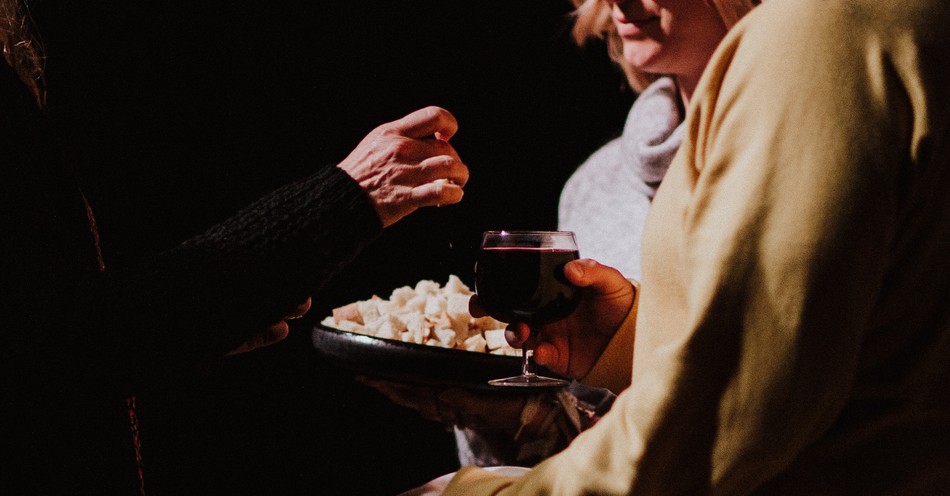
The term “Eucharist” originates from the Greek word eucharistia, meaning “thanksgiving.” The Eucharist is a sacrament of thanksgiving and communion. Eucharist is also known as Holy Communion or the Lord’s Supper. It is the central act of Christian worship, in which bread and wine are consecrated to represent the blood and body of Christ. The Eucharist is central to Christian prayer and spiritual life, as believers consume the bread and wine to remember Jesus' sacrifice on the cross. Holy Communion is our chance to express gratitude for Jesus and his sacrifice on the cross. As we receive the Eucharist, we become more united with the body of Christ, as through the consumption of the consecrated bread, we become the body of Christ. The divine person of Jesus has the power to unify us. We as the church become one body because we are the mystical body of Christ in our world today. Luke 22:19 Jesus instructs,
“And he took bread, gave thanks and broke it, and gave it to them, saying, 'This is my body given for you; do this in remembrance of me.” In the same way, after the supper he took the cup, saying, “This cup is the new covenant in my blood, which is poured out for you.”
The Eucharist is more than a ritual; it is a spiritual encounter with Christ. This practice stands at the center of Christian prayer because it connects believers to Christ’s sacrifice and nourishes our spiritual life.
The Biblical Foundation of the Eucharist
Jesus instituted the Eucharist during the Passover meal that he and his disciples shared before he was betrayed, also known as the Last Supper. Luke 22 describes how Jesus took the bread, gave thanks for it, broke it, and gave it to them. Jesus told them the bread was to remind them of his body being broken for them. They were to take the broken bread and consume it as a way to honor his soon coming sacrifice. Then Jesus took the cup and told his disciples that the wine in it represented his shed blood. His blood was poured out for us, so we might be made clean. We are to drink the wine to remember his blood. The first communion established a new covenant between God and humanity. This tradition of the Eucharist is rooted in the Old Testament passover sacrifice of the lamb. Exodus 12:7 states,
"Moreover, they shall take some of the blood and put it on the two doorposts and on the lintel of the houses in which they eat it."
The blood covered the Jewish families so death would pass them over. Then, as the freed Israelites were released to the wilderness, God provided manna for nourishment. This foreshadowed Christ’s body, which was sacrificed in our place as a provision so that humanity could have access to eternity with Christ. God uses these physical signs to communicate spiritual realities. The early church took Jesus' command seriously and gathered regularly to break bread and observe communion. Acts 2:42 says, “They devoted themselves to the apostles’ teaching and to fellowship, to the breaking of bread and to prayer.” At the start of the church, the Eucharist was closely connected to prayer and worship. Sharing communion in our churches today remains a central way that we connect with other believers and with the Lord.
5 Ways the Eucharist Deepens Faith and Unites Believers
1. The Eucharist as a Prayer of Thanksgiving
Eucharist comes from the Greek word eucharistia, meaning thanksgiving. It is a prayer of thanksgiving offered to God. When we participate in communion, we remember Jesus’ death on the cross and celebrate the gift of salvation. As we take the elements, our gratitude deepens for Christ’s amazing sacrifice on the cross. The physical act of eating the bread and drinking the wine moves believers from routine prayer to a worship-filled offering of prayer and praise to the Lord.
2. The Eucharist as Spiritual Nourishment
Jesus is the bread of life! John 6:35 “Then Jesus declared, “I am the bread of life. Whoever comes to me will never go hungry, and whoever believes in me will never be thirsty.” The Eucharist reminds us that our needs are ultimately met by the Lord. It symbolizes spiritual nourishment from Christ.
Just as physical food sustains the body, spiritual practices such as the Eucharist sustain faith. They remind us that God is faithful and unchanging, especially during hardship and trials. We need these tangible practices to keep us rooted in Christ, as we easily forget what God has done for us. We grow closer to Christ when we are obedient to his call to remember and give thanks for our salvation.
3. The Eucharist Unites the Body of Christ
Communion is often accompanied by a shared meal, shared time in worship, and meditation on the Word of the Lord. It is not just a personal act of worship; it is a communal practice in which believers gather before God as one. 1 Corinthians 10:17 states, “Because there is one loaf, we, who are many, are one body, for we all share the one loaf.” The Eucharist reminds Christians that they belong to a larger community. This shared practice bonds us together as the body of Christ.
When we gather to observe the Eucharist, believers often share prayers for the church, the world, and those in need. We can broaden our personal prayers into intercessory prayers for others, lifting our community's needs together unto the Lord. We can encourage one another in Christ through the Eucharist.
4. The Eucharist as a Reminder of Christ’s Return
When we pause to give thanks, we are reminded of Christ’s sacrifice for us, and we also anticipate the future heavenly banquet. The Lord’s Supper reminds us that God gave his son so that one day all things will be made new! We are promised a future with no more tears and can look forward with expectation to eternity in Heaven. The best is yet to come for those who believe! Participation in the Eucharist reminds us that our faith is a part of God’s greater redemptive story. We can live differently because we have an eternal perspective.
5. The Eucharist Shapes Daily Spiritual Life
1 Corinthians 11:28 encourages, “ Everyone ought to examine themselves before they eat of the bread and drink from the cup.” We are invited to examine our hearts before participating in the Eucharist, as it is a holy act. This holy pause leads to repentance and spiritual renewal. As we stand before God, we are confronted by his amazing grace and are moved towards confession, gratitude, and worship. As we consider God’s great love for us, we are inspired to live sacrificially towards others.
The Eucharist is more than a symbolic ritual; it’s a sacred moment for believers to remember Christ’s sacrifice for us. Our souls grow closer to the Lord and are nourished by the Holy Spirit. This shared moment of reflection unites us as the body of Christ. We see that the best is yet to come because God has made a way for us to share eternity with Him. This practice is central to our spiritual life. When we participate in the Eucharist, our faith grows, and we draw closer to the Lord.
For Further Reading:
- Why Do High Church Christians Practice Holy Eucharist Every Week?
- What is the Eucharist? The Tradition of Communion from the Lord's Supper
- What Is Holy Communion? Significance, Observance, and Meaning in the Bible
- How Do Protestants and Catholics Differ on Communion?
- What Is the Lord's Supper?
Photo Credit: ©Unsplash/Priscilla du Preez