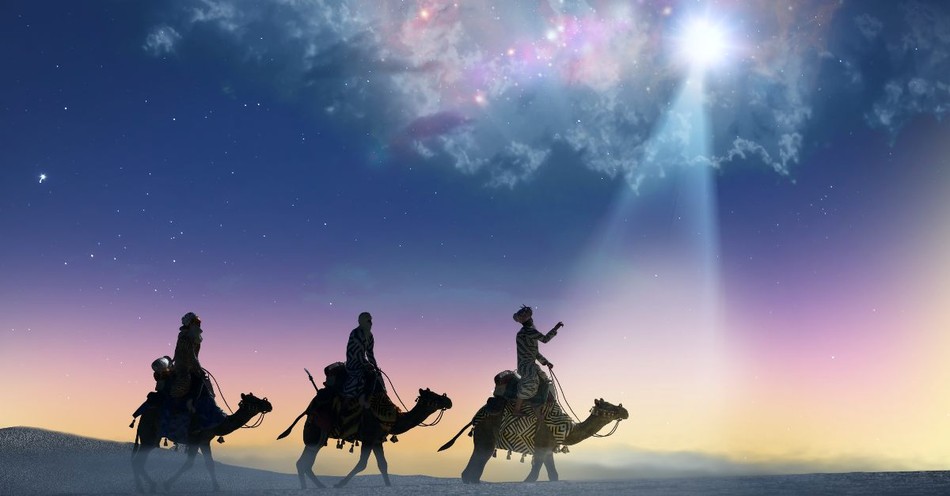
The timeline of events following Jesus’ birth, especially the visit of the Magi, has sparked debate among scholars for centuries. While the Gospels provide key details, the exact order and timing remain topics of discussion, shaped by tradition, historical analysis, and close reading of Scripture. Understanding when the wise men arrived not only clarifies the early life of Christ but also sheds light on how early Christians interpreted these significant events.
When Did the Magi Visit Jesus?
The sequence of events following the birth of Jesus, from Bethlehem to the family’s later residence in Nazareth, has long been debated by scholars. The biggest point of controversy centers on the timing of the visit of the Magi (the “wise men”). Once that moment is placed, the rest of the early-life timeline becomes much easier to understand.
Traditional Date of the Magi’s Visit: January 6
A widely held early tradition places the arrival of the Magi on January 6, about thirteen days after Jesus’ birth. If the star appeared at the moment of His birth and the Magi departed immediately, their journey would have lasted only about ten days.
January 6 soon became known as Epiphany, the feast celebrating the manifestation of Christ. Historically, Epiphany focused on:
the visit of the Magi,
the baptism of Jesus,
and later, His first miracle at Cana.
In both the Greek and Roman churches, along with the English and American Episcopal traditions, the adoration of the Magi remains the central emphasis of Epiphany.
However, this early tradition was not accepted universally. Church historians such as Eusebius and Epiphanius, citing Matthew 2:16, argued that the Magi arrived two years after Jesus’ birth. Others suggested that January 6 was chosen simply for convenience and did not reflect an actual historical date.
Why Many Place the Magi’s Visit Shortly After Jesus’ Birth
Setting aside tradition, several arguments are used to claim that the Magi arrived shortly after the birth of Christ and before the presentation of Jesus in the Temple:
Matthew 2:1 says “Now when Jesus was born…,” which some interpret as meaning the Magi came soon after His birth.
Luke 2 records that after the presentation in the Temple, the family traveled to Nazareth. If so, the Magi must have visited before this.
At the time of the Magi’s arrival, Herod first learned of Jesus’ birth. If the presentation in the Temple had already happened, news would likely have reached him through Anna’s public proclamation (Luke 2:38).
Why These Arguments Are Not Conclusive
None of these points definitively establishes a short timeline. Several possibilities remain open:
There is no clear evidence that the Magi visited immediately after Jesus was born.
A gap of up to two months between the birth and their arrival is entirely plausible.
Some early church fathers believed the Magi found Jesus still in a manger, which could be true if the manger was located in a cave or room behind a family dwelling.
Did the Family Go Directly from the Temple to Nazareth?
Luke’s statement, “When they had performed all things according to the law of the Lord, they returned into Galilee, to their own city Nazareth,” has often been interpreted to mean the family traveled directly from Jerusalem to Nazareth. But this reading is not required.
Adapted from The Life of Our Lord upon the Earth by Samuel James Andrews.
photo credit: Photo Credit: ©iStock/Getty Images Plus/Denis-Art