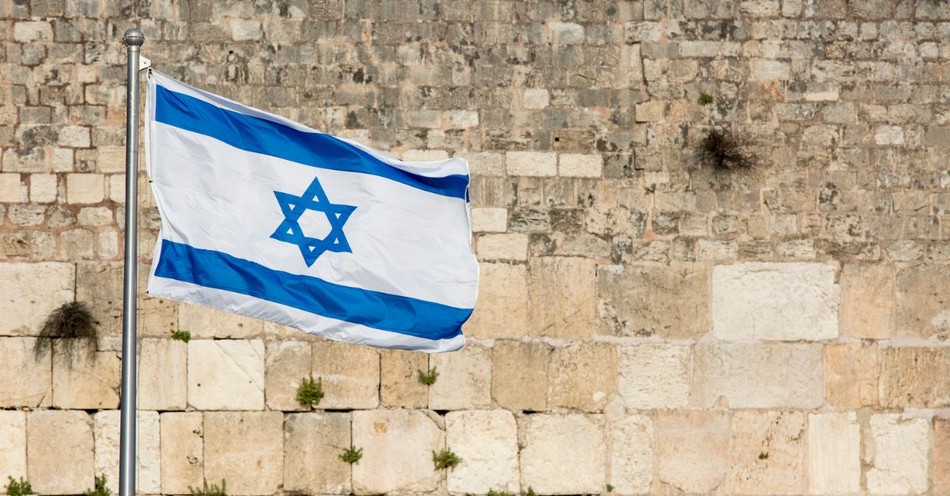
There are two competing views of Israel. The first is that the Jewish State is a miracle and cause for celebration. The second is that Israel is a calamity and should be exposed and opposed. How can there be two opposite opinions—and what makes Israel so controversial?
Let’s look at several underlying causes.
Media Representation and Misinformation
As a young student in Israel during the 1980s, I was struck by the stark contrast between what I experienced firsthand while living there and how the media portrayed the country. The disconnect was undeniable—even then, Israel was the target of misleading and distorted reporting, with “fake news” shaping narratives long before President Donald Trump popularized the term.
That pattern exploded after the October 7, 2023, Hamas attack, when misreporting and misinformation related to Israel surged at unprecedented levels. Staged photographs of children clamoring for food, old images from Syria and Iraq showing emaciated children and devastated neighborhoods identified as “Gaza,” and false narratives that denied or distorted key events circulated across social media. Mainstream media repeated claims against Israel of genocide as fact.
As a result, almost instantly, international perception of Israel and the Jewish people turned negative—even though Hamas attacked innocent Israelis, not the other way around. This was reflected in a spring 2025 Pew Research survey, which found that US adults’ unfavorable opinions of Israel rose from 42 percent in March 2022 to 53 percent by April 2025.
Lies from Arab Leaders
I also learned while in Israel not to believe what Arab leaders say to the Western world in English, but what they say to their own people—especially in Arabic—because it differs significantly. One of the most well-known examples of this is Yasser Arafat, head of the Palestine Liberation Organization (PLO), who, in 1993, met with the prime minister of Israel at the White House, shook hands, and started what the West thought were steps toward peace with Israel.
However, soon after, while he spoke in a mosque in Johannesburg, South Africa, a leaked recording of Arafat’s remarks to the Muslim faithful revealed his true intent:
The jihad [Islamic holy war] will continue, and Jerusalem is not only for the Palestinian people; it is for all the Muslim nation. You are responsible for Palestine and for Jerusalem before me. . . . This agreement, I am not considering it more than the agreement which had been signed between our Prophet Mohammed and Quraysh.
The agreement he referred to is well known within Islam. Mohammed had been unable to conquer Mecca, so he made a 10-year agreement with the ruling Quraysh tribe that allowed him to enter Mecca to pray. After just two years, he had built up his military forces enough to abrogate the agreement, slaughter the tribe of Quraysh, and conquer Mecca. Arafat never intended to live in peace with Israel and instead used the peace process for personal gain. Western leaders refused to believe he meant this and awarded him a Nobel Peace Prize. He later turned down all offers for peace and started the bloody Second Intifada.
Today, that pattern continues. Hamas agreed to the Trump ceasefire, which consisted of two phases. The first phase required the return of all hostages and a retreat of Israel to an agreed-upon area of Gaza. The second phase included the disarmament of Hamas. But once most of the hostages had been returned, Hamas announced that they never agreed to phase two. This reveals a deep disconnect between the language Palestinian leaders use when speaking to Western audiences about peace and how they address their own population. It also demonstrates the use of a ceasefire as a temporary measure to regain strength and carry on the armed struggle.
Competing Historical Claims
The Land of Israel was bequeathed to the Jewish people by God through a covenant (Genesis 12) and has thus been central to their identity since biblical times. Jewish history in the region includes the ancient kingdoms of Israel and Judah, centuries of worship centered in Jerusalem, and a continuous Jewish presence in the land, even during extended periods of exile and foreign rule. Modern Israel is, therefore, seen as both the fulfillment of a divine promise and the restoration of a people to the land where their story began.
Palestinians, however, emphasize their own longstanding connection to the land, with families who lived there for generations under Ottoman and British control. They ignore the Jewish people’s historical ties to the land going back some 4,000 years and claim Arabs are the indigenous population displaced during the 1948 Arab-Israeli War—an event they call the Nakba (“catastrophe”), when hundreds of thousands of Arabs fled or were expelled.
Because both peoples root their claims in history, identity, and in the Jewish case, divine covenant, any compromise feels like a threat to their legitimacy and survival. This clash of deeply held beliefs fuels ongoing controversy. It makes resolution extraordinarily difficult, even though recent history proves that if the Palestinians were to decide to live in peace with Israel, they would be greatly blessed, like the Arabs who did not flee in 1948 and are now full Israeli citizens enjoying more freedoms and opportunities than in any Arab country. That is a reality they do not want to admit.
Resurgence of Antisemitism
These distorted narratives not only shape opinions about Israel but are also feeding a growing resurgence of antisemitism around the world since October 7, 2023. According to the Anti-Defamation League (ADL), antisemitic incidents in the United States surged in the months immediately following the 2023 Hamas attack on Israel. In one report, the ADL documented 3,283 antisemitic incidents between October 7, 2023, and January 7, 2024—a 360 percent increase over the same period the previous year.
By 2024, the ADL had documented 9,354 antisemitic incidents—the highest annual total since it began tracking incidents in 1979. Of those 2024 cases in the United States, 58 percent were linked to opposition to Israel, whether rhetoric, protests, or anti-Zionist conduct. More recently, a 2025 global survey by the ADL revealed 46 percent of adults surveyed across 103 countries/territories hold antisemitic attitudes. Sadly, research shows most people who hold such antisemitic views have never even met a Jewish person.
Antisemitism has been likened to a virus that never seems to die out but mutates and emerges with a different face for new generations. The most common form of antisemitism today is a political one that is against the Jewish collective, the Jewish State of Israel. The demonization of Israel, however, is emboldening other forms of antisemitism, and the result is an avalanche of lies, false accusations, and Jew hatred.
Spiritual Warfare
But the true root of the issue is that Israel is fighting a spiritual war—something not easily understood. Three verses in the Bible offer a clear biblical explanation for it. The first is Genesis 3:15, where the Lord says there will be enmity between the serpent and the woman until her seed crushes the head of the serpent. In the end, the Messiah will defeat evil, but first, spiritual forces will direct this enmity and hatred toward the woman.
The second is Psalm 83:1–4, which says God’s enemies are conspiring to destroy His people, Israel, so that even their name will never be uttered again. This spiritual enmity against God and His people is reflected in military confrontations and government actions.
A third reference to this spiritual war is in Revelation 12, where John describes Israel as a pregnant woman crowned by the sun, the moon, and 12 stars, which represent the 12 tribes of Israel. An evil dragon sits at her feet, waiting to devour the male child, and when he fails, it comes after the woman. The age-old animosity of the serpent in Genesis is now depicted as an enraged dragon.
Not Just Against Israel …
Revelation 12 goes on to say that when the dragon is unable to destroy the woman—the people of Israel—he goes after her “other offspring, those with the testimony of Jesus” (v. 17). The church was born out of the Jewish faith and people. We, too, suffer in this spiritual fight. The evil pursuit is against the woman (Israel), her male child (the Messiah), and the woman’s other offspring (the church of Jesus Christ).
This helps explain the shocking hatred for Christianity in our days, particularly Bible-based, Evangelical Christianity. We, too, are progressively being openly maligned, hated, and falsely accused.
We are in this together with our Jewish brethren and must stand in solidarity with one another. Whereas the Jewish community may be small, Evangelical Christianity claims over 800 million worldwide. Many Christians pray for the peace of Jerusalem and seek to bless the Jewish people. However, more need to be educated and mobilized to speak out in opposition to such hatred and bring an end to the controversy of Israel.
Lies and conspiracy theories have marred the Jewish people’s reputation since the beginning. It’s a global problem today with no easy solution. The Jewish people cannot turn this situation around on their own and need Christians to vigorously counter this animosity prayerfully, vocally, and publicly.
This article was originally published on March 22, 2022 at: https://icejusa.org/2022/03/29/why-is-israel-so-controversial/
Photo Credit: ©Getty Images/Paul Souders