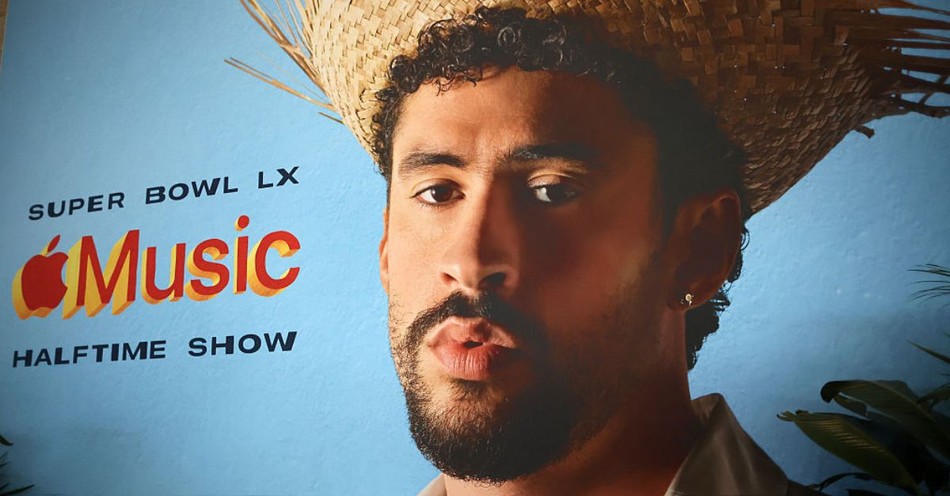
Every year in February, millions of Americans gather at home, in sports bars, and at parties across the country to celebrate the unofficial American holiday, Super Bowl Sunday. For fans of thirty NFL teams, it is bittersweet because it means their team did not make it, and for all fans, it is the last game of the season until September. The Super Bowl is more than just the largest sporting event in America; one of its biggest features is the halftime show. This is when a popular musical artist, current or past, performs for 12 to 15 minutes. This year’s performer will be Bad Bunny. Many in the conservative and Evangelical community were outraged by this selection because of the suggestive lyrics in many of his songs and his political and social views on many of the issues of the day.
My introduction to Bad Bunny was not through his music but through professional wrestling when my daughter and I saw him take part in a WWE event as a wrestler. Prior to that, I would not have known Bad Bunny from Bugs Bunny. To be clear, I am not writing this article as a fan or supporter of Bad Bunny because I have not listened to any of his music, and from many of the themes in the music, I would not want to listen to it, anyway. Despite how I may feel, he is one of the most popular artists in the world, but that is not the focus of my article. I want to raise a question about something we all wrestle with. Can people we don’t agree with or dislike deliver words of inspiration or truth that can filter through our own biases?
The Grammy Speech That Forced Us to Ask: Message or Messenger?
This year, Bad Bunny won three Grammys, including one for Album of the Year for his album Debí Tirar Más Fotos, the first Spanish-language album to receive this honor. As is customary, artists who win give a speech, and many choose to use that platform to address political and social issues of the day. That is what Bad Bunny did, and his words caused some uproar. Though I did not watch the Grammys, I listened to his speech (which was only about 2 minutes) to get the full context of what he said. He began his speech by saying, “Before I say thanks to God, I’m going to say ICE out,” to which he received a standing ovation. Afterward, he continued by saying,
“We’re not savages, we’re not animals, we’re not aliens, we are humans, and we are Americans. Also, I want to say to the people, I know it’s tough not to hate in these days and I was thinking sometimes we get “contaminados” [contaminated]…The hate gets more powerful with more hate. The only thing that is more powerful than hate is love. So, please, we need to be different. If we fight, we have to do it with love. We don’t hate them; we love our people, we love our family, and that’s the way to do it with love. Don’t forget that, please.”
Obviously, he offered these words to provide some inspiration. The question is: do these words offer inspiration to you, and if they don’t, is it the message or the messenger?
How Bias Shapes What We Hear and Why it Matters for Christians
In psychology, there are two effects known as the Halo Effect and the Horns Effect. These two are opposite each other. The Halo Effect, also known as the Liking Bias, is a cognitive distortion where our fondness for a person, brand, or idea causes us to view them more favorably than objective evidence warrants. On the contrary, with the Horns Effect, our dislike or negative impressions of a person, brand, or idea causes us to view them more unfavorably than objective evidence warrants. In other words, whether we like a person or not shapes how we perceive what they say. This is not just true in this instance, but in every instance.
You might ask why I am bringing this up. Well, this really is not about Bad Bunny. He just represents a very current example. This is about the way we process information from those we like and those we don’t. For example, with the recent activities that we have witnessed from ICE agents, including the killing of two American citizens, how did you process that information? If you are a full-fledged supporter of immigration policy, no matter what, then your processing will be different from someone who may have an opposing view.
I want to shift gears, consider what Bad Bunny said, and frame this from a different perspective. The way we treat our neighbor. The Bible is clear that the second greatest commandment is to love your neighbor as yourself. (Mt. 22:39)
Regardless of what you think about immigration policy, the truth remains that immigrants are not savages, animals, or aliens; they are humans. God created them in his image, and he loves them just as much as he loves those in our country who are not immigrants. Hopefully, you agree that this is true. Here is the question that I want you to ponder. Would you feel differently about that statement if it were coming from your pastor or someone you respect as opposed to Bad Bunny?
In his speech, I don’t believe Bad Bunny was making a case about faith, because although he was raised Catholic, from what I have learned, I don’t believe he currently practices any specific religion. However, his perception of who he is and who immigrants are is true. However, if you can’t admit that what he said about immigrants is true, then you must consider why. Chances are, you are succumbing to the Horns Effect, and honestly, this is something we all wrestle with.
Is it Possible to Hear the Truth Regardless of the Vessel?
As my original premise stated, are we able to receive information or hear inspirational thoughts from people we don’t like or disagree with? You might wonder why this matters. The reason it does is that hearing the truth opens the door for effective dialogue, which is a lost art in our current culture. Without healthy dialogue, how will we ever start reaching people with the gospel? Just think of what Bad Bunny said and how many ways you could use that to begin a conversation with him or someone else if you ever had the chance. That’s why being able to listen through our own biases matters so much.
I want to share a principle from Scripture that may help with this.
"My dear brothers and sisters, take note of this: Everyone should be quick to listen, slow to speak, and slow to become angry." - James 1:19
I will be the first to acknowledge that this is not always easy. It is even more difficult when you don’t like the source you are listening to because it is far easier to just dismiss them. Yet when you practice being quick to listen, you are not just hearing what someone says; you are processing and trying to understand what they are saying. That’s why the ability to listen is the foundation of dialogue.
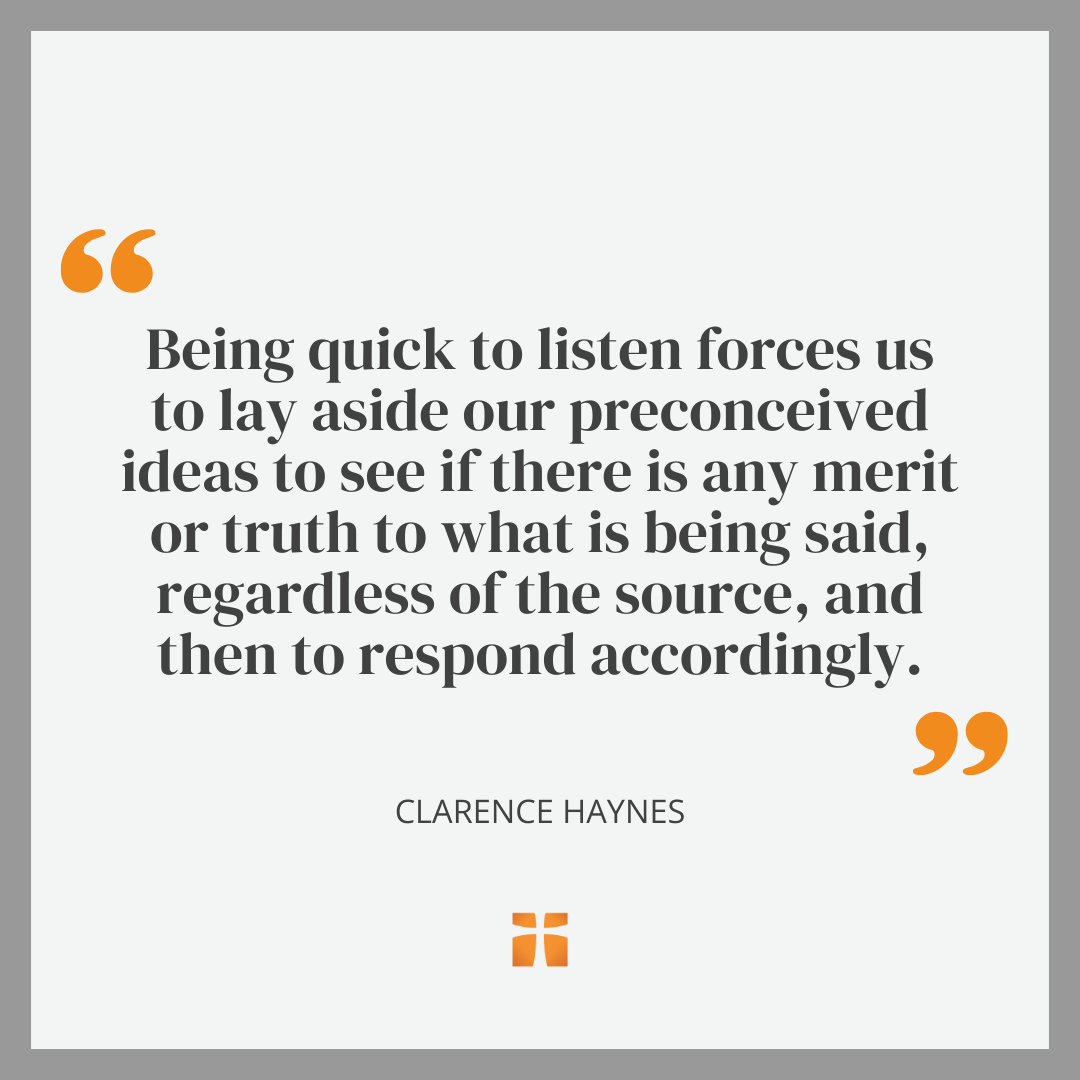
Being quick to listen forces us to lay aside our preconceived ideas to see if there is any merit or truth to what is being said, regardless of the source, and then to respond accordingly. I will admit this is difficult because our biases and our emotions are prone to getting in the way. Yet it is critical that we do this work because we now live in a society where we spend very little time talking to each other and a lot of time talking at each other. Most of the time, we never take the time to process what the other person is saying. Instead, conversations become emotionally charged far too quickly. When this happens, communication breaks down, and what could have been the beginning of dialogue often becomes fuel for disagreement.
Discerning Truth without Compromise
I hope you are hearing me.
My concern in writing an article like this is that someone may inevitably take it as I am a Bad Bunny supporter or fan. Honestly, I am not. Even after writing this, I still cannot tell you one song Bad Bunny has recorded, nor do I agree with many of his political or social stances. Despite that, if someone says something that is true, even if you don’t support or always agree with that person, you can acknowledge what they say as true.
Ultimately, your personal feelings about a person should not affect your judgment of whether what they are saying is accurate. Yet, if we are honest, it is something we all struggle with, myself included. But I hope you can see that the better we get at doing this, the more open doors it will create for dialogue, which can help build relationships and ultimately create opportunities to share the gospel.
Lastly, if you are going to watch the Super Bowl, I hope you enjoy the game. As a NY Giants fan, I don’t have a horse in this race, but hope springs eternal for next season. Aside from that, if you are gathering with friends and family for the game, I hope you have some great food, wonderful fellowship, and possibly some amazing dialogue.
Photo Credit: ©Getty Images/Chris Graythen / Staff

He is the author of The Pursuit of Purpose, which helps readers understand how God leads them into his will, and the author of The Pursuit of Victory: How To Conquer Your Greatest Challenges and Win In Your Christian Life. Clarence is also committed to helping 10,000 people learn how to study the Bible and has released his first course, Bible Study Basics, to achieve that goal. To learn more about his ministry and resources, please visit clarencehaynes.com.