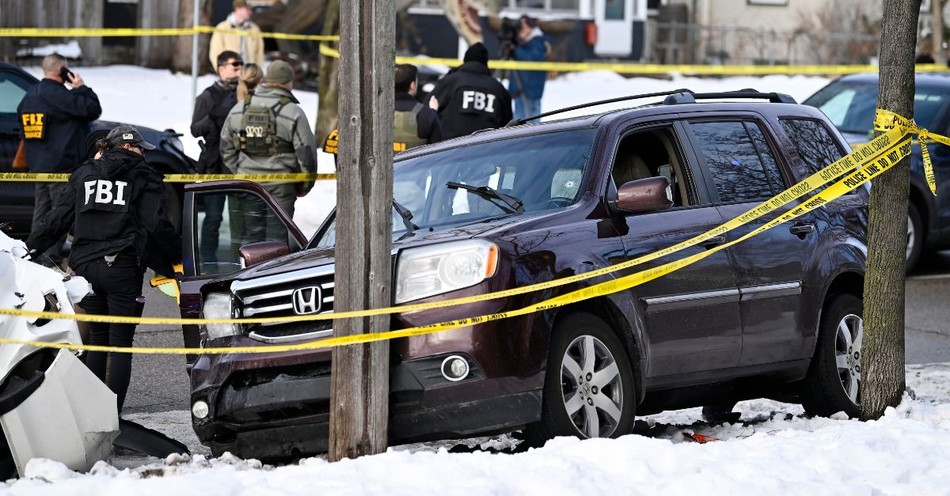
Hundreds of protesters gathered in Minneapolis, Minnesota, on January 7 after an Immigration and Customs Enforcement officer fatally shot a 37-year-old U.S. citizen, Renee Nicole Good. Federal officials said agents believed the woman posed an imminent threat by attempting to use her vehicle as a weapon, a claim disputed by Minneapolis Mayor Jacob Frey, who accused the officer of recklessly using power. Video footage shows federal agents approaching Good’s vehicle, which then moved forward before shots were fired and the car crashed nearby. The incident occurred during a heightened federal presence in the city, where over 2,000 federal personnel were deployed as part of a 30-day surge tied to investigations into alleged fraud involving federally funded programs. The shooting has intensified national conversations about law enforcement authority, accountability, and the sanctity of human life. Regardless of how you feel about this incident politically, our responsibility as Christ followers is to see this through a different lens, and that forces me to ask this question. When authority and force result in loss of life, how are Christians called to respond? It should probably begin with truth, justice, prayer, and compassion for all involved, especially those grieving.
Before you consider any political or social ramifications, we must acknowledge that a 37-year-old woman lost her life. That is the tragedy of this event. We simply cannot overlook that reality. We should grieve and mourn for her family and loved ones because Renee Nicole Good did not make it home that day. Ultimately, time will tell the entire story of what happened, but until then, remember a young woman’s life was lost, and we cannot lose that fact.
It's Not Our Job to Judge, Especially in the Wake of Tragedy
In a lawsuit, the first to speak seems right, until someone comes forward and cross-examines. -Proverbs 18:17
Because of the intense political climate we live in, people drew conclusions about this incident before they had all the information. In describing the incident, the Trump administration quickly used words like domestic terrorism and weaponizing her vehicle. I am not saying her actions were right or wrong because at the time those words were spoken, there was not enough information to draw such a conclusion. On the other side, critics of the officer who committed the shooting framed it with words such as murder, abuse of power, aggressive enforcement, or an act of brutality. Again, to make those statements immediately after the event is too soon to draw such a conclusion. As someone said, “If you don’t have complete evidence, any conclusion you come to is probably wrong.”
The challenge we face is that there is a rush to shape the narrative instead of the responsibility of getting the story right. As Christians, we should want the story to be right. The book of James reminds us to be quick to listen, slow to speak, and slow to become angry. This rule should apply here. When we don’t do that, then we fall into what I will call “The Rhetoric Trap,” and in this space, we lose our objectivity. This is not to declare immediately that either party was right or wrong, but to be patient enough to gather all the information before we make the declaration.

Learning to Show Mutual Respect in Adverse Situations
Law enforcement is not a job for the faint of heart. Having friends and family who served in law enforcement, I know there are extreme challenges that come with the role. Growing up in NYC, the motto of the police department was to protect and to serve. While I don’t know the slogans of every law enforcement agency, my assumption is that it might be something similar. To protect and to serve means you must show respect for the people you are protecting and serving. Treating people with respect typically leads to their showing respect in return. However, if instead of protecting and serving, people are feeling harassed and profiled, it is only a matter of time before people push back. This is where accountability is needed for those who enforce the law and those who are required to obey it.
As Christians, we should follow the laws of the land and obey those in authority. However, we should also expect those in authority to treat those they protect and serve with dignity and respect. There must be mutual respect, or it will create tension, and it becomes a powder keg waiting to explode. This means we must not only care about how we are treated, but also be mindful of and care about how our neighbors are being treated.
What’s missing in this, especially with the rush to frame the narrative, is the lack of human dignity used in describing the victim and the shooter. God created each person in his image, and we cannot forget that because when we do, it leads to needless aggression and dehumanization. Whenever you dehumanize someone, it will affect how you treat them because you will see them as less than human. This is true of those in authority and those who are not. So if we are going to shine the light of Christ in these situations, we must tone down the rhetoric and remember these are people whom Jesus loves and came and died for. Hopefully, this will allow us to see objectively.
Holding Ourselves Accountable to Loving Our Neighbors
With the political nature of our culture, it longs for people to take sides. However, often in choosing sides, accountability gets lost in the narrative. That’s why, if you are going to take any side, then the side we should choose is the one that reflects the character of Christ.
In Jesus’ encounters with the Pharisees and religious leaders, there was often this tension between the letter of the law and the spirit of the law. The Pharisees often used the letter of the law to appease their own self-righteousness. Jesus used the spirit of the law to expose the condition of their hearts. I guess this is the question we must ask ourselves. Do we want to apply the letter of the law or the spirit of the law? I am not referring to whether we obey the laws of the land, because there is no debate that we should. I am referring to how we treat those who are our fellow neighbors and what level of accountability we hold for those who don’t do this.
In Luke 10, Jesus tells the story of the Good Samaritan. However, what preceded his telling the story was an expert in the law who wanted to justify himself. He knew the law required him to love God with all his heart and to love his neighbor as himself. However, he asked Jesus, Who is my neighbor, because he wanted to feel good about himself for following the letter of the law.
Jesus proceeds by telling him the story of a Jewish man who was beaten and robbed. Two of his fellow Jewish “neighbors” walked by him, looked at him, and left him there. It was his Samaritan neighbor who stopped to help. Jews and Samaritans hated each other, so the one who was most unlikely to help and who could have given a legitimate reason not to help, stopped and showed mercy and compassion to his Jewish neighbor. At the end of the parable, Jesus asked which one was a neighbor. The expert in the law said the one who showed mercy. Jesus told him go and do likewise.
My friends, when authority and force result in loss of life, how are Christians called to respond? We need to go and do likewise. Don’t worry about being right politically; instead, be the one who shows up with love and compassion. That will have far greater reach, allowing you to shine your light so people can see your good deeds and give glory to God. At the end of the day, shouldn’t that be the cry of our hearts and the way we show love to our neighbors? This does not mean we don’t hold people accountable if there was wrongdoing. It means we don’t demonize them in the process, and we seek the truth to come forth and justice to be served when it is required.
Photo Credit: ©Getty Images / Stephen Maturen / Stringer

He is the author of The Pursuit of Purpose, which helps readers understand how God leads them into his will, and the author of The Pursuit of Victory: How To Conquer Your Greatest Challenges and Win In Your Christian Life. Clarence is also committed to helping 10,000 people learn how to study the Bible and has released his first course, Bible Study Basics, to achieve that goal. To learn more about his ministry and resources, please visit clarencehaynes.com.