Key Points
- Open Doors’ 2026 World Watch List estimates that more than 388 million Christians face high levels of persecution or discrimination worldwide.
- Pastor Son Hyun-bo’s testimony challenges believers to consider whether worship, Scripture, prayer, and public faith are worth suffering for.
- Religious freedom is not only something Christians defend; it is something we are called to steward faithfully.
- Christian courage can strengthen others, open doors for others, and remind the church that faith was never meant to be lived alone.
- Freedom should produce gratitude, prayer, and faithfulness rather than fear, bitterness, or spiritual complacency.
"Peter and the other apostles replied: 'We must obey God rather than human beings!'" — Acts 5:29
What Is Happening to Religious Freedom Around the World?
Most American Christians do not think twice about going to church. We choose where to worship, carry our Bibles openly, gather for prayer, sing hymns, teach our children, give to missions, and speak publicly about our faith.
These freedoms are so familiar that we can easily assume they will always be there.
But millions of our brothers and sisters around the world know differently. And perhaps it's time for the American church to wake up — not in fear, but in faithfulness.
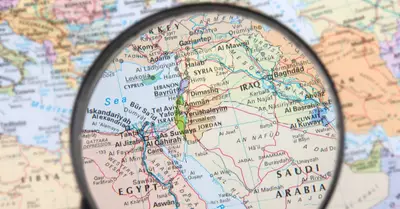
Open Doors' 2026 World Watch List estimates that more than 388 million Christians — one in seven worldwide — experience high levels of persecution or discrimination because of their faith. More than 315 million of them live in the fifty countries where persecution is rated very high or extreme. During the latest reporting period, Open Doors documented 4,849 Christians killed for faith-related reasons, 3,632 churches or Christian properties attacked, and more than 224,000 Christians forced from their homes or into hiding.
The numbers are almost too large to comprehend. For American believers, the question is no longer merely, "Is persecution happening?" It is. The more uncomfortable question is this: What are we doing with the freedom we still have?
The testimony of South Korean pastor Son Hyun-bo brings that question close to home.
When Does Worship Begin to Carry a Cost?
Long before Pastor Son became known for standing against government restrictions, he says he learned what religious freedom meant as a young soldier — a testimony he shared in a July 29, 2026 interview on the World Outreach Church YouTube channel.
Serving in an elite South Korean military unit, Son wanted to attend Christian worship on Sundays. Korean law provided for religious freedom, but his military superiors repeatedly ordered him not to go. He went anyway.
The consequences were severe. Son describes soldiers awakening him at night and beating him for continuing to attend church, a pattern that continued for approximately eight months, leaving him bleeding. Yet each Sunday, he continued worshiping.
His perseverance is difficult for those of us who enjoy religious liberty to imagine. Many of us decide whether to attend church based on the weather, our schedule, how tired we feel, or what else is happening that weekend. Son was deciding whether worship was worth suffering for.
His answer was yes.
That conviction echoes Peter and John's response when authorities ordered them to stop speaking about Jesus: "Which is right in God's eyes: to listen to you, or to him? You be the judges! As for us, we cannot help speaking about what we have seen and heard" (Acts 4:19–20).
Christian courage is not rebellion for rebellion's sake. It is the settled conviction that obedience to God must remain our highest allegiance.
How Can Christian Courage Open the Door for Others?
Eventually, Son's commander granted him permission to attend church. That could have been the end of the story. Son had won his freedom. But the following Sunday, he brought two other soldiers with him. Then more came. Eventually, he says, his entire platoon attended worship, and the freedom to attend church spread into other parts of the military unit.
Son did not fight for religious freedom merely so he could enjoy it privately. He used the freedom he received to open the door for others.
That should challenge us. What are we doing with the freedom we already possess? If we are free to read Scripture, are we reading it? If we are free to worship, are we gathering faithfully? If we are free to pray publicly and privately, are we praying? If we are free to tell others about Jesus Christ, are we speaking?
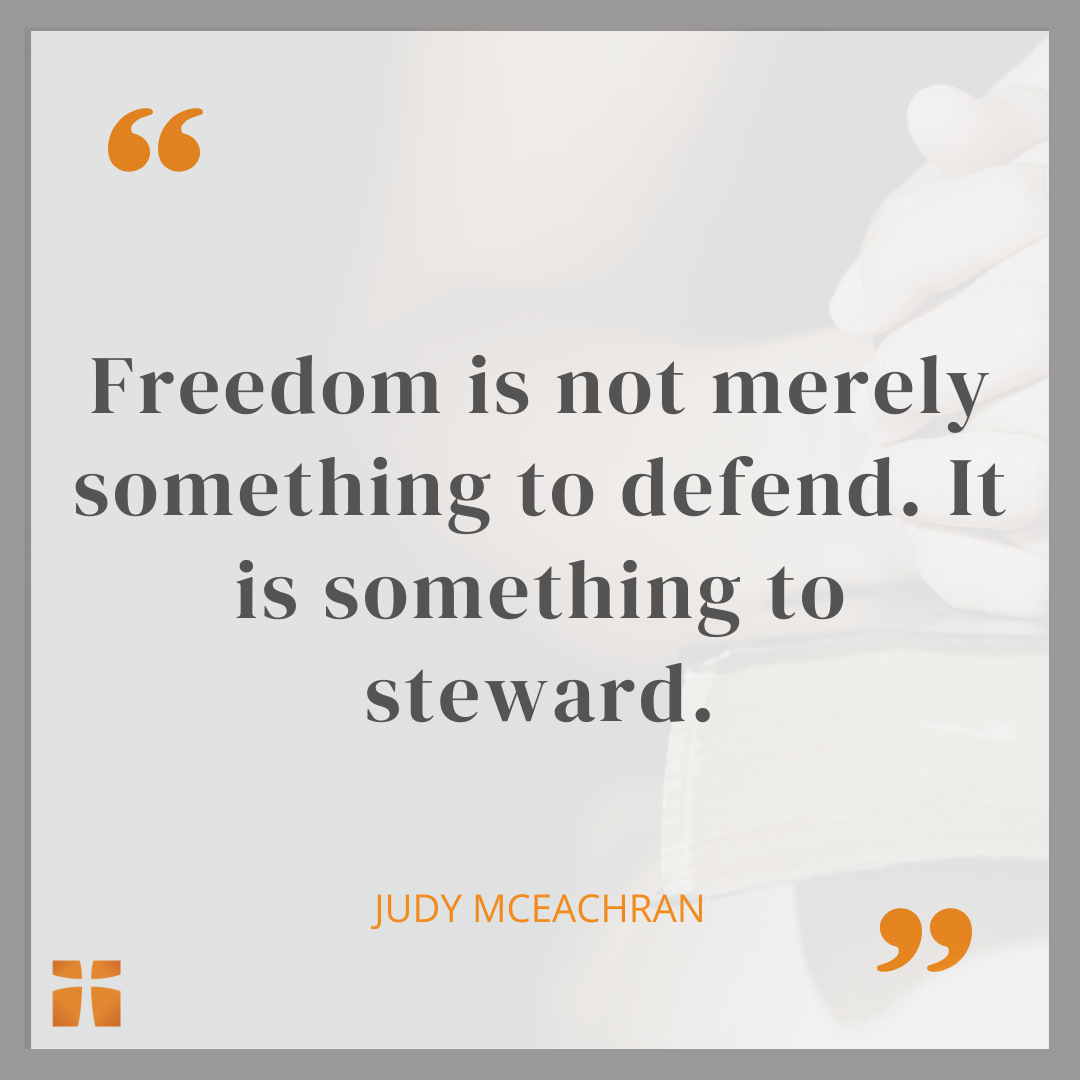
Freedom is not merely something to defend. It is something to steward.
What Happens When Pressure Returns?
Decades later, Son faced another test.
By then he was leading Segero Church in Busan, a congregation he had built from twenty aging members into one of South Korea's largest churches. During the COVID-19 pandemic, gatherings at Segero were restricted to as few as five people in a sanctuary built for thousands. Son believed worship was both the duty and the privilege of believers, and the church continued gathering under restrictions. It was fined, and at one point ordered shut down. Public reaction followed, and the restrictions were eventually eased.
That same conviction resurfaced years later, at a far higher cost.
In September 2025, Pastor Son was arrested and charged under South Korea's election law, in part for interviewing a school-superintendent candidate during a worship service and posting the video online — a candidate who, like Son, opposed introducing anti-discrimination curriculum into public schools. He was held in pretrial detention for nearly five months, from September 2025 to early February 2026. Prosecutors sought a one-year sentence and argued he posed a flight risk, a claim his supporters called implausible for a pastor who had led the same church for over thirty years and appeared for every summons.
Pastor Son had also become a prominent voice against government overreach into the church, helping mobilize roughly two million people, in person and online, to oppose two pieces of proposed legislation. One is a Comprehensive Anti-Discrimination Bill, which critics warn could classify traditional biblical teaching on marriage and sexuality as "hate speech" and provide a legal mechanism to shut down churches that refuse to comply. The other is a proposed amendment to the civil code, which Son himself has described this way: if a church's religious speech is judged too political, the government would gain the power to disband it and revoke its permit, conduct investigations without a warrant, and transfer its assets and property to the state.
Believers close to the case, including American pastor Rob McCoy and reporting from CBN News, have described the election-law charge itself as something of a smoke screen — a narrow technical violation used to reach a deeper target: Pastor Son's willingness to preach biblical conviction into public life. Whether or not one agrees with that reading, it's the reason his supporters have worked so hard to make his story known outside Korea. His son Chance carried it to American audiences at conferences and on podcasts. The late Charlie Kirk promised to use his platform to tell it, two days before Son's arrest. And this past August, Son and his family were received at the White House, where he met with President Trump and stopped by the White House Faith Office to raise the same concerns directly. For believers watching from outside Korea, the point of that attention isn't partisan — it's that persecution left unseen is persecution left unanswered, and the global church has a responsibility to know when one of its own is suffering for the gospel.
Whatever conclusions Christians may draw about the specifics of Korean politics or its legal system, one spiritual truth remains unmistakable: the church is not the building. Buildings may close. Institutions may change. Governments may restrict. But worship belongs to God. That truth has carried believers through centuries of persecution. Many evangelical Christians believe the state is attempting to muzzle the church on specific cultural and moral battlegrounds, and Pastor Son's case has become a rallying point for that concern.
Will we be so brave? So committed?
Why Is Christian Courage Often Contagious?
Son's congregation did not stand alone forever. As other churches watched what was happening, more believers began speaking and gathering in solidarity. Smaller churches moved first; some larger ones stayed quiet longer. But eventually more Christians rallied together.
One courageous believer can strengthen another. One church willing to stand can remind another church what faithfulness looks like. This is why Scripture tells believers, "Let us consider how we may spur one another on toward love and good deeds, not giving up meeting together" (Hebrews 10:24–25).
Faith was never intended to be lived entirely alone. When pressure increases, Christian fellowship becomes even more important — and so does remembering believers who suffer. Hebrews 13:3 tells us, "Continue to remember those in prison as if you were together with them in prison."
For many Christians around the world, that verse is not theoretical. It is daily reality.
How Can Faithfulness Resist Bitterness?
Perhaps one of the most remarkable parts of Son's military testimony is what happened to the people who opposed him. He did not simply outlast them. He prayed for them.
He eventually went to his commanding officer and insisted that leaders should pray for the soldiers under their authority. According to Son, the commander finally allowed him to pray for him and later agreed to attend church. Other officers followed. By the time Son left military service, he says he was teaching Bible studies to some of the same leaders who had once opposed his worship.
That is the gospel in miniature. Jesus did not command us merely to resist our enemies. He told us to love them. "Love your enemies and pray for those who persecute you" (Matthew 5:44).
The goal of Christian courage is never simply to defeat those who oppose us. It is to remain faithful to Christ and to pray that even our opponents may come to know Him.
Why Should Freedom Lead to Gratitude, Not Fear?
Near the end of his testimony, Pastor Son made a statement worth remembering: "Freedom is not eternal."
Those words should not produce fear. They should produce gratitude.
Political systems change. Governments rise and fall. Laws can be rewritten. Cultural attitudes toward Christianity can shift faster than anyone expects. But Jesus Christ does not change. "Jesus Christ is the same yesterday and today and forever" (Hebrews 13:8).
Our confidence has never ultimately rested in government protection. It rests in Christ.
At the same time, Scripture gives us good reason to pray for religious liberty. Paul urged believers to pray "for kings and all those in authority, that we may live peaceful and quiet lives in all godliness and holiness" (1 Timothy 2:2). Peace and freedom create opportunities for the gospel — for churches to gather, missionaries to be sent, children to be discipled, ministries to serve communities, and believers to proclaim Christ openly. That kind of freedom should never be taken lightly.
What Will We Do with the Freedom We Have?
Perhaps Christians living under pressure would ask a question of those of us who live comfortably: What are you doing with the freedom we wish we had?
We may never face imprisonment for attending church. We may never be beaten for carrying a Bible. We may never be ordered to deny Christ. But faithfulness is being formed in us right now, in smaller moments.
Every time we choose worship over convenience, Scripture over cultural opinion, and courage over silence, we are learning to stand. We should defend religious liberty because it is precious. We should pray for believers who do not have it. We should speak when freedom is threatened.
But above all, we should defend the freedom God has presently entrusted to us.
Perhaps the tragedy would not only be losing religious freedom someday. Perhaps an even greater tragedy would be discovering that while we had it, we scarcely used it — that we never spoke up, stood up, or trained our children in God's wisdom while the door was still open.
We are a nation founded on biblical truths, governed by a constitution that has outlasted every other in the world. While we are still free, may we use that freedom faithfully, courageously, gratefully — and for the glory of God.
Source: Pastor Son Hyun-bo's testimony is drawn from a July 2026 interview on the World Outreach Church YouTube channel, A Warning to the American Church.
Frequently Asked Questions about Religious Freedom, Pastor Son Hyun-bo, and Christian Courage
- Who is Pastor Son Hyun-bo?
Pastor Son Hyun-bo is a South Korean pastor of Segero Church in Busan whose testimony and legal case have drawn attention from Christians concerned about religious freedom, worship, and public faith. - Why does religious freedom matter to Christians?
Religious freedom allows Christians to worship, gather, pray, teach, disciple children, serve communities, and proclaim the gospel openly. - What does the Bible say about obeying God under pressure?
Acts 5:29 teaches that believers must obey God rather than human beings when earthly authorities command what God forbids or forbid what God commands. - How should Christians respond to persecuted believers?
Christians should remember persecuted believers, pray for them, learn their stories, speak truthfully about their suffering, and use freedom faithfully while they have it. - How can Christians steward religious freedom today?
Christians can steward freedom by gathering for worship, reading Scripture, praying, teaching their children, sharing the gospel, defending religious liberty, and refusing spiritual complacency.
For Further Reading
- Does the Bible Support Religious Freedom?
- 5 Prayers for Persecuted Believers
- Praying for Persecutors and the Persecuted
- How to Remain Faithful When You Are Persecuted for Your Beliefs
- How Can We Help Persecuted Christians?
Photo Credit: ©GettyImages/vadimguzhva