
Key Points
- AI can make work more efficient without automatically making its use unwise or unfaithful.
- Christians should distinguish between using technology to perform work well and using it simply to escape responsibility or difficulty.
- Efficiency becomes dangerous when people are viewed primarily as labor costs rather than human beings made in God's image.
- A person's dignity does not depend on whether technology can automate part of that person's job.
- Faithfulness in a changing workplace requires wisdom, adaptability, honest work, and trust in God when outcomes remain uncertain.
Anyone who has driven through rush-hour traffic knows the temptation. The GPS says to stay on the highway. Traffic says otherwise.
It’s an internal struggle. Heaven and hell make up that fork ahead. A few minutes later, cold sweats and bubblegut. Doubt and disbelief. It won’t stop. And then, the frontage road. It’s moving. The highway isn’t. Surely, there must be a shortcut around this mess.
A few turns later, the GPS is rerouting, the frontage road has six stoplights, and the same semi-truck that was three cars ahead is now disappearing over the horizon.
It turns out the GPS knew about the traffic—you didn’t. Isn’t that why you used GPS in the first place?
There is something familiar about that feeling in the American workplace right now. Artificial intelligence promises shortcuts everywhere. Tasks that took hours can be handled in minutes, routine work can be automated, and companies trying to squeeze more productivity out of increasingly expensive operations have plenty of reasons to listen.
Just ask McDonald’s.
The fast-food behemoth plans to provide approximately $8.5 billion in support through 2036 to help franchisees modernize their restaurants and improve operations. Among those changes are AI-powered systems that can help with inventory, scheduling and other routine work.
One could eventually eliminate at least 50 labor hours per week from a typical restaurant’s workload. McDonald’s says reducing staff isn’t the intention.
Meanwhile, away from the Golden Arches and into the Home of the Frosty, things look different under another familiar fast-food sign.
Meritage Hospitality Group, a major Wendy’s franchisee, filed for Chapter 11 bankruptcy protection after closing dozens of restaurants. The company operates 314 Wendy’s locations across 15 states and employs about 9,000 people.
Same industry. Two very different stories. And thousands of workers are caught somewhere in an economy, trying to figure out how much work still needs to be done. A personal touch is now a mechanical one, which makes AI an easy target.
It probably shouldn’t be.
Is AI Really the Problem with the Future of Work?
Since grade school and math class, people have always looked for shortcuts. Calculators replaced long division on scratch paper. GPS replaced the folded map stuffed in the glove box. Nobody accused the washing machine of destroying the spiritual value of clean socks.
AI is another tool—a remarkably powerful one, and one capable of replacing some of the work people do.
A McDonald’s manager spending less time counting inventory could spend more time helping employees. A small-business owner could use AI to finish paperwork and get home for dinner. Someone staring at a blank page could use it to organize ideas instead of asking a real person for semi-fake opinions.
There is nothing particularly un-Christian about working smarter, not harder. Colossians 3:23 tells believers, “Whatever you do, work at it with all your heart, as working for the Lord.” There’s no “as long as humanly possible” in that verse.
We all want to work smarter, so when AI got on the scene, “smarter” is precisely why everyone jumped. Then, corporate America noticed it was “harder” to pay everyone, so they got “smarter” as well.
Convenience can quietly teach impatience. AI may also be revealing just how expendable companies already believed some work to be. That’s when the GPS analogy gets uncomfortable.
When Does an AI Shortcut Become an Escape from Work?
Sometimes, taking the frontage road is the right decision. There could be a wreck ahead. The highway may be closed. Wisdom does not require sitting in traffic to prove someone has faith. Sometimes faith means leaning on the Lord for wisdom to make the right decision.
The same applies to work. People need vacations, sick days, mental health time and rest. You know? Time off. Jesus Himself withdrew from crowds to pray (Luke 5:16), and Sabbath was built into God’s rhythm for His people (Exodus 20:8-11).
There is a difference between using AI to help complete your work and using it to avoid doing the work you are paid to do. It’s a big project: Do you perfect it with AI, or watch TV and allow AI to do it all? There is a difference between needing a day away and simply wanting an escape from responsibility.
That distinction gets blurry because shortcuts feel good at first. They offer control when something seems inconvenient, uncertain or painfully slow. Too much reliance on AI can turn a useful shortcut into an easy way out.
Christians are hardly immune. People pray about a problem, tell God they are giving it to Him, and then spend the next four hours figuring out how to take it back. Apparently, “lay your burdens down” in Matthew 11:28-30 comes with an unofficial 30-minute return policy.
What Happens When Trusting God Takes Too Long?
Abraham knew something about waiting. God promised him an heir and descendants as numerous as the stars (Genesis 15:1-6). There was only one obvious problem—he had no child of his own.
Time passed. Abraham and Sarah got older. Eventually, Sarah offered another route, her own concocted shortcut: Abraham could have a child through her servant Hagar (Genesis 16:1-4).
Right when God said, “Stay on the highway,” Abraham and Sarah drove on the shoulder, up a steep hill and bottomed out on the curb at the frontage road.
The problem was not that Abraham and Sarah lacked initiative. For them, waiting became harder, so they tried to control the outcome themselves.
A worker worries about being replaced, so every new AI tool feels like something that must be mastered immediately. A manager feels pressure to improve numbers, so people begin looking suspiciously like costs on a spreadsheet. Someone hates uncertainty, so another shortcut promises at least the feeling of control.
AI did not create that instinct. It simply gives it better tools.
Proverbs 3:5 tells believers to “trust in the Lord with all your heart and lean not on your own understanding.” Christians quote that verse easily enough when life is moving. Traffic makes it harder.
What Does Working for God Actually Mean?
This is where Colossians 3:23 deserves another look. “Work at it with all your heart” can sound like a biblical productivity slogan: work harder, stay later, answer another email and hope the boss notices.
Paul keeps going. Believers work wholeheartedly because they know they “will receive an inheritance from the Lord as a reward” (Colossians 3:24).
A Christian can use AI and still work for the Lord. In fact, refusing a useful tool simply because it is new would not necessarily make anyone more faithful. A carpenter does not become holier by refusing a power saw.
First Peter 1:15-16 calls believers to be holy, or set apart, in how they live. In the workplace, that can show up in honesty when dishonesty would be easier, patience when results are slow and kindness toward people who cannot improve the quarterly report.
AI can help with the work. It cannot set someone apart. Only God does that, as believers learn to trust Him.
What Happens to Workers When Efficiency Wins?
That matters when returning to McDonald’s and Wendy’s.
Saving 50 labor hours in a restaurant sounds terrific on a spreadsheet. So does automating inventory or making scheduling easier. If technology removes repetitive work and gives employees more time for customers or one another, there is real value in that.
But what about the people behind those hours?
There are also people behind Wendy’s restaurant closures. Meritage’s bankruptcy is not an abstract lesson about market forces to the worker wondering whether next month’s rent will still have a paycheck attached.
Christian conversations about changing workplaces cannot lose sight of that. Genesis 1:27 says human beings were created in the image of God. Their value was established long before anyone had a job title, a productivity metric, a LinkedIn profile or even worked with a chatbot.
That means a cashier is not worth less because software can perform part of the job. A manager is not worth more because quarterly numbers improved. And someone who loses a job has not lost the thing that gave that person value in the first place.
How Can Christians Trust God in a Changing Workplace?
There is a reason that shortcuts are so attractive: they offer a sense of control.
That may explain some of the enthusiasm surrounding AI at work. It may also explain some of the fear. One side sees a tool that can eliminate hours of tedious work. The other sees a tool that could eliminate the person doing it. Both are looking down the same road and wondering what comes next.
Christians do not have to pretend those concerns are imaginary. Jobs change. Companies close. New technology replaces old tasks. For a Wendy’s employee wondering what comes next, “hold on to faith” and “God bless you” don’t pay the bills.
Trust does not mean pretending the traffic is moving. It means knowing who remains trustworthy when it isn’t.
That can require wisdom. Sometimes another road really is necessary. A worker may need new skills. Someone may need to find another job. A business may need AI to survive.
Trusting God has never meant refusing to move. It does mean resisting the belief that every burden must be escaped, every delay must be fixed, and every outcome must remain under human control.
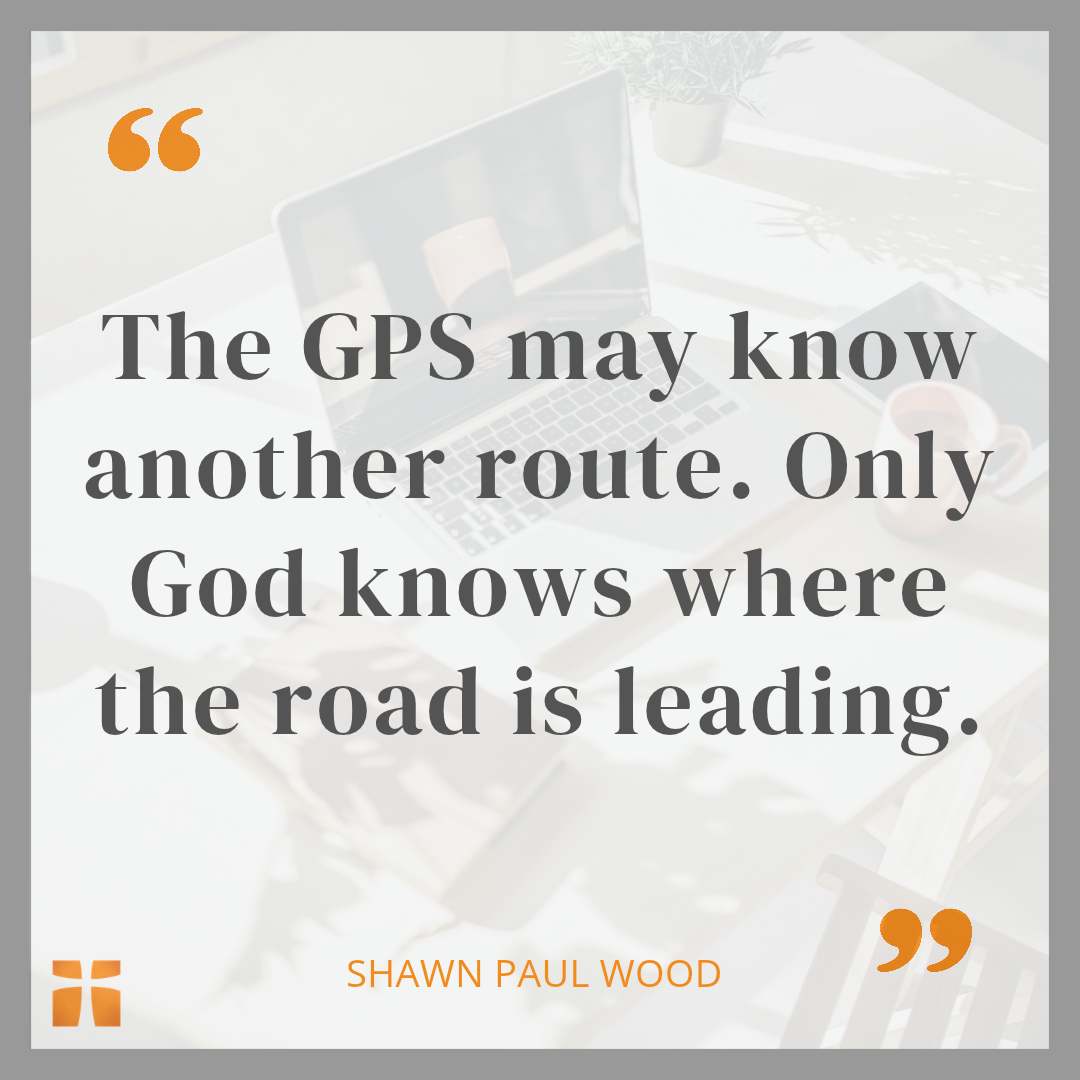
AI will probably keep getting better at finding shortcuts. Christians should get better at knowing when not to take one. The GPS may know another route. Only God knows where the road is leading.
Frequently Asked Questions
How is McDonald's using AI?
McDonald's is deploying AI-enabled tools for tasks including drive-thru ordering, inventory management, scheduling, order accuracy, and equipment monitoring as part of its NEXT modernization strategy.
Will McDonald's AI reduce employee hours?
McDonald's says its AI-enabled drive-thru system could free at least 50 labor hours per week as it scales, while the company says reducing staffing is not the intention.
What does the Bible say about using AI at work?
The Bible does not address artificial intelligence directly, but Scripture gives Christians principles concerning faithful work, wisdom, honesty, stewardship, rest, and the dignity of people made in God's image.
Does Colossians 3:23 mean Christians should always work harder?
No. Colossians 3:23 calls believers to work wholeheartedly for the Lord. It should not be reduced to a command for endless productivity or overwork.
Does automation change a worker's value?
No. From a Christian perspective, human worth comes from being made in God's image, not from productivity, job title, salary, or whether technology can perform part of someone's work.
For Further Reading
- How Christians Should Think about AI, Efficiency, and Wisdom
- A Biblical View of Work and Worth
- Why Should We Work with All Our Hearts?
- What Does the Bible Say About Work and Rest?
- How Can We Trust in the Lord with All Our Heart?
Photo Credit: KCKATE from Jookiko