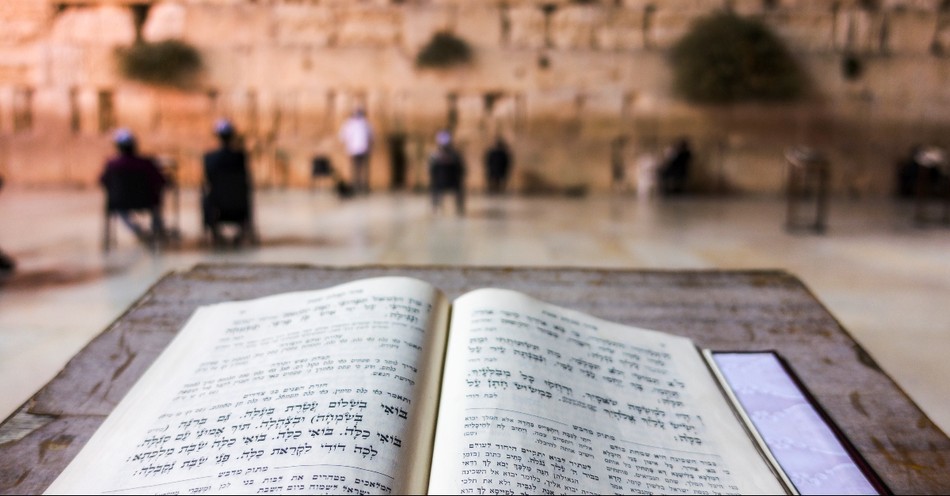
I’ve been in ministry for over forty years. During that time, the Church prayed for the peace of Jerusalem, acknowledged our Jewish roots, and affirmed Israel’s significant place in biblical prophecy. That consensus once seemed settled.
But as public conversations intensified—through sermons, social movements, and demonstrations—antisemitism began to rise alongside them. And with it, a divide quietly emerged within the Church itself.
For some believers, Israel has become merely a contested land, disconnected from the Israel God calls His own. For others, Israel remains the covenant people—not because of national righteousness, but because “the gifts and the calling of God are irrevocable” (Romans 11:29).
Meanwhile, antisemitism is no longer distant or abstract. It is rising on our campuses and in our cities, while the Church hesitates—unsure whether this moment is a prophetic warning or simply a political inconvenience.
Does God’s covenant come with an expiration date? Can Israel, as a people and a land, be redefined as nothing more than a “spiritual Israel”?
Many believers have quietly adopted a theology they have never carefully examined. Israel is spoken of as merely political, God’s promises as conditional or outdated, and Romans 9–11 as theology best softened by ambiguity or silence.
This article examines what Scripture actually says about Israel’s covenant status, why the Church has not replaced Israel, and how Christians should respond when antisemitism surges and the nations rage against Jerusalem.
To understand Israel’s standing, we must begin where God did: with a promise.
God chose Israel as His covenant people. “The Lord your God has chosen you… to be His treasured possession” (Deut. 7:6). This covenant began with Abraham, whom God called into the land of Canaan—promised to him and his descendants forever (Gen. 17:1–8).
Scripture records the covenant honestly: God’s faithfulness alongside Israel’s repeated failure. The prophets openly confronted Israel’s sin (Isaiah 1:4), and God’s discipline followed, including exile—just as He warned (Deut. 28:64). Yet judgment never meant rejection.
Even in dispersion, God promised restoration—not because of Israel’s righteousness, but because of His name and faithfulness: “I will gather you from the nations and bring you back into your own land… not for your sake, but for the sake of my holy name” (Ezek. 36:22–24).
History bears witness. After nearly two thousand years of exile, and in the Holocaust’s aftermath, Israel was reborn as a nation in 1948. This was not a political accident, but a covenantal fulfillment.
Israel’s failure does not cancel God’s promises; it magnifies His mercy. The question is not whether Israel has failed—Scripture is clear—but whether God has.
As cultural voices recast Israel as merely symbolic or redefine covenant to fit the spirit of the age, the Church must choose its authority. Scripture answers plainly:
“Has God rejected His people? By no means!” (Romans 11:1).
The Church Grafted in, Not Substituted
From the beginning, God’s covenant with Israel was never meant to end with one nation, but to bless all nations through it. The prophets anticipated this expansion: “I will also make you a light for the Gentiles, that my salvation may reach to the ends of the earth” (Isaiah 49:6). Yet the inclusion of the Gentiles was never intended to erase Israel—only to widen the reach of God’s kingdom.
The New Testament affirms this design. Peter’s vision and his visit to Cornelius opened the door to the gospel for Gentiles without closing it to Israel (Acts 10). Paul, commissioned to preach to the nations, likewise did not redefine Israel out of existence. Instead, he explained that Israel’s unbelief was real but temporary—a “partial hardening” that would last “until the fullness of the Gentiles has come in” (Romans 11:25).
Paul’s image is decisive: Gentile believers are “grafted in” by grace through faith (Romans 11:17–18). They are joined to the covenant promises, not substituted for Israel. The root remains. The promises endure.
Yet today, a growing number claim that the Church has replaced Israel—that covenant promises once given to the Jewish people and their land now belong exclusively to the Church. This view, known as replacement theology, stands in direct tension with Romans 9–11. Israel’s unbelief is acknowledged, but her future is not erased. The Church stands by grace, not by displacement.
Why does this matter? Because if God’s promises to Israel can be revoked or reassigned, then no promise is secure. If “everlasting” means only “for a time,” faith rests on unstable ground. Scripture is unequivocal: “The gifts and the calling of God are irrevocable” (Romans 11:29).
Replacement theology does not merely reinterpret prophecy; it quietly reshapes the character of God.
The Rising Tide of Antisemitism
This theological confusion over Israel’s covenant status coincides with a measurable rise in antisemitism—both globally and in the United States.
Jewish students increasingly report intimidation and hostility on university campuses, often justified under political or ideological banners. Israel is routinely portrayed as uniquely malevolent and disproportionately blamed for global instability—an echo of historic prejudices in modern form. In 2023, the Anti-Defamation League recorded more than 8,800 antisemitic incidents in the United States, the highest number since tracking began in 1979.
In politics and media, Israel is held to standards rarely imposed on any other nation. Part of this disproportion is geographic as well: Israel is only about 8,000 square miles—roughly the size of New Jersey—while its surrounding neighbors, including Egypt, Jordan, Syria, Iraq, and Iran, are many times larger. Yet international pressure continues to demand that Israel cede land, despite its already small size and security challenges.
When Hamas fired thousands of rockets into Israeli cities in May 2021—deliberately targeting civilians—international attention focused largely on Israel’s defensive response rather than the initiating violence. By contrast, when other nations respond militarily to terrorism or sustained attacks, their actions are more readily framed as legitimate self-defense. Violence against Jewish civilians is often rationalized as “resistance,” while Jewish self-defense is treated as morally suspect.
Scripture affirms God establishes governing authorities to restrain evil and protect life: “He does not bear the sword in vain” (Romans 13:3–4). Ecclesiastes acknowledges the tragic realities of a fallen world—“a time for peace and a time for war” (Ecclesiastes 3:8). Yet when Israel exercises this God-given responsibility, she alone is routinely accused of moral excess. Scripture warns that “unequal weights and unequal measures are an abomination to the Lord” (Proverbs 20:23), and such unequal standards are now applied in full view of the world.
As cultural narratives reshape moral reasoning, biblical categories of covenant, election, and prophecy are quietly displaced. Scripture foretold that Jerusalem would become “a heavy stone for all the peoples” (Zechariah 12:3). What we are witnessing is not merely political tension, but the weight of that prophetic reality pressing upon the conscience of the nations.
For the Church, the question is unavoidable: will we return to the steady voice of God’s Word, or will we allow cultural narratives to determine what we believe—and what we are willing to say?
Why This Matters for the Church
Israel is not merely a political issue; it is a biblical one. Our inheritance of salvation is rooted in the promise God made to Abraham: “In you all the families of the earth shall be blessed” (Genesis 12:2-3). Jesus Himself—the Lion of the tribe of Judah—comes through the covenant line God preserved in Israel. If God’s promises to Israel can be nullified, then the foundation of our faith—that God keeps His word—stands on uncertain ground.
This is not about defending any government’s policies. It is about defending God's character. When cultural narratives reshape our theology, or when the Church remains silent as antisemitism rises, we are not occupying neutral ground—we are standing on shifting theological sand.
The Church must therefore answer a sobering question: Do we believe God keeps His promises, even when His people fail Him? If the answer is yes, then we must acknowledge Israel’s continuing place in God’s redemptive plan—not because Israel is righteous, but because God, who chose Israel, is faithful.
Faithfulness in this moment requires discernment to recognize when culture is redefining truth, courage to stand on Scripture when it is unpopular, humility to examine assumptions we may have absorbed uncritically, and compassion that grieves all innocent suffering while refusing moral inversion that excuses or normalizes antisemitism.
A Call to the Church: Stand on the Rock
While interest in biblical themes has grown, consistent engagement with Scripture has not. Only one in six adults reads the Bible most days of the week. As a result, cultural narratives increasingly shape many believers, who lack the biblical grounding to evaluate. Theology is absorbed rather than examined. Israel is spoken of as merely political. God’s covenant promises are treated as if they carry expiration dates. And the Church grows uncertain whether rising antisemitism is prophetic—or simply political.
This is not the fault of any single generation. It reflects a broader failure to teach covenant theology clearly, to connect prophecy with history and current events, and to prepare believers to stand firm when cultural pressure intensifies.
But it is not too late.
Open the Scriptures.
Wrestle honestly with God’s Word. What does Paul mean when he insists in Romans 9–11 that God’s gifts and calling are irrevocable? The Law, the history of Israel, the prophets, the life of Jesus, and the writings to the churches all testify to the same truth: God’s redemptive plan includes Jews and grafted-in Gentiles together, not replaced. Israel is not erased; the promise is expanded.
Test what you hear.
When someone claims the Church has replaced Israel, ask where Scripture says so. When covenant promises are described as conditional or forfeited, ask where those conditions appear in Genesis 12, 15, or 17—or in the prophets who spoke of restoration even after judgment.
Stand on this truth.
God keeps His promises. He has not rejected Israel. He has not replaced His covenant people. “For the gifts and the calling of God are irrevocable” (Romans 11:29).
Scripture also warns that the nations will rage against Jerusalem (Ezekiel 38–39; Zechariah 12–14; Matthew 24). Prophecy speaks of a final global conflict centered in Israel (Revelation 19:11–21), at Har Megiddo—Armageddon—a real place on the map of history where nations have clashed before and where Scripture says the final confrontation will unfold when Christ returns in victory. Until then, cultural pressure will intensify. Confusion will grow.
But God’s Word stands. His faithfulness endures. And the Church that builds on the rock of Scripture—rather than the shifting sand of cultural opinion—will not be moved.
Paul’s warning remains timely: “Do not be wise in your own sight” (Romans 11:25).
The question before the Church is not complicated—but it is decisive:
Will we stand on God’s Word, or will we bend to the spirit of the age?
As for me, I choose to stand with God and His Word. As A.W. Tozer rightly observed, “Truth is not what we want it to be; it is what God says it is.”
Photo Credit: ©iStock/Getty Images Plus/Jacek_Sopotnicki