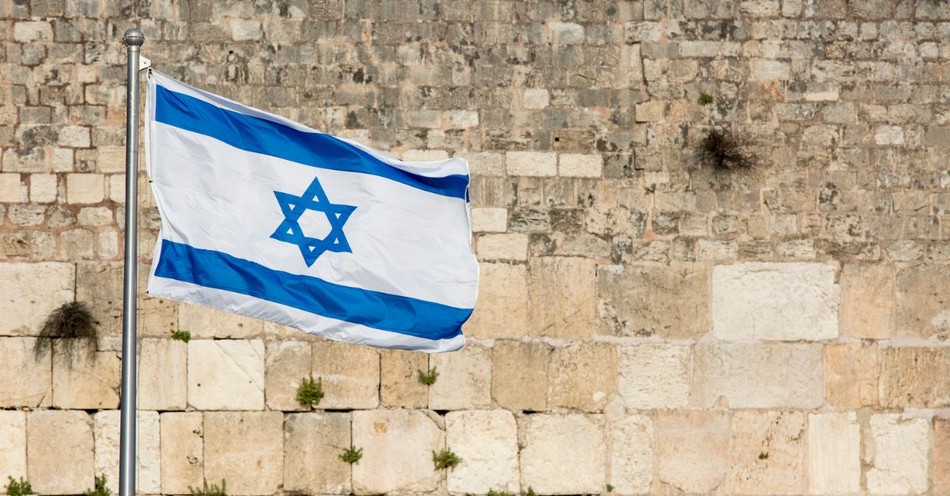
One of the lies circulating in Christian circles today is that Israel of the Bible is not connected to Israel of today. This is why understanding the history of the Jewish people is so critical and, in this series, “Connecting the Bible to Today,” we have helped fill in the gap and connect the dots between the people of Israel in biblical times with today. It is the descendants of Abraham, Isaac, and Jacob who have returned to the land and established the modern State of Israel.
Another lie in the campaign to discredit modern Israel is that those returning Jews were white colonizers. Even the Palestinian Liberation Organization (PLO) Charter states that “Zionism is a colonialist movement in its inception.” This claim, echoed by many throughout the Middle East and beyond, asserts that Israel was founded illegally and lacks legitimate historical and legal standing.
To understand how this is not true, we must tell the story of the founding of Israel, because historical and legal records tell a different story. Israel’s founding had a firm basis in international law—and an enduring historical connection between the Jewish people and the land of Israel.
Jews have maintained a continuous presence in and connection to the land of Israel for more than 3,000 years. Jerusalem has been the Jewish people’s capital for more than three millennia: the city is mentioned almost 700 times in the Hebrew Bible, and more than a hundred generations of dispersed Jews prayed daily to return to Jerusalem. This deep-rooted connection to the land of Israel is not only affirmed in Jewish tradition but further confirmed in the sacred texts of Islam and Christianity.
The summary that follows highlights the key events and agreements that established the legal and diplomatic basis for Israel’s founding in May 1948.
Breakup of the Ottoman Empire
As World War I was coming to an end, the four-hundred-year-old Ottoman Empire was crumbling. The western powers were discussing what to do after the war and how to divide up the territories and prepare them for self-rule. The British were interested in the area called Palestine, and in 1917, Prime Minister Lloyd George’s government issued the Balfour Declaration—penned by British Foreign Secretary Arthur Balfour—supporting a “national home for the Jewish people” in Palestine.
San Remo Conference
In 1920, the Allied powers (Britain, France, Italy, and Japan) met to discuss the fate of the former Ottoman territories. Named after the city in Italy where the conference took place, the San Remo Conference produced the San Remo Resolution, which approved the British Mandate of Palestine, acknowledged the Jewish people’s historic connection to the land, and endorsed the establishment of a Jewish national homeland—laying the legal and diplomatic groundwork for Israel’s declaration of statehood in 1948. The San Remo Conference is often cited as an early international affirmation of Israel’s right to statehood.
The British Mandate
From 1920 to 1948, Britain governed Palestine under the authority of the League of Nations and was charged with preparing the land for a Jewish national homeland and safeguarding the civil and religious rights of the Arab population. The Balfour Declaration of 1917 was incorporated into the mandate, reinforcing international recognition of Jewish aspirations. During these years, surges of Jewish immigration—especially in response to rising antisemitism in Europe—transformed the demographics and economy of the land. During this same time, however, Arab resistance to Jewish settlement and opposition to British policies sparked outbreaks of violence. Nevertheless, decades of development, conflict, and political maneuvering further prepared the Jewish people for statehood.
Jewish and Arab Immigration to Israel
Aliyah (Jewish immigration) to Palestine occurred in several waves during Britain’s oversight of Palestine and helped shape the region’s social, political, and economic landscape. The Third Aliyah (1919–1923) brought approximately 35,000–40,000 Jews from Eastern Europe following World War I, and in the Fourth Aliyah (1924–1929), around 80,000 Jews—mainly from Poland—fled economic hardship and rising antisemitism. The Fifth Aliyah (1929–1939) brought between 225,000 and 300,000 Jews, particularly from Central Europe, escaping Nazi persecution. During the same period, Arabs seeking economic opportunities generated by the growing Jewish communities were also immigrating to Palestine, and the two communities grew at approximately the same rate.
Palestine Divided
During this period, the territory known as Palestine was divided. In 1921, the British gave 78 percent of Palestine to the Arabs and established Transjordan (modern-day Jordan), while the remaining area west of the Jordan River remained under direct British control.
Laying the Groundwork for Statehood
The expanding Jewish presence in what remained of Palestine (22 percent) led to the establishment of key organizations, like the Jewish Agency for Israel (JAFI), which acted as a de facto government; the Haganah, a Jewish paramilitary organization that provided security (eventually evolving into the Israeli Defense Forces, or IDF); and institutions like Hebrew University. Together, these and additional economic establishments strengthened the cultural and organizational foundations of the future state. By the mid-1940s, the growing Jewish community in Palestine had built the social, political, and military infrastructure necessary for statehood.
While the Jewish people were strengthening their homeland, increasing tensions between Jewish immigrants and the Arab population erupted into violent clashes, including Arab riots in 1920, 1921, and 1929 and the Arab uprising from 1936 to 1939, which challenged both British authorities and Jewish settlers.
World War II and the Holocaust
The Holocaust—in which Nazi Germany murdered six million Jews—profoundly impacted global opinion and increased urgency for a Jewish homeland. The unspeakable events of this genocide of the Jewish people highlighted their vulnerability and the dangers they faced living outside their land in the Diaspora.
Many Jews who had survived the Holocaust sought refuge in the future State of Israel. However, in response to the Arab uprisings, Britain limited Jewish immigration to 75,000 over five years under the White Paper of 1939, while Arab immigration continued unhindered. This led to Aliyah Bet (illegal immigration), a critical effort that carried refugees by ship to Palestine, who then attempted to pass through British blockades.
The United Nations Partition Plan (Resolution 181)
Rising tensions in the Holy Land, combined with the plight of the Jewish refugees, led to the UN vote for the Partition Plan (Resolution 181) in 1947. This “plan” recommended dividing Palestine into separate Jewish and Arab states and provided the legal and diplomatic framework for the declaration of statehood. Jewish leadership accepted the plan and declared statehood in May 1948. Arab states and Palestinian leaders rejected the Partition Plan and declared war on the newborn Jewish state.
In 1949, Israel was admitted into the United Nations with a majority vote.
Israel’s founding was legal and in accordance with international mandates and ratified by the international powers at the time, including the United Nations. For this reason, Christians should reject all efforts to undermine or delegitimize the world’s only Jewish state and boldly support her existence.
Photo Credit: ©Getty Images/Paul Souders
Republished with permisison.