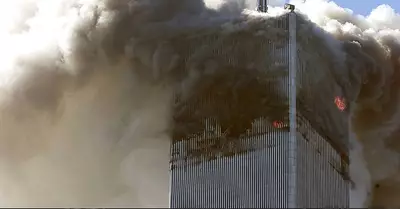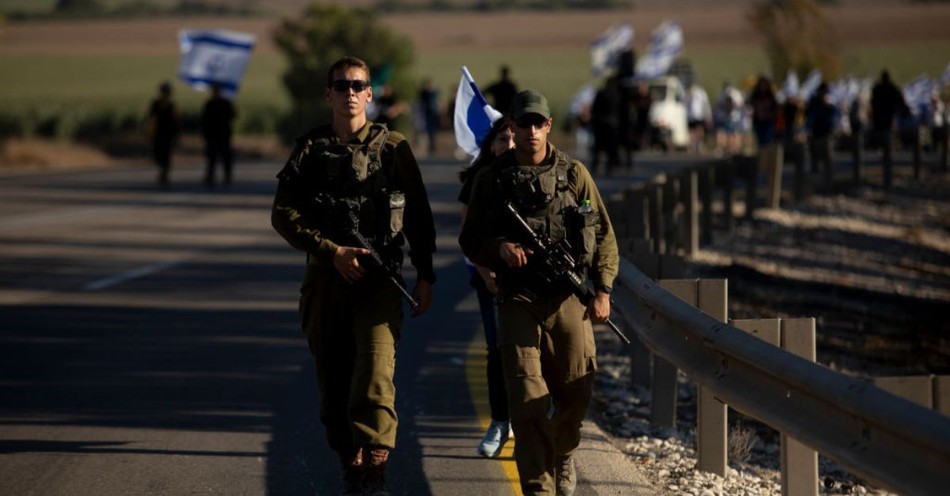
2025 was a monumental year for Israel, but it is impossible to reflect on the year’s developments without going back to the fateful date of October 7, 2023. After 27 months of war and challenges, as well as astounding miracles, the Jewish State has changed in many ways. What follows are 10 significant developments affecting Israel today.
1. Israel was victorious on seven battlefronts of war.
Many of us struggle to understand the complexities of the Middle East and therefore did not grasp the seriousness of the situation Israel was facing two years ago. Thanks to the well-coordinated information war that kept the world focused on false narratives coming out of Gaza, we also did not understand the astounding accomplishments of the Israel Defense Forces (IDF) fighting a seven-front war in Gaza, the “West Bank,” Lebanon, Syria, Iraq, Iran, and Yemen.
Israel was victorious, but her enemies still exist. And as long as they do, the danger of renewed war remains. This is why few Israelis are in a celebratory mood even after their astounding successes on the battlefield.
2. Israel is losing on the eighth front of the war.
A lot of Israeli pessimism reflects the understanding that Israel is losing the battle on the eighth front—that of public opinion. Demonstrations in support of Hamas and against Israel took place around the world as early as October 8, thanks to a well-funded, well-organized campaign that had been waiting for that day. Its effectiveness on American college campuses exposed the decades of influence bought with billions of Qatari dollars. The same financial influence had crippled mainstream media and bought powerful influencers on social media. Israel could not compete, and its reputation has now been badly damaged by the stream of false accusations parroted by professors, news anchors, Hollywood actors, and influencers.
3. Israel is experiencing a mental health crisis.
Some 40 percent of Israelis are suffering from depression, and 30 percent could have PTSD, creating a massive demand for counseling and trauma therapy. The effects of the worst massacre of Jews since the Holocaust on October 7, the 250 hostages held in Gaza—some for a full two years—and the danger of so many loved ones serving in IDF reserve duty created compounded trauma. That, plus the surge of antisemitism around the world, made Israelis feel very alone and depressed.
4. Aliyah to Israel is surging.
One of the most amazing contradictions in modern Israel is that for every Israeli moving their family abroad to get away from the stress, someone is planning to move to Israel. The current antisemitic wave of hatred for all things Israeli and Jewish has only served to confirm the need for Israel and its strong military and intelligence apparatus. Israel exists as a place of safety for Jews where they can defend themselves, and many are moving there to escape the threat of rising antisemitism abroad.
5. Israel is recognizing that their greatest friends are Evangelical Christians.
A recent study in Israel uncovered that 9 out of 10 Israelis are unaware of the hundreds of millions of Christian supporters around the world. When the Zionist movement began in the late nineteenth century, it was almost entirely Jewish, with a handful of Christians involved. Today, the numbers are flipped, and the number of Evangelical Christians who support Israel dwarfs the number of Jewish Zionists.
The American Jewish community is also waking up to this after the shock of discovering the liberal causes and groups they had supported turned against them after October 7. The one group that continued to support Israel was the one they had tried to keep at arm’s length—Evangelical Christians. As a result, they are beginning to accept that Christians are true friends, and initiatives to bring rabbis and pastors, Jews and Christians together are finding great interest and success. The two faiths need each other in the battle for truth and against antisemitism.
6. Israel has shifted right.
Israelis living in the southern border region known as the Gaza envelope endured decades of sirens and the threat of incoming rockets because of their firm belief that peace was possible. They employed Gazans in their communities and farms; some provided transportation to Israeli hospitals for treatment; others planned projects inside Gaza to improve life there—all in hopes that this goodwill would lead to friendship and peace.
Those dreams were shattered on the morning of October 7 when they discovered the Gaza workers had been mapping out the area, reporting who lived in each house, who had arms, and where the community security chiefs lived. After a decade of what they thought was a growing trust and friendship, the betrayal was so deadly that the whole of Israel has concluded there is no partner for peace, and therefore, there cannot be a Palestinian state. The Oslo peace process was pronounced dead, and these former “peace-niks” shifted from planning for peace to backing the increase of Israeli presence and security administration in the territories.
7. Israel is experiencing its closest relationship with the United States ever.
Israel’s Ambassador to the United States, Yechiel Leiter, recently revealed how comical it was that during the intense planning of a joint US-Israel attack on Iran’s nuclear facilities, the media was reporting rising tensions and disagreements between the two governments. He said it provided great coverage for what was really happening: the planning of the first joint military campaign between the United States and Israel.
Likewise, there is still a lot of skepticism about President Donald Trump’s plans to rebuild Gaza and whether he will do something that endangers Israel. The reality is that the two countries are working more closely than ever before and with shared goals. The situation in Gaza is incredibly difficult and complex. Israel cannot solve it alone and hopes this strategic partnership with President Trump will bring about an arrangement that provides a better life for the Palestinians in Gaza and the security that Israel needs.
8. Peace still may come to the Middle East.
The Abraham Accords were put on hold during this two-year war. While Arab leaders would not say so publicly, they cared little for the Palestinians, and they detested the Muslim Brotherhood-backed Hamas. But their citizens cared, and for that reason, they could not be seen as supporting Israel. The Sunni Muslim countries, such as the UAE and Saudi Arabia, secretly rejoiced when they saw the Shia Muslim Iranian regime brought to its knees. But they cannot say so publicly for now. Instead, they are waiting it out. In the meantime, expect quiet cooperation with Israel that may one day become public with the signing of more agreements.
9. Young Israelis are embracing their Jewish heritage.
As hostages were released from Gaza, many shared a common theme: they had encountered God in their captivity. One young man said he had never prayed before, but in the pitch-black tunnel, he often spoke to God and felt His presence. Another former hostage even said he missed the divine presence he experienced there. It is also reported that many young men and women returning from service in the IDF are coming home with renewed interest in prayer and sabbath observance. But the most puzzling trend is that thousands of high school students in secular Tel Aviv are attending early-morning prayers at the synagogue before going to school. One of those teenagers explained to their mother, “We are a generation of thirsty souls.” These students, who were raised secular, are now seeking something more.
10. Israel is still the miracle nation.
It would take a book to recount all the astounding miracles in Israel’s defeat of her enemies in this past war. Extensive operations in Lebanon, Syria, Iran, and Yemen completely crippled enemies without the loss of one Israeli soldier. The civilian death toll due to 28,000 missiles fired into Israel was, incredibly, less than 40.
The painful day that started it all is actually what saved Israel. Hamas was planning a coordinated attack with Hezbollah and Iran that could have destroyed Israel. For some unknown reason, Hamas attacked Israel alone and angered the others, so they did not join the battle. While over 1,200 Israelis lost their lives on October 7, the plan was to kill millions by combining the Hamas ground operation with thousands of missiles from Lebanon and Iran. No one knows why Hamas went out ahead of the plan, but it saved Israel by doing so.
Israel is still the miracle nation, and although the Jewish State will continue to face challenges, as Israel’s first prime minister, David Ben Gurion, said: “In Israel, in order to be a realist, you must believe in miracles.”
That is still true today.
Photo Credit: ©Getty Images/Amir Levy/Stringer