
Stillness and quiet are not easy to come by in today’s world. With constant access to our phones, we read news articles and scroll through the latest posts from our friends on social media. We learn about attacks and widespread suffering while also noticing a cute puppy video or an engagement announcement. Such cycles of information, good and bad, leave us anxious. We continue scrolling.
Intermingled with the bombardment of information is a culture that encourages us to hurry. We feel pressure to keep up with the latest trends and technology, and view the most recent viral celebrity clips and engage to express our approval or outrage. But the sense of hurry is not confined to online spaces. We have shortened our attention spans so much that most of us cannot sit down to read a book. And even if we already have multiple jobs, we are tempted ot take another side gig to join the hustle for more in the current economy.
Is there any end to the restlessness that pervades our lives?
The Bible tells us: yes. It is found in doing less! God tells us in Psalm 46:10, “Be still, and know that I am God! I will be honored by every nation. I will be honored throughout the world” (NLT). Learning to be still in the presence of God lies in surrendering, laying down our ceaseless activities, worries, and scrolling at the feet of Him who holds the world.
Psalm 46 Teaches Why God Is Our Refuge
Though some scholars differ in their opinions of who wrote this Psalm, the traditional view is that it was written by the sons of Korah, as ascribed in Scripture. This song is one of confidence, that no matter what may happen, the Lord will remain a refuge in times of trouble. The Psalmist was assured because God dwelt among them and would help them (Psalm 46:4-5).
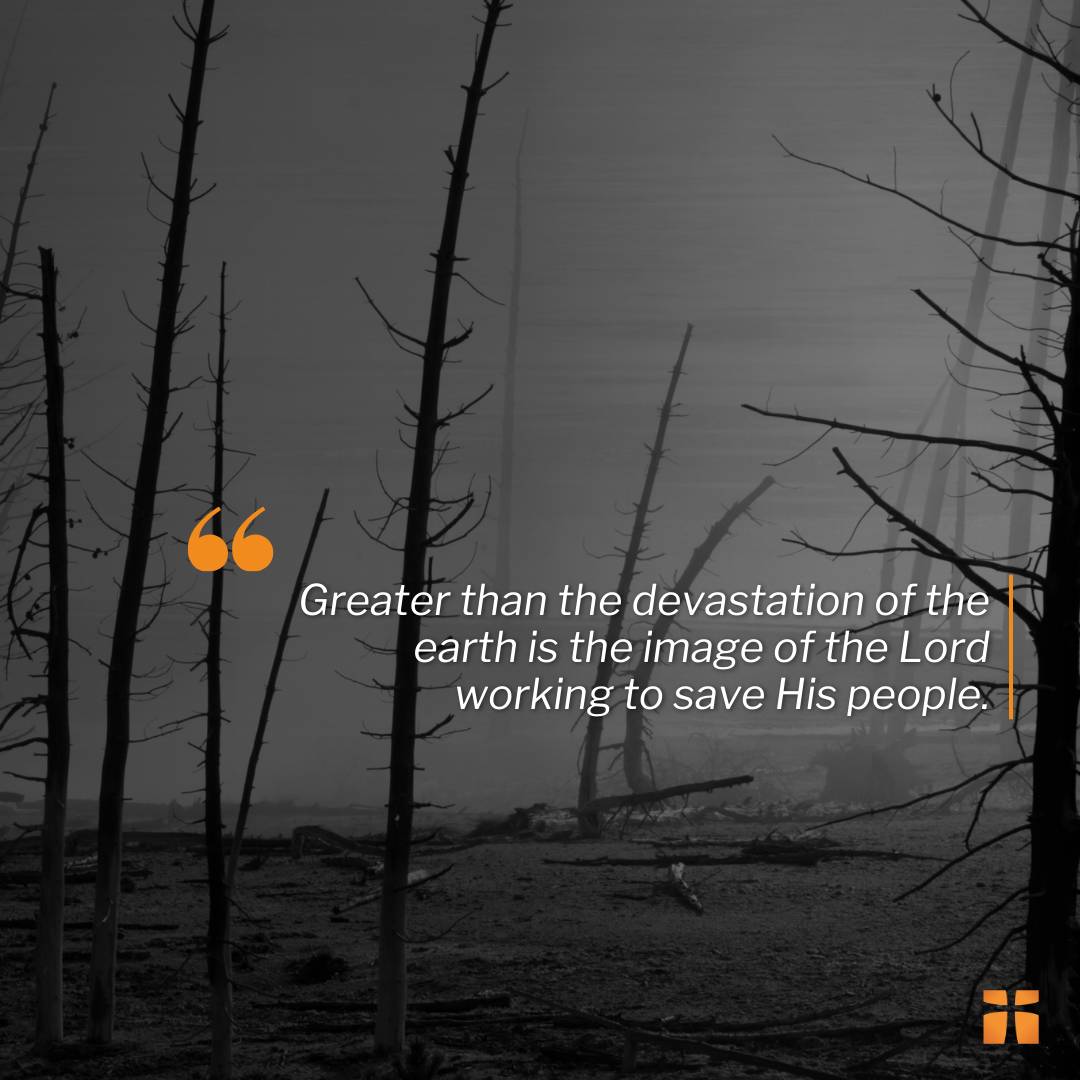
The poetic language in the Psalm paints a picture of destruction–of the ground trembling and the mountains falling into the sea. Waves crash, as if in a great storm. Yet greater than the devastation of the earth is the image of the Lord working to save His people. Unlike the physical shaking and crashing of the earth, God can dissolve the earth with a mere shout (Psalm 46:6). The One who spoke all things into existence is the same One who can command its destruction.
He destroys the weapons of the enemy, and “He makes wars cease to the ends of the earth” (Psalm 46:9, NIV). Because of this imagery of the Lord bringing an end to war and dissolving the earth, many commentators believe these latter verses may refer to the end times. From Revelation, we know that Christ will return and put an end to humankind's fighting (Revelation 19:11-21; also see 2 Thessalonians 2:8).
Since the Lord is in control and fights for His people, we can trust Him. The stillness we are called to is intricately tied to a firm trust. We do not wait in stillness because of apathy toward the events around us. Instead, we cease from fretful worry based on our confidence and faith in the Lord, who is greater than any warring nation or natural disaster.
Why Victory Is Accomplished by Trusting in God
Biblical scholars do not agree about whether the command to be still was given to the people of Judah or to the contending nations. However, from other passages in Scripture, we know that the people of God had to be reminded to trust in the Lord, especially in times of trouble. When the Lord led the Israelites out of Egypt, and they were hemmed in with Pharaoh and his armies behind, and the Red Sea ahead, they cried out against Moses. But he told them,
“Do not be afraid. Stand firm, and you will see the deliverance the Lord will bring you today. The Egyptians you see today you will never see again. The Lord will fight for you; you need only to be still.” - Exodus 14:13-14, NIV
That is what God did–by His own power, He defeated Israel’s enemies and led them to safety. None of them could boast that they had saved themselves. When the Moabites, Ammonites, and Meunites came against Jehoshaphat, he sought the Lord’s help. He recalled how the Israelites had obeyed the Lord and refrained from invading the lands of the Moabites and Ammonites, but now their kindness was being repaid with evil (2 Chronicles 20:10-11). Confessing their powerlessness in this situation, Jehoshaphat waited for the Lord to act (2 Chronicles 20:12). God replied through Jahaziel, a descendant of Asaph: “Do not be afraid or discouraged because of this vast army. For the battle is not yours, but God’s” (2 Chronicles 20:15, NIV). They were called only to trust in the Lord and see His deliverance.
Victory comes by being still and trusting in the Lord, not in fretful striving or exerting greater power, as if we could win the battles of life by our own strength. We are just as in need as Moses, the Israelites, and Jehoshaphat. The decision to stop trying to control the situation is often counterintuitive to what we know, but it is the best choice we can make. Hence, the Apostle Paul later wrote that we should “not be anxious about anything” (Philippians 4:6, NIV). Confidently waiting on God is needed if we desire to learn to be still in His presence.
How Knowing God Unlocks Peace in Our Everyday Lives
Our trust is not in some magical formula or in an idea of what should happen. The Lord encourages us: “Be still, and know that I am God” (Psalm 46:10, NIV, emphasis added). We are not merely practicing stillness for the sake of quiet or false promises of peace. Our stillness comes from an intimate knowledge and trust in God.
He is the Mighty One who rescued the Israelites from their Egyptian slavery. He is the One who toppled the walls of Jericho. He is the One who threw the armies into confusion and defeated them as Jehoshaphat and the others sang. He is the One who stopped Sennacherib. And He is the One who saved us by sending His Son to die in our place. Our freedom from sin comes only from Him. We walk in obedience to Him through the power of His indwelling Spirit.
None of us will learn to be still and cease from our anxious striving if we do not know this great God. And this is not only about head knowledge, as if listing facts about His omnipotence and omniscience is enough to quiet our fretful hearts. No, we must know Him as a person knows a friend, or a mother knows her child––through loving relationship.
Those who have placed faith in Jesus’ death and resurrection can invest in their relationship with Him by regularly spending time with Him, reading Scripture, praying, obeying Him, and meeting with other Christ-followers for mutual edification. We get to know Him on a closer level, learning to trust Him in the mundane tasks, so that when the storms of life come, we can remember the faithful working of our God and trust that He will safely bring us through according to His good plan.
Simple Steps to Surrender Our Worries and Be Still
We are not Israel, fearfully awaiting destruction at the hands of our enemies. Neither are we promised that we will be preserved from every trouble in life. As our Lord said, “I have told you these things, so that in me you may have peace. In this world you will have trouble. But take heart! I have overcome the world” (John 16:33, NIV). Though the disciples did not face war, they did know what it meant to be persecuted, caught in spiritual battles, and weighed down by the darkness in the world. But they were able to be still, quiet their worried hearts, and find rest in the Savior––regardless of their circumstances (Philippians 4:11). For He has overcome, and we can trust that all things will be made right at His return. Like the disciples, we can live in an unhurried and restful faith in our Savior.
4 Spiritually Based, Practical Ways to Slow Down
1. Giving our concerns to the Lord. To pray without ceasing and present our worries to Him, entrusting them to the hands of Him who sustains everything (1 Thessalonians 5:17; 1 Peter 5:7).
2. We can practice patient waiting, knowing that every trial we face in faith will have eternal effects (Ecclesiastes 12:14; Colossians 3:2).
3. Each day, we can walk with our Savior, growing in knowledge and love of Him (2 Peter 3:18).
4. Practice sitting in stillness and quiet before opening ourselves to prayer or reading God’s Word.
In this way, we acknowledge our dependence on Him and declare that we do not live the Christian life through our own power or fight our battles with human strength. The Lord God is in control, and in Him, we put our trust. We cease from our striving because “The Lord Almighty is with us; the God of Jacob is our fortress” (Psalm 46:11, NIV).
Printable Related Resources
Download 7 Powerful Psalms to Pray against Fear and Evil
7-Day Practice in Being Still with God
Peace Be Still: An 8-Day Biblical Guide to Overcoming Anxiety
Photo credit: ©GettyImages/Olga Pankova