
A Prayer to Remind Us God Works for Our Good
By Lori Hatcher
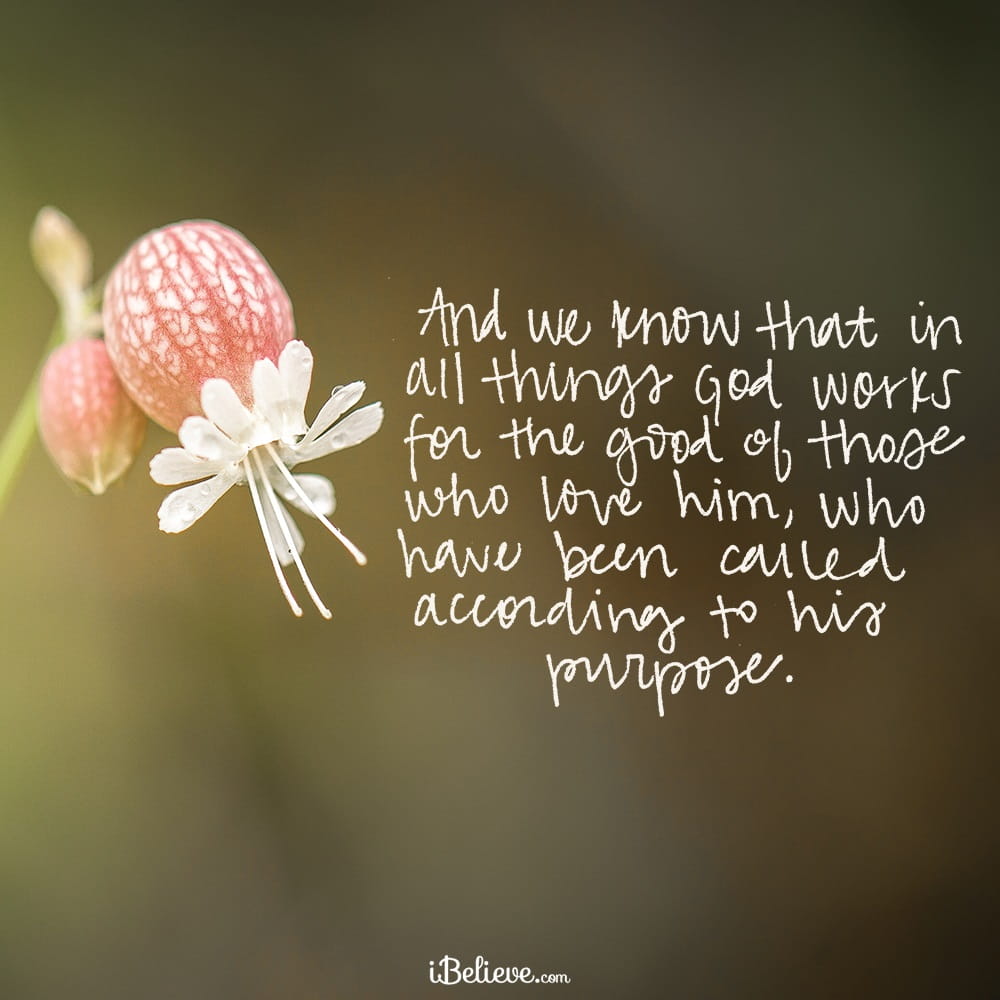
“And we know that in all things God works for the good of those who love him, who have been called according to his purpose.”(Romans 8:28)
This Scripture brings comfort, direction, and hope to Christians every day. Sadly, it’s also one of the most misquoted and misunderstood verses in the Bible.
I’d like to share three things about this popular verse you may never have noticed.
First, Romans 8:28 doesn’t mean we can live any way we choose, and God will fix our messes.
To understand the truth of Romans 8:28, we can’t just quote the part of the verse we like: “And we know that in all things God works for the good...” and skip the rest, “of those who love him, who have been called according to his purpose.”
This verse says to those who love God and are doing their best to obey his commands, “Even though bad/sad/evil/wicked things will touch your life, I (God) will use them to ultimately bring about good, both in your life and in the world.”
Second, Romans 8:28 tells us God can use all things together for good. He doesn’t say all things are good.
No matter how rose-colored our glasses are, there’s nothing good about cancer, sex trafficking, or death. Until Jesus returns and conquers Satan once and for all, sin will continue to drag its poisonous tentacles across our world, damaging and destroying everything in its wake.
The truth of Romans 8:28 reminds us that although sin and Satan are powerful, God is more powerful; He is able to redeem and restore anything for our good and his glory. All things may not be good, but God can and will use all things for good.
The final thing you may never have noticed about Romans 8:28 and its accompanying verse, Romans 8:29 is the ultimate good God wants to accomplish in the lives of his children:
“For those God foreknew, he also predestined to be conformed to the likeness of his Son, that he might be the firstborn among many brothers” (v. 29).
A wise Bible teacher once told me, “God allows everything into our lives for one of two purposes—either to bring us into a relationship with himself or, if we already know him, to make us more like his Son.”
As long as we live in this world, people will attempt to reconcile God’s sovereignty with humanity’s suffering. Verses like Romans 8:28 assure us that no suffering is wasted, and God is always at work for our good and his glory. When we cannot comprehend why trials come and struggle to imagine that anything good can come from them, we can rest in the security that God is in control.
Please pray with me:
Father, sometimes I can’t understand how you can bring beauty from the ashes of my life. I struggle to trust you with the broken pieces. You say in your Word that without faith it is impossible to please you, and I want to please you. I want to trust you. I want you to make me more like Jesus and use my trials for my good and your glory. Help me believe the promise of Romans 8:28. In the strong name of Jesus I ask, Amen.
Editor’s Note: Content taken from “3 Things You Never Noticed in Romans 8:28” by Lori Hatcher. You can read that piece in full here. All rights reserved.
Related Resource: Sheila Walsh: The Cost of Pretending You’re Okay - Buried Emotions, Depression, Mental Health & the Courage to Heal
In this powerful conversation, bestselling author and beloved speaker Sheila Walsh opens up about the hidden cost of pretending you’re okay. She and Zach explore why what we refuse to feel can eventually overwhelm us, why vulnerability is not weakness, and how healing often begins when we finally tell the truth about what’s happening inside. If you’ve ever felt pressure to hold it all together while quietly falling apart, this conversation reminds you that you don’t have to pretend, and you don’t have to heal alone. If you like what you hear, be sure to follow The Built Different Podcast on Apple, Spotify or YouTube so you never miss an episode!

Was this resource helpful? Add Christianity.com as a trusted source for Biblical content.


