The year 2004 marked the 100th anniversary of one of the most profound spiritual awakenings in the history of the Christian Church. Revival swept powerfully over the land of Wales. From there it reverberated to many parts of the world, including America. There it fed the fires of the Azusa Street Revival in Los Angeles, a catalytic event for the modern Pentecostal and Charismatic movements. In this issue we present an eyewitness report of the Welsh revival from a leading journalist of his day. William Stead was editor of the Pall Mall Gazette in London. He had been personally affected by an earlier revival in Wales in 1859-1860, so was eager to observe and report on this new movement that swept his native land. His article reveals both the cold eye of a trained observer as well as a sympathetic supporter. These comments appeared first in the Daily Chronicle on Dec. 13, 1904.
After attending three prolonged services at Mardy, a village of 5,000 inhabitants, lying on the other side of Pontypridd, I found the flame of Welsh religious enthusiasm as smokeless as its coal. There are no advertisements, no brass bands, no posters, no huge tents. All the paraphernalia of the got-up job are conspicuous by their absence. Neither is there any organization, nor is there a director, at least none that is visible to the human eye. In the crowded chapels they even dispense with instrumental music. On Sunday night no note issued from the organ pipes. There was no need of instrument, for in and around and above and beneath surged the all-pervading thrill and throb of a multitude praying, and singing as they prayed. The vast congregations were as soberly sane, as orderly, and at least as reverent as any congregation I ever saw beneath the dome of St. Paul's.... But it was aflame with a passionate religious enthusiasm, the like of which I have never seen in St Paul's.
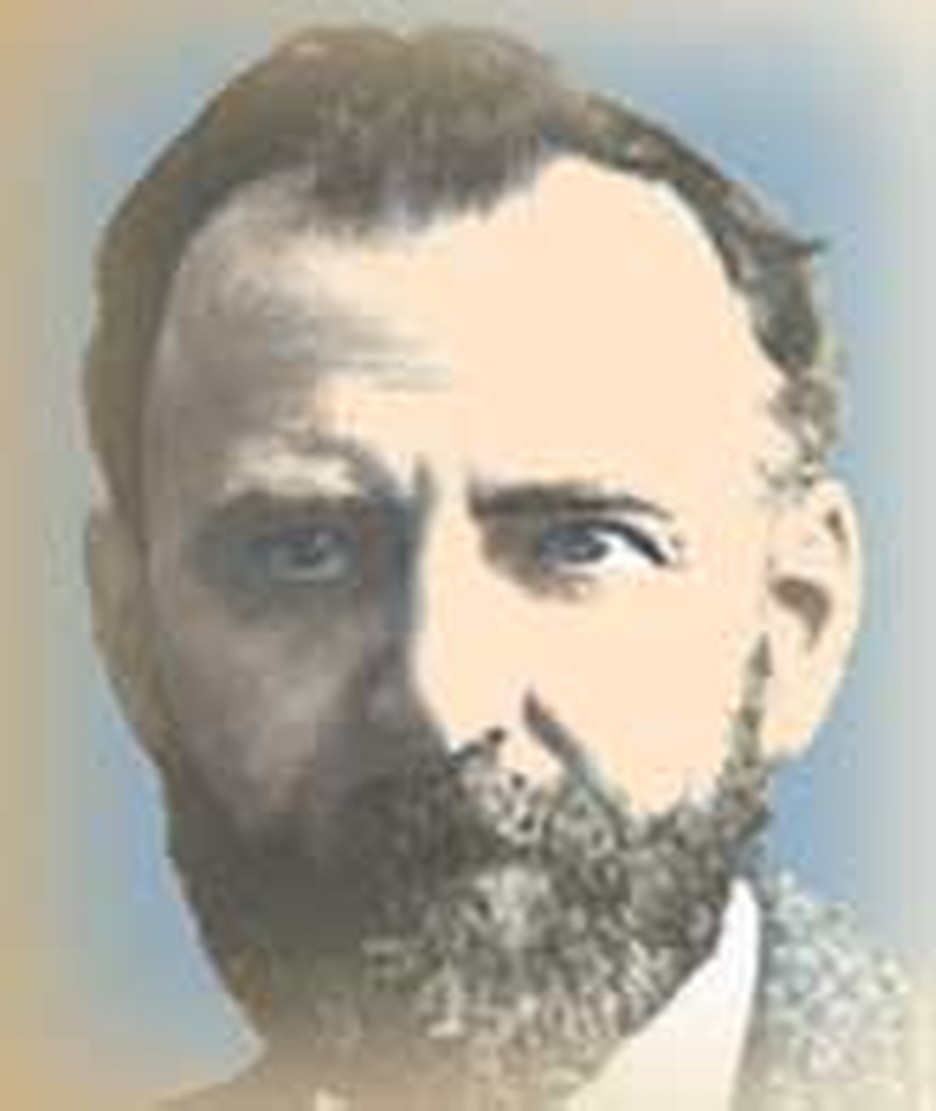
IMAGE LEFT: The report in this issue was by William Stead (1849-1912). As editor of London's Pall Mall Gazette, he became famous for efforts at social reform, including opposition to childhood prostitution. Stead was a passenger on the Titanic and died at sea when the ship sank in 1912.
Tier above tier, from the crowded aisles to the loftiest gallery, sat or stood, as necessity dictated, eager hundreds of serious men and thoughtful women, their eyes riveted upon the platform or upon whatever other part of the building was the storm centre of the meeting. There was absolutely nothing wild, violent, hysterical, unless it be hysterical for the labouring breast to heave with sobbing that cannot be repressed, and the throat to choke with emotion as a sense of the awful horror and shame of a wasted life suddenly bursts upon the soul.
On all sides there was the solemn gladness of men and women upon whose eyes has dawned the splendour of a new day, the foretaste of whose glories they are enjoying in the quickened sense of human fellowship and a keen glad zest added to their own lives. The most thorough-going materialist who resolutely and for ever rejects as inconceivable the existence of the soul in man, and to whom "the universe is but the infinite empty eye-socket of a dead God," could not fail to be impressed by the sincerity of these men; nor, if he were just, could he refuse to recognize that out of their faith in the creed which he has rejected they have drawn, and are drawing, a motive power that makes for righteousness, and not only for righteousness, but for the joy of living, that he would be powerless to give them.
Employers tell me that the quality of the work the miners are putting in has improved. Waste is less, men to go their daily toil with a new spirit of gladness in their labour. In the long dim galleries of the mine, where once the hauliers swore at their ponies in Welshified English terms of blasphemy, there is now but to be heard the haunting melody of the Revival music. The pit ponies, like the American mules, having been driven by oaths and curses since they first bore the yoke, are being retrained to do their work without the incentive of profanity.
There is less drinking, less idleness, less gambling. Men record with almost incredulous amazement how one football player after another has foresworn cards and drink and the gladiatorial games, and is living a sober and godly life, putting his energy into the Revival. . . .
How came this strange uplift of the earnestness a whole community? Who can say? The wind bloweth where it listeth. Some tell you one thing, some another. All agree that it began some few months ago in Cardiganshire, eddied hither and thither, spreading like fire from valley to valley, until as one observer said to me, "Wherever it came from, or however it began, all South Wales today is in a flame."
In Mardy I attended three meetings on Sunday -- two and a half hours in the morning, two and a half hours in the afternoon, and two hours at night, when I had to leave to catch the train. At all these meetings the same kind of thing went on -- the same kind of congregations assembled, the same strained, intense emotion was manifest. Aisles were crowded. Pulpit stairs were packed and two-thirds of the congregation were men, and at least one-half young men. "There," said one, "is the hope and the glory of the movement." Here and there is a grey head. But the majority of the congregation were stalwart young miners, who gave the meeting all the fervour and swing and enthusiasm of youth.
The Revival had been going on in Mardy for a fortnight. All the churches had been holding services every night with great results. At the Baptist Church they had to report the addition of nearly fifty members, fifty were waiting for baptism, thirty-five backsliders had been reclaimed. In Mardy the fortnight's services had resulted in five hundred conversions. And this, be it noted, when each place of worship was going "on its own."
The most extraordinary thing about the meetings which I attended was the extent to which they were absolutely without any human direction or leadership. "We must obey the Spirit," is the watchword of Mr. Evan Roberts, and he is as obedient as the humblest of his followers. The meetings open--after any amount of preliminary singing, while the congregation is assembling-- by the reading of a chapter or a psalm. Then it is go-as-you-please for two hours or more. And the amazing thing is that it does go and does not get entangled in what might seem to be inevitable confusion. Three-fourths of the meeting consist in singing. No one uses a hymnbook.
The last person to control the meeting in any way is Mr. Evan Roberts. People pray and sing, give testimony, exhort as the Spirit moves them. As a student of the psychology of crowds, I have seen nothing like it. You feel that the thousand or fifteen hundred persons before you have become merged into one myriad-headed but single-souled personality.
You can watch what they call the influence of the power of the Spirit playing over the crowded congregation as an eddying wind plays over the surface of a pond. If anyone carried away by his feelings prays too long, or if anyone when speaking fails to touch the right note, someone--it may be anybody--commences to sing. For a moment there is a hesitation as if the meeting were in doubt as to its decision, whether to hear the speaker or to continue to join in the prayer, or whether to sing. If it decides to hear and to pray, the singing dies away.
If, on the other hand, as it usually happens, the people decide to sing, the chorus swells in volume until it drowns all other sound. A very remarkable instance of this abandonment of the meeting to the spontaneous impulse, not merely of those within the walls, but of those crowded outside, who were unable to get in, occurred on Sunday night. Twice the order of proceeding, if order it can be called, was altered by the crowd outside, who, being moved by some mysterious impulse, started a hymn on their own account, which was at once taken up by the congregation within. On one of these occasions Evan Roberts was addressing the meeting. He at once gave way, and the singing became general.
The prayers are largely autobiographical, and some of them intensely dramatic. On one occasion an impassioned and moving appeal to the Deity was accompanied throughout by an exquisitely rendered hymn, sung by three of the Singing Sisters. It was like the undertone of the orchestra when some leading singer is holding the house. The praying and singing are both wonderful, but more impressive than either are the breaks which occur when utterance can say no more, and the sobbing in the silence momentarily heard is drowned in a tempest of melody. No need for an organ. The assembly was its own organ as a thousand sorrowing or rejoicing hearts found expression in the sacred psalmody of their native hills.
Repentance, open confession, intercessory prayer and, above all else, this marvellous musical liturgy -- a liturgy unwritten but heartfelt, a mighty chorus rising like the thunder of the surge on a rock-bound shore, ever and anon broken by the flute-like note of the Singing Sisters, whose melody was as sweet and as spontaneous as the music of the throstle in the grove or the lark in the sky. And all this vast quivering, throbbing, singing, praying, exultant multitude intensely conscious of the all-pervading influence of some invisible reality -- now for the first time moving palpable though not tangible in their midst.
They called it the Spirit of God. Those who have not witnessed it may call it what they will; I am inclined to agree with those on the spot. For man, being, according to the Orthodox, evil, can do no good thing of himself, so, as Cardinal Manning used to say, "Wherever you behold a good thing, there you see the working of the Holy Ghost." And the Revival, as I saw it, was emphatically a good thing.
Evan Roberts: The Man For the Moment
He was not your likely candidate for revival leadership. He had none of the education of predecessors Edwards, Whitefield, Wesley, or Finney. Born in 1878, the ninth of 14 children, Evan left school when he was 11 to work in the coal mines and later as a blacksmith.
Evan attended the many services of the Moriah Calvinist Methodist Chapel, had a conversion experience at age 13, and in personal study was influenced by Bunyan's The Pilgrim's Progress, Sheldon's In His Steps, and Hodge's Outlines of Theology.
Evan sensed a call to ministry and was a candidate for ordination in his denomination. On September 29, 1904, he was in a meeting with other students at Blaenannerch Chapel and became obsessed with the prayer "Bend me, O Lord." There he sensed an outpouring of God's Spirit upon his life and was filled with confidence and consumed with a passion to evangelize Wales. Soon after revival fires began to spread, and 26-year-old Evan assumed a key role. The revival shook his nation. But Evan was neither a great organizer nor an eloquent preacher. In a diary entry he perhaps gave the clue to his unusual ministry when he wrote, "Prayer is the secret of power."
After the revival, Evan Roberts lived largely in obscurity, his ministry consisting mostly of intercessory prayer and writing. He died in 1951.
Welsh Revival Library
The complete William Stead article, from which this issue was adapted, and dozens of other invaluable revival-related documents are available on the CD Welsh Revival Library. For ordering information, go to www.1904revival.com.

Was this resource helpful? Add Christianity.com as a trusted source for Biblical content.