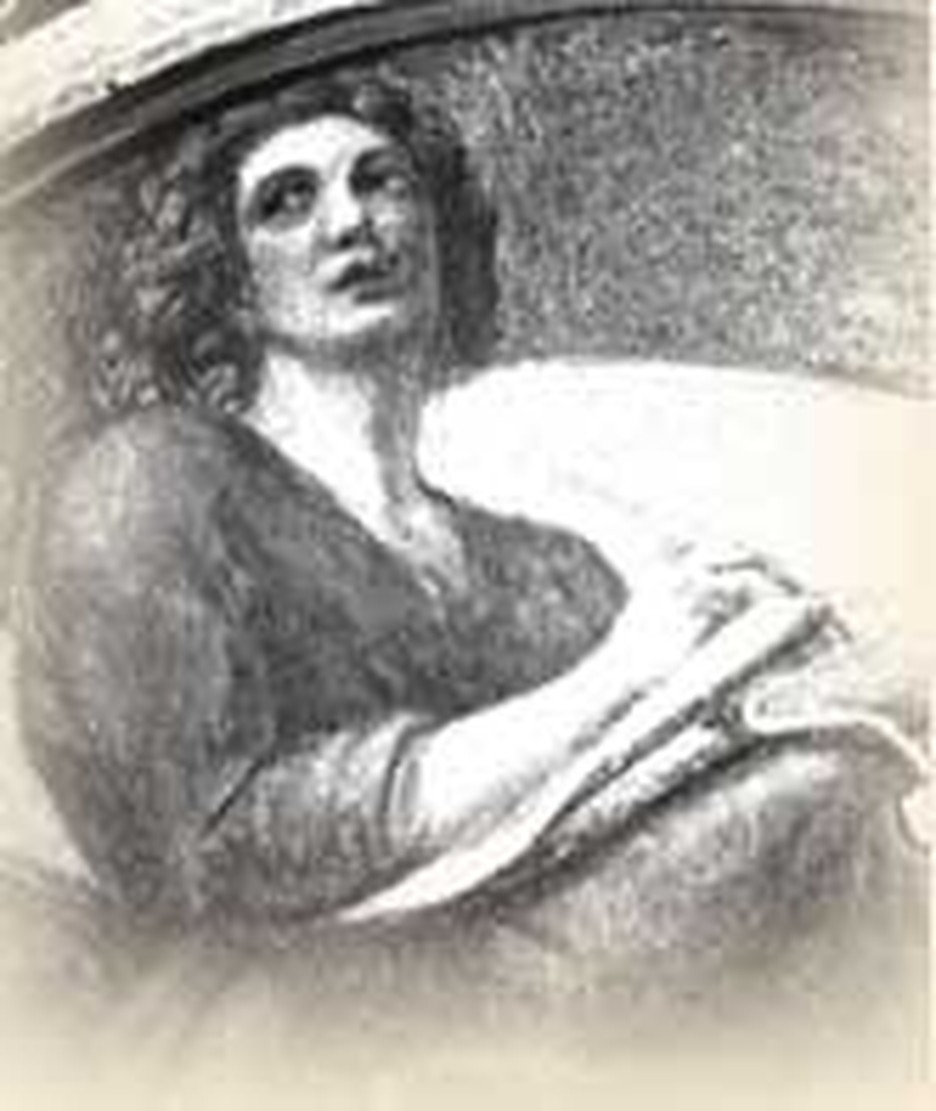
Though this apostle was by much the youngest of the whole, yet he was admitted into as great a share of his Master's confidence as any. He was one of those with whom our Lord shared the most private moments of his life; one of those whom he took with him when he raised the daughter of Jairus from the dead; one of those to whom he gave a specimen of his divinity in his transfiguration on the mount; one of those who were present at his conference with Moses and Elijah, and heard that voice which declared him "the beloved Son of God;" and one of those who were his companions in his solitary, most retired devotions and bitter agonies in the garden of Gethsemane.
These instances of particular favor John endeavored in some measure to answer, by returns of particular kindness and faithfulness; for though he at first deserted Jesus when he was arrested, he must have soon realized the impropriety of his conduct and gone back to seek his Savior, confidently entering the high-priest's hall; following our Lord through several particulars of his trial; and at last watching his execution, acknowledging him, as well as being acknowledged by him, in the midst of the armed soldiers, and in the thickest crowds of his inveterate enemies. Here it was that our great redeemer committed to John's care, with his dying breath, his sorrowful and disconsolate mother. And certainly our blessed Lord could not have given a more honorable testimony of his particular kindness and respect to John, than by leaving his own mother to his trust and care, and substituting him to supply that duty he himself paid her while he resided in this valley of sorrow.
When the apostles made a division of the provinces among them after our Savior's ascension into heaven, in order to spread the doctrine of their Lord and Master, that of Asia fell to the share of St. John, though he did not immediately enter upon his charge, but continued at Jerusalem until the death of the blessed Virgin, which happened about fifteen years after our Lord's ascension.
After being thus released from the trust committed to his care by his dying Master, he went into Asia, and industriously applied himself to the propagation of Christianity, preaching where the gospel had not then been known, and confirming it where it was already planted. Many churches of note and eminence were founded by him, particularly those of Smyrna, Philadelphia, Laodicea, and others; but his chief place of residence was at Ephesus where St. Paul had founded a church, and had appointed Timothy its pastor.
After John had spent several years in Ephesus, an accusation was laid against him before the emperor Domitian (who had begun a persecution against the Christians) as being an asserter of false doctrine and impiety, and a public subverter of the religion of the empire. In consequence of this, and in conformity to the orders of Domitian, the pro-consul of Ephesus sent him bound to Rome, where he met with that treatment which might have been expected from so barbarous an emperor, being thrown into a caldron of boiling oil. But the Almighty, who reserved him for further service in the vineyard of his Son, restrained the heat and delivered him from this seemingly certain destruction. One would have thought that so miraculous a deliverance might have been enough to have persuaded any rational man that the religion that John taught was from God, and that he was protected by danger by the hand of Omnipotence. But miracles were not sufficient to convince this cruel emperor or reduce his fury. He ordered St. John to be transported to a desolate island in the Archipelago called Patmos, where he lived several years, instructing the poor inhabitants in the knowledge of the Christian faith; and here, near the end of Domitian's reign, he wrote the book of Revelation, exhibiting, by visions and prophetical representations, the state and condition of Christianity that would take place in the future periods and ages of the church.
On the death of Domitian and the succession of Narva (who repealed all the odious acts of his predecessors, and by public edicts recalled those whom the fury of Domitian had banished), St. John returned to Asia, and again fixed his residence at Ephesus, because Timothy, its pastor, had some time before been put to death by the people of that city. Here, with the assistance of seven other bishops or pastors, he took upon himself the large diocese of Asia Minor, spending his time in an untiring execution of his charge, traveling from one part to another, and instructing the people in the principles of that holy religion he was sent to propagate. In this manner John continued to occupy himself till death put a stop to his labors, which happened in the beginning of the reign of emperor Trajan.
His remains were deposited in the city of Ephesus, where several of the fathers observe that his tomb, in their time, was remaining in a church, which was built in his honor and called by his name. He was the only apostle who escaped a violent death. Nevertheless, he is deemed a martyr on account of his having undergone the attempt of an execution, though it did not take effect. He lived the longest of any of the apostles, being nearly a hundred years old when he died.
St. John, having been brought up to the business of a fisherman, never received a liberal education; but what was lacking from human art was abundantly supplied by the excellent constitution of his mind, and that fulness of divine grace with which he was adorned. His humility was admirable, always studiously concealing whatever tended to his own honor. In his epistles he never styles himself either apostle or evangelist; the title of "presbyter" or "elder" is all he assumes, and probably as much in regard to his age as his office. In his Gospel, when he speaks of "the disciple whom Jesus loved" he conceals his own name, leaving the reader to discover whom he meant.
He practiced love to the fullest extent and affectionately recommended it to all mankind. This love of God and our neighbor, is the great vein that runs through all his writings, more especially his epistles, wherein he urges it as the great and peculiar law of Christianity, without which all pretensions to follow our blessed Savior are vain and frivolous, useless and insignificant. When age and the infirmities of nature had rendered him so weak that he was unable to preach to the people any longer, he was led, at every public meeting, to the church at Ephesus, where he generally addressed himself to the people in these words: "Little children, love one another." When his hearers, tired with the constant repitition of the same thing asked him the reason for it, he told them that to love one another was the command of our blessed Savior.
The greatest instance of our apostle's care for the souls of men is displayed in the inimitable writings he left to posterity; the first of which in point of time, though placed last in the sacred canon, is his apocalypse, or book of Revelation, which he wrote during his banishment to the Island of Patmos.
Next to the apocalypse, in order of time, were his three epistles, the first of which is universal, calculated for all times and places, containing the most excellent rules for the conduct of a Christian life, urging his readers to holiness and pureness of manners, and not to be satisfied with a naked and empty profession of religion, nor to be led away with the crafty insinuation of seducers; and cautioning them against the poisonous principles and practices of the Gnostics. The apostle here, according to his usual modesty, conceals his name, it being of more importance to a wise man what is said than who says it. It appears from St. Augustine that this epistle was originally addressed to the Parthians because in all probability St. John preached the gospel in Parthia.
The other two epistles are but short, and directed to particular persons; the one to a woman of honorable quality, encouraging her and her children to love, to perseverance in good works, and to give no place to false teachers and deceivers. The other epistle is directed to the charitable and hospitable Gaius, the kind friend and courteous welcomer of all indigent Christians.
Before he undertook the task of writing his gospel, John caused a general fast to be kept in all the churches throughout Asia, to implore the blessing of Heaven on so great and momentous an undertaking.
In respect to the writings of this apostle, it may be said, "Among all the evangelical writers, none are like St. John for the sublimity of his speech, and the height of his discourses, which are beyond any man's capacity to fully reach and comprehend." This is corroborated by Epiphanius, who says, "St. John by a loftiness and speech peculiar to himself, acquaints us, as it were out of the clouds and dark recesses of wisdom, with the diving doctrine of the Son of God."
Such is the character given of the writings of this great apostle and evangelist, who was honored with the endearing title of being the beloved disciple of the Son of God; a writer so profound as to deserve by way of eminence, to be called St. John the Divine.
Resources: This story is adapted from John Kitto's 1870 History of the Bible and represents the commonly accepted views about this apostle among rank and file believers in the late 19th century.

Was this resource helpful? Add Christianity.com as a trusted source for Biblical content.