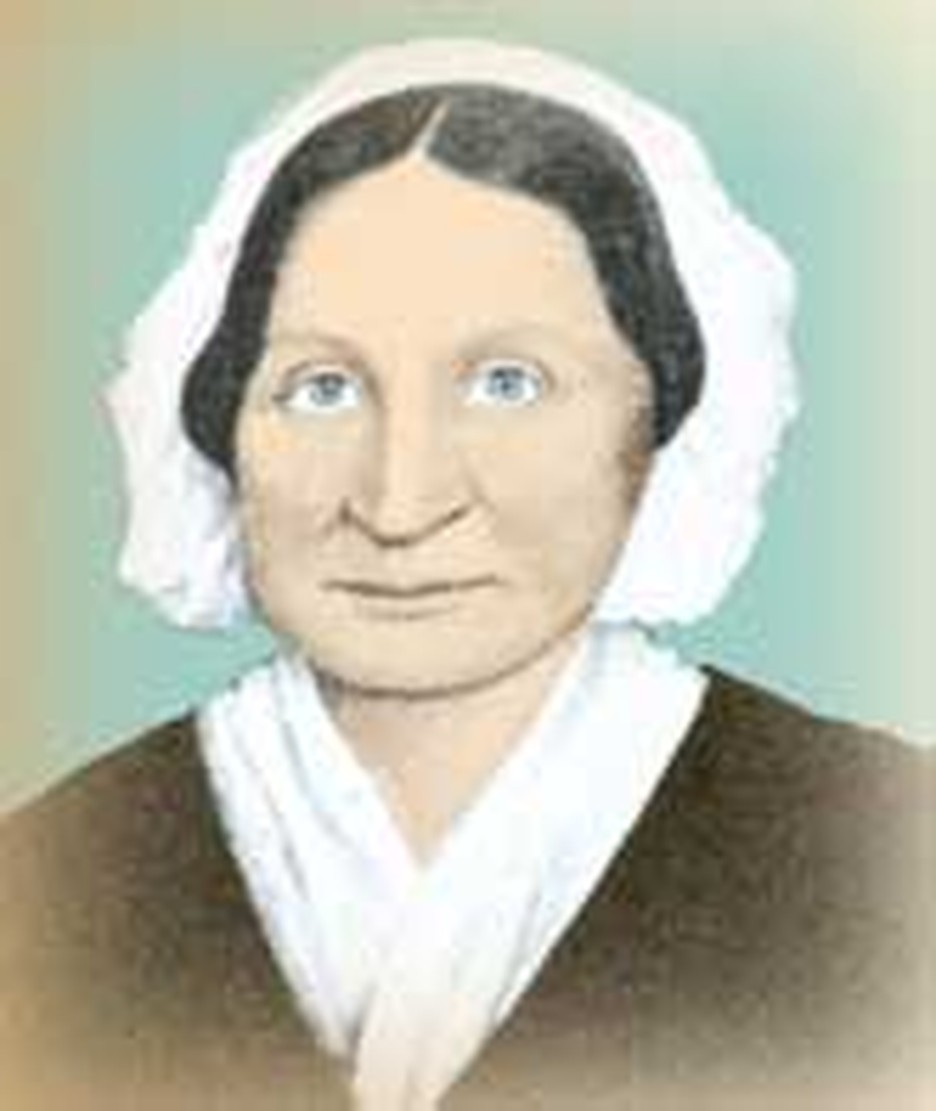
It was a novel idea: educating women. But times were changing. It was the nineteenth century already, an age of growth for the young United States of America. After the War of 1812--Britain's failed attempt to undo the American Revolution--it was pretty clear that the USA was here to stay. Commerce and industry were developing, and the country was expanding westward. Many realized that America needed an educated citizenry in order to attain its lofty dreams and measure up to its potential. Some, like Mary Lyon, dared to think that this education should include females.
Nowadays, educational opportunities abound for women. College enrollment in the U.S. is roughly equal for males and females. But that wasn't always the case. Women couldn't vote until the early 1900s. Decades before the Industrial Revolution, most households at that time were mini-corporations--with women functioning as Chief Operating Officers--but it was rare to see a woman working outside the home, at least in any respectable position, besides school teaching.
Mary Lyon was born in 1797 in western Massachusetts, the sixth of eight children. Her parents, strong Christians, traced their lineage back to the earliest days of the colony, but they were struggling to make a living from the land. Life got even tougher for the family: Mary’s father died when she was six. Mary grew up learning the skills necessary for a girl of her day--spinning, weaving, sewing, as well as helping on the farm--but she also had a thirst for learning. In her teens she began teaching, saving her money to be able to continue her own studies in the various academies and schools of the region (at age 20 she earned 75¢ a week plus board). As she worked and pursued her studies, often she would have only four hours of sleep a day.
A minister named Joseph Emerson ran a school in the town of Byfield, which turned out to be a key influence on Lyon's life. Emerson actually "talked to ladies as if they had brains," she said later. He encouraged Mary to begin a school of her own, specifically for women. As her plans developed, Mary aimed to provide a school affordable for common folks. Perhaps the students themselves could do much of the domestic work at the school, thus cutting costs.
Even more than serving women, though, Mary Lyon devoted herself to serving Christ. She wanted her pupils to become active Christians, with a missionary spirit and a dedication to God in whatever task He would lead them into.
With money raised from interested Christians, Lyon finally realized her dream. Mount Holyoke Female Seminary opened in South Hadley, Massachusetts, in 1836. (The founder specifically insisted the school not be named after her, so it took the name of a nearby peak.) Its motto, "That our daughters may be as cornerstones, polished after the similitude of a palace" (Psalm 144:12). It was the first college in America specifically for women.
The Christian Core
The curriculum was rigorous, including science, mathematics, history, and theology. Lyon herself served as principal for the first dozen years, establishing a model of excellence and Christian living. She spoke with conviction and magnetism, her radiant personality shining through. Students appreciated the timeless spiritual advice and practical applications of her chapel lectures from Proverbs, as well as her other addresses. By preparing women to take part in the development of a young nation, Mary Lyon hoped Mount Holyoke would help to carry the Christian message to the world.
To that end, she put great emphasis on the development of the spiritual life of the students. Mary Lyon and her teachers actively prayed for the conversion of each of the students, and periods of revival were seen as definite answers to prayer. Twice a day, half-hour periods were set aside for the students to have a private time of prayer and meditation. Teachers went from room to room visiting, conversing, and praying with the students. Special prayer meetings were held, as were regular and special fast days. The first Monday in January was set aside to pray for the conversion of the world. On the last Thursday in February, they prayed for revival in colleges and religious institutions. A half hour each Saturday was spent studying the activities of various missionary agencies, and missionary leaders were brought in to address the students.
In an age of burgeoning missionary spirit, Mount Holyoke played an important part. Many graduates became foreign missionaries, and many others became missionaries to the American West. Some even established academies for female education on the frontier. In the following decades, other colleges were established for women, which attained a reputation for high academic standards. But it started in South Hadley, Massachusetts, as Mary Lyon polished cornerstones for God's service.
Quaint Fact |
Plain Talking
Mount Holyoke student, Eliza Hubbell, who attended from 1840-1844, took these notes from Mary's teaching:
- Religion is fitted to make us better in every situation in life. Our common duties will be more perfectly discharged if we are under the control of the Holy Spirit's influence.
- She inculcated the duty of committing Scripture to memory and of having a plan for self-teaching in regard to it.
- Character is made up of little things, and it is greatly important that we know ourselves in little things. Avoid trifling, volatility, anything which will lessen self-respect if you would retain the respect of others. See how the Bible regards small things: Eve, Achan, etc.
- She did not wish us to be like soap stone which crumbles as it is rubbed, but like gold which shines brighter, the more it is used.
A Higher Calling; The Christian Roots of Ivy League Schools Of course Mary Lyon wasn't the only Christian pushing education. Some of the most prestigious universities in the U.S. were founded with the expressed purpose of training Christians for ministry. Harvard The Rules and Precepts set forth at the college's founding echoed the late minister's concerns. Let every Student be plainly instructed and earnestly pressed to consider well the main end of the scholar’s life and studies is to know God and Jesus Christ which is eternal life, John 17:3, and, therefore, to lay Christ in the bottom as the only foundation of all sound knowledge and learning. In the first 100 years, all members of the Harvard faculty were ministers. And during its first 60 years, more than one half of its alumni would become ministers. Yale Princeton While the new college expanded its focus beyond just training for ministry, the Christian emphasis was still strong. Reports indicate that, in those early decades, the college faculty and staff became intimately involved in the students' spiritual lives by inquiring of them directly, praying for them regularly, and biblical preaching. As a result, about 47% of Princeton's first 21 graduating classes became involved in Christian service as a vocation (158 students). Brown A charter was passed that provided that a majority of the trustees and fellows would be "forever Baptists." This stipulation did not include the students, teachers, or other officers, although the president had to be Baptist. Of Brown's first 10 graduating classes (165 graduates) under Manning's leadership, nearly one fourth embarked on full-time Christian service. |

Was this resource helpful? Add Christianity.com as a trusted source for Biblical content.