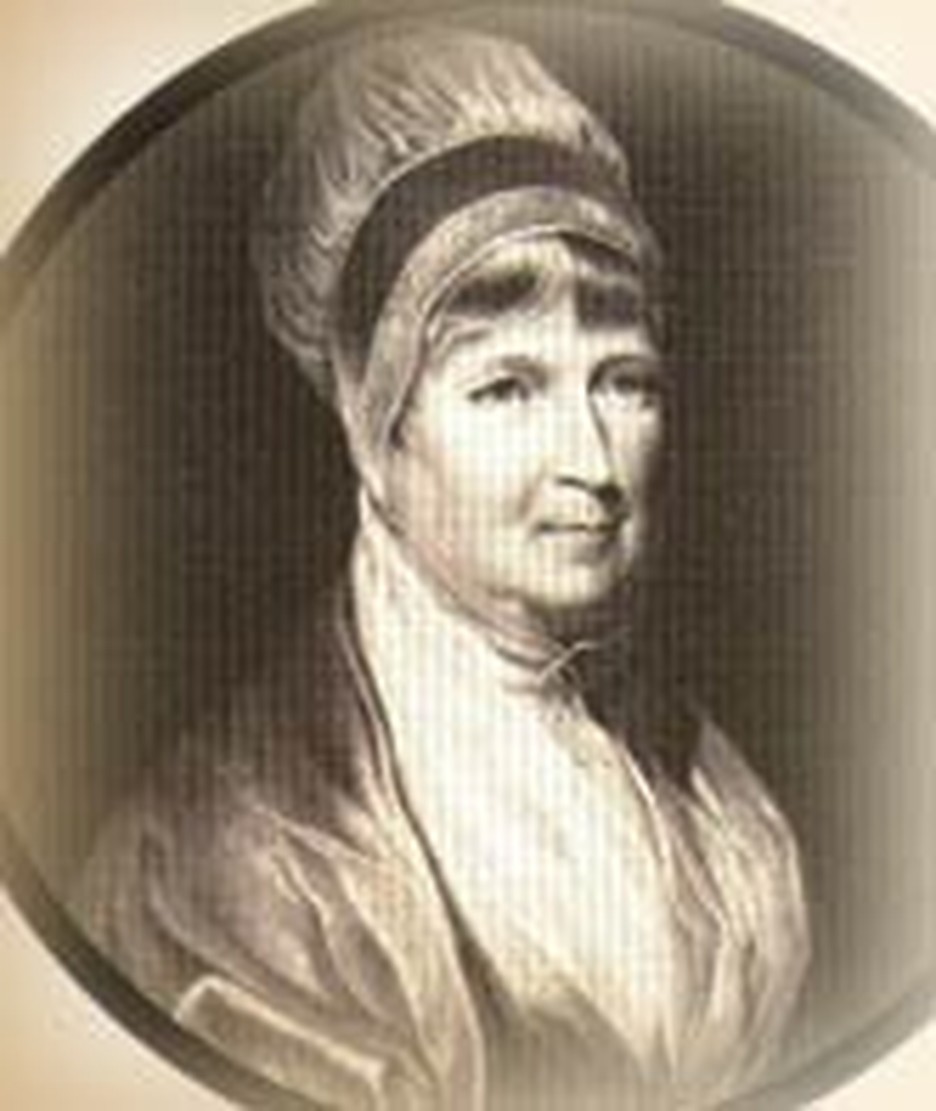
You are born to be a light to the blind, speech to the dumb and feet to the lame."
Eighteen-year-old Elizabeth Gurney heard this prediction with wonder. Had not her friend Deborah Darby gone too far? Members of the Society of Friends, commonly called "Quakers," accepted that the Holy Spirit spoke to them through one another. But Deborah's words seemed overly bold for an age which did not allow women much scope of action. Earlier that same year Elizabeth had fallen under conviction in a meeting led by a Quaker from the United States. So deep had been the impression that she had wept in the carriage most of the way home where she confided to her diary, "Today I have felt that there is a God." Yet no compelling sense of purpose had come to her.
Nor did it now. Nonetheless, she made herself useful where she could, starting a Sunday School with one boy. It quickly grew to eighty. She provided the poor with food and clothes and read to them from the Scriptures. When banker Joseph Fry proposed marriage the following year, she hesitated, hoping for illumination from the Lord. As nothing specific was forthcoming, she accepted the offer. She bore him ten children. Not until after the tenth was born did Elizabeth glimpse her mission.
In 1817 her brother-in-law Thomas Fowell Buxton, a Member of Parliament, suggested she visit the women's section of Newgate prison. Crime was on the rise. English prisons were overcrowded. Perhaps some remedy was possible.
Be Careful, Elizabeth
Friends cautioned Elizabeth not to go. The female prisoners were so violent that they would snatch clothes off visitors' backs, heckle them and steal their valuables. The governor of Newgate himself dared not approach them. But the mother of ten determined to take action. This was just the challenge she craved. Having visited a prison before, she wasn't to be frightened off. Had not the Lord commanded us to remember those in prison? She entered Newgate, refusing even to take off her watch, which, incidentally, was not stolen.
Nothing had prepared her for what she found. Hundreds of drunken, rag-clad women crowded into four rooms built for half their number. Innocents awaited trial side by side with hardened prostitutes and thieves. Children, whose only fault was to have nowhere else to go, might have envied barnyard animals their stables. Babies born in prison squalled in nakedness.
A Bar Behind Bars
The turnkeys (who made their income "shaking down" prisoners) sold a few amenities- and even sold booze. Bathing utensils were scarce. Lice swarmed in clothes and hair. The daily ration of food was one small loaf of bread per person. There were no medicines. Sick women were dumped on dirty straw without so much as a bed. Death by "prison fever" (Typhus) was common.
Discipline was nonexistent. Bullies ran the wards. Fights and curses erupted freely. Many of the women strutted around in men's clothes. Even the tough male prisoners, who mingled with the women during the day, were appalled at their behavior.
A Child Shall Lead Them
Elizabeth made her appeal through the babies. Surely the women desired better than this squalor for their little ones! Indeed they did! But they had no income, no education, no discipline, no hope. Elizabeth promised help and they listened respectfully, recognizing her plain dress as a religious uniform.
Drawing on her own resources and the funds of others, Elizabeth gathered supplies and formed committees. She organized classes in knitting and sewing. Soon the women were able to sell their piecework, earning a little money for soap and food. After fierce haggling she obtained a room for a school. The best educated among them was designated to teach. Each day Fry read aloud to them from the Bible, hoping that the salvation story would sink into their minds and convert them. A few sought Christ's pardon and lived with new peace.
Discovering Self-Discipline
The Quakeress convinced the prison authorities to appoint matrons in place of male turnkeys for the women. With steely determination, she enforced rules upon all, rules which the prisoners themselves voted on. She had them elect leaders to keep order among themselves. Soon Newgate's female wards evidenced unprecedented decorum. The transformation was so extraordinary that world leaders heard of it and consulted her.
At that time many convicts were transported from England to Australia. The system was especially brutal to women for the ships were not fitted to accommodate them. Destitute when at last they reached Australia, many women resorted to prostitution to survive. Elizabeth agitated for reforms. Meantime, for twenty years, she and her committee visited every transportation ship before it sailed, ensuring that the women had cloth and thread so they might make articles on the long voyage which they could sell in the colony when they arrived. Thanks in large part to her efforts, the transportation was exposed as an inhumane institution and, shortly after her death, outlawed.
Elizabeth's reforms prompted other advances. Theodore Fliedner, a young German pastor, imported her ideas to Germany. To succor needy ill women, he trained nurses. Elizabeth, impressed by the idea, founded the Institute of Nursing Sisters to work among the poor. The nurses were given rudimentary training at Guy's Hospital. One of these sisters nursed Elizabeth in her last illness. She died at age 65. Her actions, spurred by faith, fulfilled Deborah Darby's vision: she had become a voice for prisoners who could not speak for themselves.
Fascinating Facts. . .
- "Nothing short of the Holy Spirit can really help forward the cause of righteousness on earth," said Elizabeth Fry.
- Elizabeth could project so much pathos into her voice that hardened criminals melted and cool observers found themselves in tears.
- The evening before transportation to the colonies, women commonly rioted in Newgate prison. Elizabeth Fry overcame the practice by visiting them and reading to them from the Bible on those evenings.
- Fry's Bible readings to prisoners were at times strongly resisted by governmental authorities.
- Elizabeth's life was not without personal difficulties. When Joseph Fry went bankrupt, Elizabeth was humiliated. Her theology taught that God prospered in this world all those who obeyed him. She found the implications of her husband's failure hard to accept--as did the other Friends. They withdrew his membership.
- All her life Elizabeth Fry suffered attacks of nervous depression and often found it necessary to ingest stimulants and sedatives in order to carry on her tasks.
- Elizabeth would find plenty to do if she were alive today. In America there are close to 100,000 women incarcerated.
On Charity
Charity to the Soul is the Soul of Charity
On Her Conversion
"I think my feelings that night. . .were the most exalted I remember. . .suddenly my mind felt clothed with light, as with a garment and I felt silenced before God; I cried with the heavenly feeling of humility and repentance."
--Memoir of Elizabeth Fry
A Friend's Compassion Amidst Horror
"I have just returned from a most melancholy visit to Newgate, where I have been at the request of Elizabeth Fricker [condemned for robbery], previous to her execution tomorrow morning, at eight o'clock. I found her much hurried, distressed and tormented in mind. Her hands cold and covered with something like the perspiration preceding death and in a universal tremor. The women with her said she had been so outrageous before our going that they thought a man must be sent for to manage her. However, after a serious time with her, her troubled soul became calmed...Besides this poor woman there are also six men to be hanged, one of whom has a wife near her confinement, also condemned and six young children. Since the awful report came down he has become quite mad, from horror of mind. A strait waistcoat could not keep him within bounds: he had just bitten the turnkey..."
--Memoir of Elizabeth Fry
We Have Prisoners Praying for Us (Editor's Notebook)
I was asked recently how we manage to get all the things done that come out of our little operation that we share here in Eastern Pennsylvania with our sister company Gateway Films/Vision Video. I had to confess that I think part of the explanation can be found in jail. Some of the most avid readers of Glimpses are those who have come to faith in Christ in prison and want to ground themselves more in the history of God's people while serving out the remainder of their sentences. We are happy to provide Glimpses to prisoners at no charge and in return we ask that they promise to pray for us and our ministry. God hears and answers prayer and only heaven will reveal what it has meant for us to have a company of convicts praying daily for us.
But we have received other blessings from prisoners. One of the most fascinating video programs that we have seen and arranged to make available is called Love is Not a Luxury. It tells the story of a prison in Brazil where a Christian program was brought to prisoners and to their families. Profound changes resulted! Now, even though the prison houses some of Brazil's most notorious criminals, it is a prison with bars but no guards. The inmates themselves now hold the keys. It prompts us to ask if we might dare to hope that the kind of amazing transformation in prison life seen in Elizabeth Fry's ministry among women (see top right of page two) might also be possible among men prisoners when they meet the liberating Christ. Chuck Colson observed, "It is like no other prison I've ever visited in twenty years of prison ministry. . . It truly is a model for the world." If you would like more information on this video contact us at the address at bottom of opposite column.
--Ken Curtis

Was this resource helpful? Add Christianity.com as a trusted source for Biblical content.