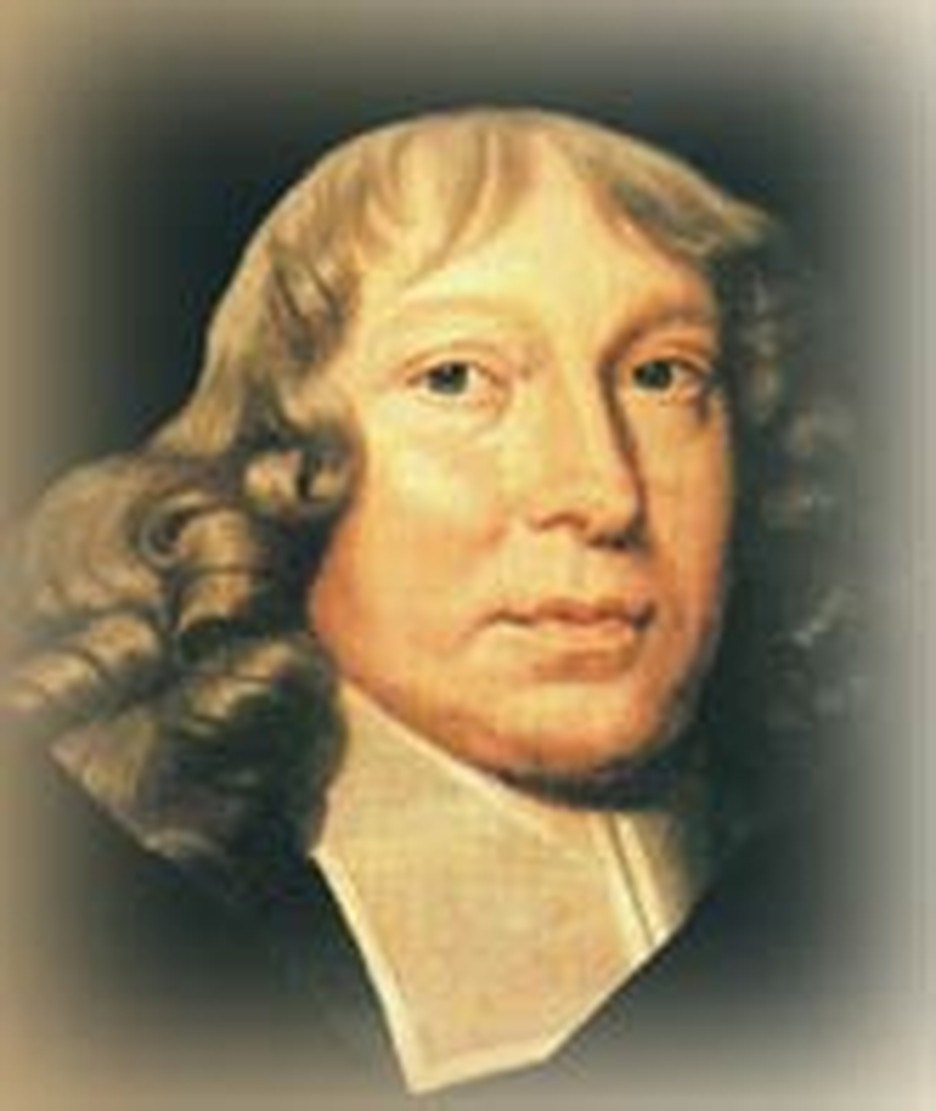
Duties are ours, and events are the Lord's." It wasn't easy in coming, but that was the conclusion reached by a discouraged preacher who felt abandoned by God and useless. And small wonder: He had been removed from his church, forbidden to preach anywhere in his land, and confined to the town of Aberdeen.
Little did he expect at first that his exile would provide the occasion for him to write a volume of letters that nearly four hundred years later would still be acclaimed as masterpieces. In fact, one of the greatest wordsmiths ever, Charles Haddon Spurgeon said of his letters: "When we are dead and gone, let the world know that Spurgeon held Rutherford's letters to be the nearest thing to inspiration which can be found in all the writings of mere man."
Spurgeon spoke of Scotsman Samuel Rutherford who was born in 1600. He would bless the world with spiritual literature that endures, a monumental legal classic, a major role in the formation of one of Christendom's finest confessions of faith and foundational concepts later developed in the US Constitution. Yes, Samuel took up his duties. God saw to the events!
Rutherford attended the University of Edinburgh, served as a professor for two years, studied theology, and was licensed as a preacher at age 27. He was assigned the rural county parish of Anwoth in Scotland. There was no village near the small church; the congregation was scattered among the surrounding farms. Though his congregation was small, Rutherford was devoted to his flock. He was known to rise as early as 3 A.M. to begin praying, studying, and caring for the spiritual needs of his congregation.
Family Tragedy
In 1630, after barely five years of marriage, Samuel's wife died. She had suffered a painful illness of thirteen months, and Samuel was deeply affected by her loss. The Rutherfords’ two children also died, and Samuel himself had a debilitating fever three months before his wife's death. RUTHERFORD'S many sufferings only gave him a greater heart of sympathy for the suffering in his flock.
Difficult Days
Rutherford lived during a time of religious persecution in Britain, and many were leaving for the new land of hope, America. Rutherford, however, remained to fight the spiritual battles in Scotland. In 1636, he published an Apology of Divine Grace against the heresies of a righteousness based on human works then spreading the land. This work offended the government and Bishop Laud, who then controlled the established churches of Britain.
Muzzled and Exiled
So, Rutherford was put out of his church. However long the Lord chose to keep him in exile at Aberdeen, Rutherford would not question Him. In a letter to one of his flock at Anwoth, Rutherford wrote, "It is not for us to set an hourglass to the Creator of time."
Though it appeared Rutherford's service for the Lord was being restricted by his confinement, in reality his usefulness increased. The hundreds of letters he wrote to members of his congregation at Anwoth and to fellow-Christians were full of encouragement and loving devotion to Christ. Rutherford had an intimate communion with the Lord which he was not afraid to talk about. He wrote always of Christ, not just of the blessings and work of Christ, but of the wondrous glory of His Person. His letters are full of anticipation of Christ's coming, as Rutherford eagerly awaited the "Marriage Supper of the Lamb." After his death, Rutherford's letters were published; they are still in print and continue to minister to Christians.
After a year and a half exile in Aberdeen, Rutherford resumed a life of preaching and teaching. During the 1640’s he represented the church of Scotland in the important reforms of the Westminster Assembly in London, where he was a major author of the Shorter Catechism, with its famous beginning, "What is the chief end of man?"
Sorry King, Can't Come to Your Court
While a member of the Westminster Assembly, Rutherford wrote a book called Lex Rex, or The Law of the Prince (or King), in which he showed that only God has absolute authority, and even the King must obey the law. When Charles II became King after Cromwell's Puritan rule, Lex Rex was burned by the public hangman and Rutherford was summoned to appear before Parliament under charges of treason. Rutherford was on his deathbed and replied to Parliament's summons by saying, "I have got a summons already before a superior judge and judicatory, and I behoove to answer my first summons, and ere your day come I will be where few kings and great folks come."
His Lex Rex, challenging the "Divine Right of Kings" and insisting that everyone including the king was subject to law, was a radical idea at the time. This same premise, that all government leaders are responsible to a law apart from and higher than themselves, was central to the formation of the United States government and Constitution.
SAMUEL RUTHERFORD'S SAYINGS- If ye were not strangers here, the dogs of the world would not bark at you.
- I am come to love a rumbling and raging devil best. Seeing we must have a devil to hold the saints waking, I wish a cumbersome devil, rather than a secure and sleeping one.
- Honor God, and shame the roaring lion.
- Faith is exceedingly charitable, and believeth no evil of God.
- Ye may have, for the seeking, three always in your company, the Father, Son, and Holy Spirit.
- Surely it cannot be long till day. Nay, hear Him say, Behold I come, my dear Bride; think it not long. I shall be at you at once. I hear you coming … come quickly, for the prisoners of hope are looking out at the prison windows to see if they can behold the King's ambassador coming with the King's warrant and the keys."
- "It is hard to keep sight of God in a storm."
- (Preaching from Song of Solomon 2:14) It is ordinary for man to beg from God, for we be but His beggars; but it is a miracle to see God beg at man. Yet here is the Potter begging from the clay; the Savior seeking from sinners!
- Oh, if He would fold the heavens together like an old cloak, and shovel time and days out of the way, and make ready in haste the Lamb's wife for her Husband! Since He looked upon me, my heart is not mine own; He hath run away to heaven with it.
- Kiss His wise and unerring providence … Learn to believe Christ better than his strokes … Let not the Lord's dealings seem harsh, rough, or unfatherly, because it is unpleasant. When the Lord's blessed will bloweth across your desires, it is best, in humility, to strike sail to Him, and to be willing to be led any way our Lord pleaseth.
In his last illness, as in the vigor of life, Rutherford continued to be occupied with the beauty of the Lord. Some of his last, dying words were:
I shall shine. I shall see Him as He is, and all the fair company with Him, and shall have my large share. It is not easy to be a Christian, but I have obtained the victory through Him who loved me, and Christ is holding forth his arms to embrace me. I have had my fears and faintings, like other sinful men to be carried creditably through; but as sure as ever he spake to me in his word, his Spirit witnessed to my heart, saying Fear not, he had accepted my suffering... Now I feel, I believe, I enjoy, I rejoice...I feed upon manna, I have angels' food, my eyes shall see my Redeemer, I know that He shall stand at the latter day on the earth, and I shall be caught up in the clouds to meet Him in the air...I sleep in Christ, and when I awake I shall be satisfied with his likeness. O for arms to embrace Him.
A fine commemorative book on the Westminster Assembly titled To Glorify and Enjoy God is available from The Banner of Truth Trust at:
PO Box 621
Carlisle, PA 17013
(717) 249-5747
Rutherford's Lex Rex has been reprinted by and is available from Sprinkle Publications at:
PO Box 1094
Harrisonburg, VA 22801
(540) 434-8840 FAX: (540) 434-4136 The Rutherford Institute was founded in 1982 by attorney John Whitehead, author of The Second American Revolution. The Institute is named after Samuel Rutherford and seeks to defend religious civil liberties. It is at:
Box 7482
Charlottesville, VA 22906
(804) 978-3888
Samuel Rutherford may have been the principal author of the famed Westminster Shorter Catechism. There is a manuscript in the library of Edinburgh University in Scotland with a sketch for a "shorter catechism." It much resembles the Westminster Shorter Catechism, and is in Rutherford's own handwriting.
That first question of the catechism is ruthless, asking us in effect, "What are you doing here?" Think of the empty answers from those who do not look to the Bible for their understanding. What would the reply be from the materialist, secularist, atheist, New-Ager, Hindu, Buddhist?

Was this resource helpful? Add Christianity.com as a trusted source for Biblical content.