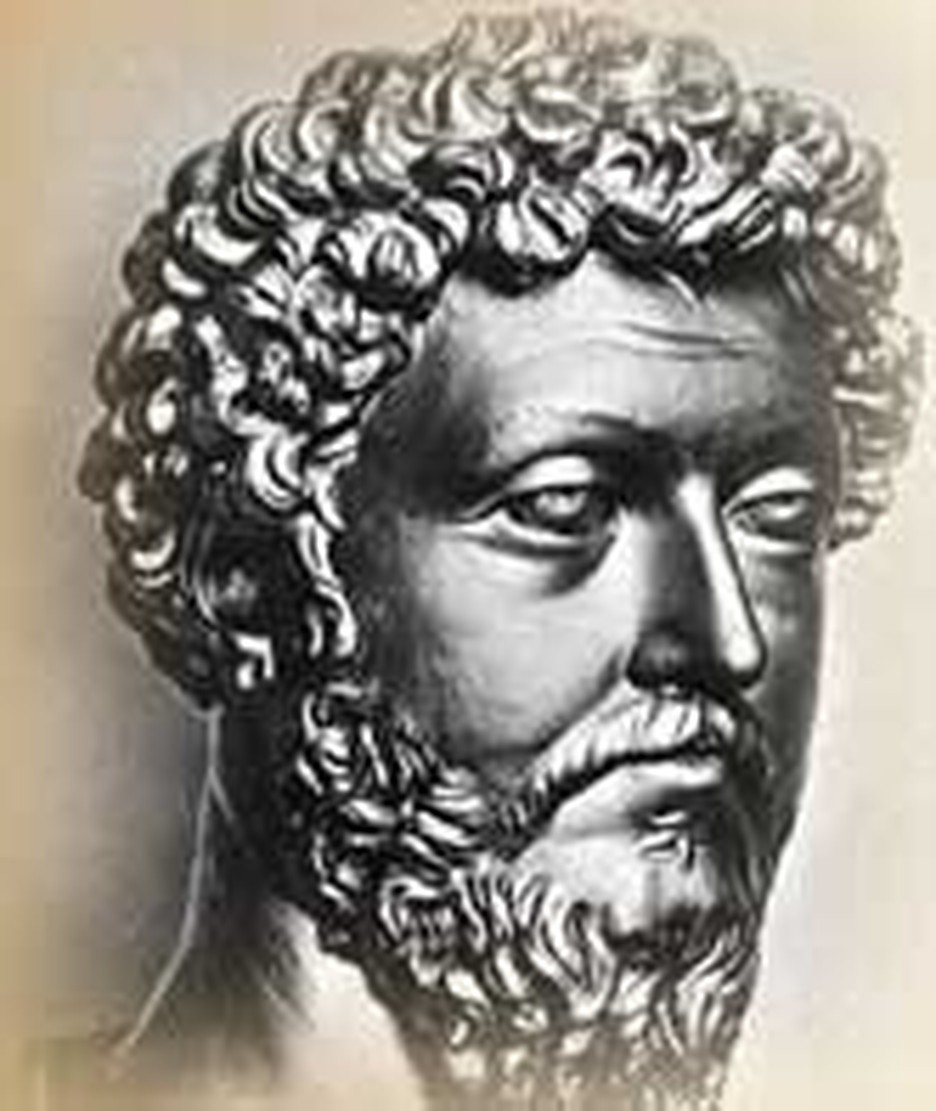
It took a lot of courage for an obscure Athenian philosopher to write a letter to his emperor, challenging him to change his ways! Why did he do it? Because of the extreme persecution his fellow Christians were experiencing under Emperor Marcus Aurelius, now considered to be one of the most enlightened Roman emperors.
Savage Treatment for Christians
Christians were being targeted again for arrest and unthinkable persecution. Earlier emperors Nero, Domitian, and Trajan had made a policy of persecuting believers, and Aurelius was following their example. In addition, persecutions were happening in small towns and local communities all over the Roman Empire.
For example, the city of Lyons, Gaul (modern-day France) unleashed a savage persecution on Christians. Many suffocated in dungeons, while others were tortured with fire in an arena or tossed and dragged by maddened beasts. The slave girl Blandina is a classic example. For three days prior to her execution she publicly endured every cruelty, but never stopped encouraging her fellow sufferers.
Athenagoras could not sit by idly while fellow Christians suffered such cruelty. So in AD 177, he penned his letter, Embassy for the Christians. The letter was addressed "To the Emperors Marcus Aurelius Anoninus and Lucius Aurelius Commodus, conquerors of Armenia and Sarmatia, and more than all, philosophers." Athenagoras must have hoped that Emperor Aurelius, who was a fellow philosopher, would respond to his logical appeal.
What did Aurelius think when he received the letter? Did he even read it? Or was it tossed aside unread? We will never know. But Athenagoras' words are still studied by scholars today.
What Was the Complaint?
Athenagoras pleaded for equal rights for Christians. All kinds of religions were allowed to flourish in the empire, even the silliest and most wicked. Christianity alone was singled out for persecution. Furthermore, when Christians were brought to court, the normal rules of trial were violated. Many were condemned merely for bearing the name "Christian." They were punished for things they never dreamed of doing: atheism, cannibalism and incest.
Athenagoras answered the charges, showing first that Christians believe in one God, "the Maker of this universe, who is Himself uncreated (for that which is does not come to be, but that which is not) but has made all things by the Logos which is from Him..."
Even Some Pagans Say the Same
Even some of the Greek and Roman poets and philosophers had taught that there is just one God, said Athenagoras, so why should Christians be penalized for saying the same thing? In chapter six he quoted Plato as saying, "To find out the Maker and Father of this universe is difficult, and when found, it is impossible to declare Him to all."
We Are NOT Atheists
Christians in those days were accused of atheism because they refused to worship the Roman gods. Athenagoras stated, "...we are not atheists, therefore, seeing that we acknowledge one God, uncreated, eternal, invisible, impassible, incomprehensible, illimitable, who is apprehended by the understanding only and the reason, who is encompassed by light, and beauty, and spirit and power ineffable, by whom the universe has been created through His Logos, and set in order and is kept in being...for we acknowledge also a Son of God."
But among us you will find uneducated persons, and artisans, and old women, who by their deeds exhibit the benefit arising from their persuasion of its truth: they do not rehearse speeches but exhibit good works; when struck, they do not strike again; when robbed, they do not go to law; they give to those that ask of them, and they love their neighbors as themselves. --Athenagoras, Chapter eleven of the Embassy
He explained why Christians do not offer sacrifices to pagan gods or worship the universe. How could Christians worship gods who themselves had been created, according to the myths, and who lived immoral lives which even the pagan philosophers could not accept? In the same spirit, how could Christians worship the cosmos-- however impressive it is--when it is merely a creation?
Our Good People Don't Commit Atrocities
Christians were accused of cannibalism because they spoke of Christ’s body and blood during communion. They were accused of sexual immorality because of the closeness of Christian fellowship, so Athenagoras needed to explain that Christians held a higher sexual standard than non-Christians, many of them growing old without ever marrying, in the hope of drawing closer to God. Yes, Christians called each other brother and sister, but it was only to express the relationship they had as children of God. As for cannibalism, the charge was too absurd; far from killing and eating people, Christians even forbade abortion and rescued babies whom pagans threw on the rubbish heaps.
An Appeal to the Best in the Emperor
Athenagoras closed his argument with a final appeal to the emperor and his son. "And now do you, who are entirely in everything, by nature and by education, upright, and moderate and benevolent, and worthy of your rule, now that I have disposed of the several accusations, and proved that we are pious and gentle, and temperate in spirit, bend your royal head in approval. For who are more deserving to obtain the things they ask, than those who, like us, pray for your government, that you may, as is most equitable, receive the kingdom, son from father, and that your empire may receive increase and addition, all men becoming subject to your sway? And this is also for our advantage that we may lead a peaceable and quiet life, and may ourselves readily perform all that is commanded us."
From the Writings of Athenagoras about the Trinity
Nor let anyone think it ridiculous that God should have a Son. For though the poets, in their fictions, represent the gods as no better than men, our mode of thinking is not the same as theirs, concerning either God the Father or the Son. But the Son of God is the Logos of the Father, in idea and in operation; for after the pattern of Him and by Him were all things made, the Father and the Son being one.
And the Son being in the Father and the Father in the Son, in oneness and power of spirit, the understanding and reason of the Father is the Son of God. But if, in your surpassing intelligence, it occurs to you to inquire what is meant by the Son, I will state briefly that He is the first product of the Father, not as having been brought into existence (for from the beginning, God, who is the eternal mind, had the Logos in Himself, being from eternity instinct with Logos) but inasmuch as He came forth to be the idea and energizing power of all material things, which lay like a nature without attributes, and an inactive earth, the grosser particles being mixed up with the lighter.
The prophetic Spirit also agrees with our statements. "The Lord" it says, "made me, the beginning of His ways to His works." The Holy Spirit Himself also, which operates in the prophets, we assert to be an effluence of God, flowing from Him, and returning back again like a beam of the sun. Who, then, would not be astonished to hear men who speak of God the Father, and of God the Son, and of the Holy Spirit, and who declare both their power in union and their distinction in order, called atheists?
Who Was Athenagoras?
The Embassy for the Christians made the earliest defense of the Trinity that we know of. In another book, Athenagoras set forth the first sustained defense of the doctrine of the resurrection. With credentials like that, you would think he would be well known. In fact, he does not have high name recognition now, nor did he in his own day. He was hardly mentioned by other early church writers.
Why? It wasn't because he lived so long ago. Justin Martyr, who died ten years before the Embassy came out, is famous. It wasn't because Athenagoras was unpublished. His writings have been known for centuries.
Why then? Perhaps it is because he said nothing about himself in his writings. He offered nothing dramatic or flashy, just sober arguments. Indeed, the only hard fact we have about Athenagoras is that he was an Athenian. An old account that may or may not be true says that he was converted to Christ while reading the Bible to debunk it.
But his solid and beautiful defense of Christianity tells us all we really need to know about Athenagoras. As long as Christian fathers are read, he will shine among them.
Paul's Preaching Keeps Bearing Fruit
Generations ago, passing through Athens, Paul was troubled by the idolatry in the city. (Acts 17:16-34) He spoke out and some Stoic and Epicurean philosophers began to argue with him. "He seems to be advocating foreign gods," they said and brought him to a meeting on Mars Hill (the Areopagus).
The Athenians, who always liked to hear new ideas, listened to him until he declared that God had raised Jesus from the dead to prove Christ's right to judge all men. Then some began to mock. A number of others believed the gospel, however, including a member of the Areopagus named Dionysius and a woman named Damaris. A church sprang up in the heart of Greece's most philosophical city.
About one hundred and ten years later, a member of that little church that Paul had founded picked up Paul's teaching on the resurrection and ran with it, writing a philosophical argument to prove that resurrection was a reasonable belief. Some of Athenagoras' arguments may not have stood the test of time, but Paul's speech on Mars Hill had produced fruit close to home!
Resources:
- "Athenagoras." The Oxford Dictionary of the Christian Church. Edited by F. L. Cross and E. A. Livingstone. Oxford, 1997.
- Domaszewski, Alfred von. Geschichte der Roischen Kaiser Leipzig: Verlag von Quelle & Meyer, 1909.
- Hubbard, Elbert. Little Journeys to the Homes of the Great. New York: William H. Wise, 1916.
- Mattingly, Harold et. al. Roman imperial coinage vol II. London: Spink and son, 1926.
- Pratten, B.P. in The Ante-Nicene fathers: translations of the writings of the fathers down to A.D. 325. Alexander Roberts and James Donaldson, editors. American reprint of the Edinburgh edition. Revised and chronologically arranged, with brief prefaces and occasional notes, by A. Cleveland Coxe. New York: Scribner's, 1926.

Was this resource helpful? Add Christianity.com as a trusted source for Biblical content.