Alfred The Great
Alfred lived and ruled over 1,000 years ago. Yet his historic vision for his people, personal courage, spiritual devotion, and treatment of his enemies, offer profound wisdom for political leaders of any age -- including our own. Winston Churchill noted when looking back over the centuries at Alfred's life that, "we are witnessing the birth of a nation." It is an exhilarating story.
But first, some necessary background. Christianity came to Britain in the first century, probably brought by Roman soldiers -- possibly even by one of the soldiers who guarded Paul during his Roman imprisonment. Slowly the gospel of Christ spread and a strong Celtic church was established in Britain. The Celtic Christians even sent out missionaries to Ireland (St. Patrick!) and the European Continent.
When the Angle and Saxon barbarians attacked Britain in the fourth century, the British Christians began to be pushed back until they finally were mostly in Cornwall and Wales. In spite of their missionary zeal elsewhere, the British Christians did little to evangelize their Angle and Saxon invaders and conquerors. Not until Pope Gregory sent Augustine to England in 597 did the Angles and Saxons begin to embrace Christianity. Ethelbert was the first Anglo-Saxon monarch to become a Christian, and he encouraged his people to follow the Christian religion.
Gradually the Angles and Saxons converted to Christ and united with the British Christians in worship. In time, however, the vitality of the church declined. Ignorance, superstition and luxurious living replaced the simplicity and power of the Scriptures and a holy life. Many thought the Viking invasions which began at the end of the eighth century were punishment for the spiritual declension of the leaders and the people.
Pictured Below: Portrait of Alfred the Great.

More than any Other
One man who did more than any other to fight against the spiritual decay within the English church as well as against the Vikings was Alfred, later known as Alfred the Great. Would Heathen Anarchy Prevail? In the earliest years of the attacks, the Vikings had been content to raid and plunder the coastal areas. By Alfred's time, some Danish Vikings wanted to settle on conquered lands. The Danes conquered the commercial town of London and began to settle in Northumbria and East Anglia. In 870 the Danes began a strong military push to extend their conquest to Wessex. It seemed that all of England would fall into heathen anarchy, and Christianity would disappear from the island. In January 871 Alfred led the Saxons against the Danes on Berkshire Downs and put the Danes to flight. It was Alfred's first battle, and with the Danes decisively beaten on the battlefield, hope was restored to the Saxon people. Soon after, King Ethelred died, and Alfred became King at the age of 24.
Some later saw it as providential that Alfred ascended to the throne of Wessex just as the Danish attacks were becoming strongest. As the warfare intensified, the invaders would make peace and then break their oaths and launch surprise attacks. On the Twelfth Night in 878, when the Saxons were celebrating, the Danes swept down, and the whole Saxon army was thrown into confusion. Many were killed while others slipped away to their homes. Only a handful remained with Alfred, who hid out in the marshes and swamps on the Isle of Athelney. This was Alfred's darkest hour.
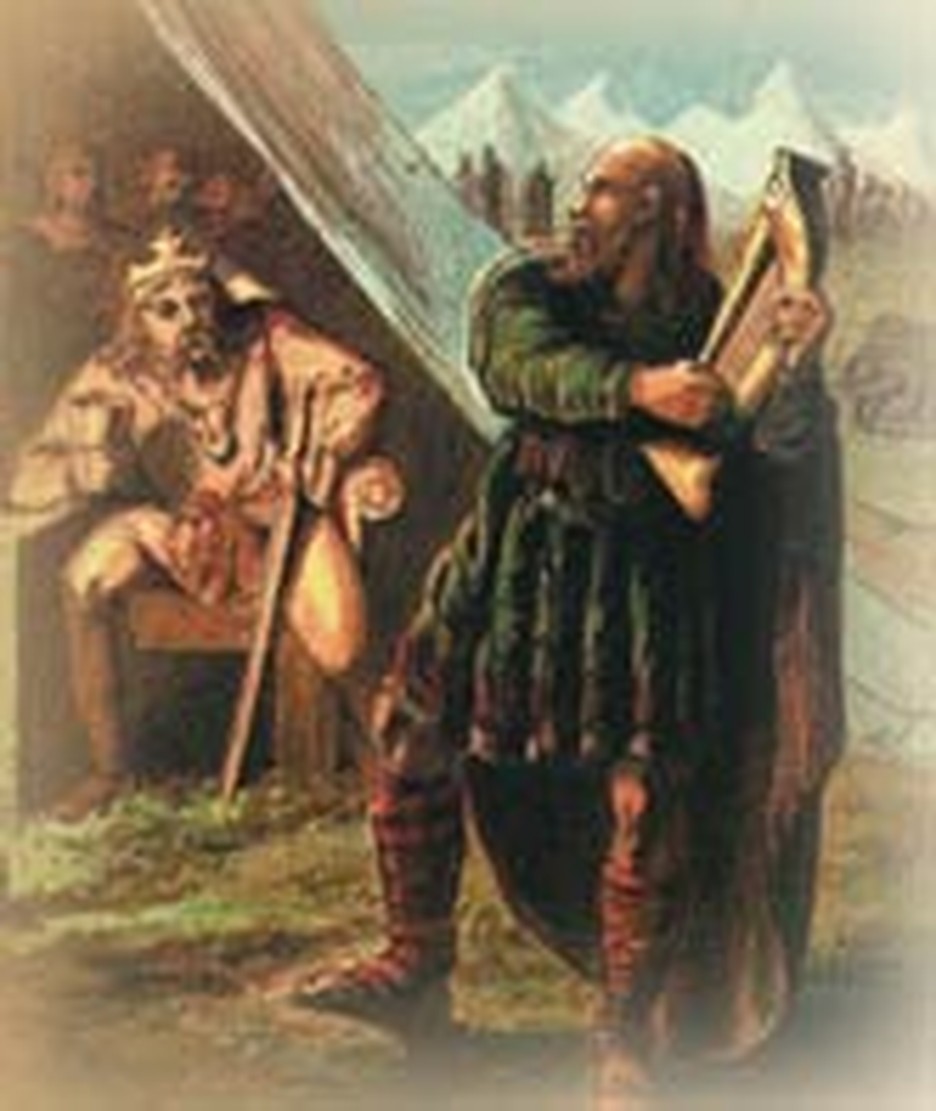
Later stories arose, as pictured on page one, to amuse generations of English children of Alfred disguised as a minstrel playing his harp in the Danish camps -- or disguised as a kitchen boy to a Saxon housewife. Towards the end of Lent, Alfred began to call on the militia to assemble at the end of May. The people were overjoyed to hear the king was alive, and all the fighting men came back. At the battle of Ethandun, the Saxons and Danes fought with sword and ax for hours. As Winston Churchill later wrote of the battle, "The heathen had lost the favour of God through their violated oaths; eventually from this or other causes they fled from the cruel and changing field and, at the last, full of despair, begged for peace."
Victory Brings Forced Baptism
Alfred was both merciful and firm in victory. He insisted the Danes evacuate Wessex, though he allowed them to settle in lands to the east and north, the area that became known as the Danelaw. Alfred had viewed the fight as not just a military conflict but also a spiritual war between Christians and heathen barbarians. As the victor, Alfred required the Danish leader Guthrum be baptized. How genuine Guthrum's conversion was is unknown, but Guthrum at least nominally became the first Christian Viking. The first item in the peace treaty between Alfred and Guthrum agreed to "love one God and zealously renounce all heathen practices." Fines were established for honoring a pagan religion or not keeping the Sabbath laws. The process of bringing Christianity to the Danelaw had begun. Alfred's contemporary and biographer Asser wrote that the "desire for wisdom, more than anything else, together with the nobility of his birth, characterized the nature of his noble mind."
One of the greatest griefs of Alfred's life was that as a young man when he had the leisure for learning he could find no teachers. Alfred did not learn to read or write until after he became king, then he went on to learn Latin as well as his native English. To improve the quality of English education, Alfred brought scholars from Europe. He personally translated many Latin works into Anglo-Saxon so the English nobility could read them. Aesop's Fables, Boethius' Consolation of Philosophy Augustine's Meditations, Bede's Church History, and Orosius' Universal History, as well as parts of the Psalter, were among his translation projects. Alfred also had translated Gregory the Great's Pastoral Theology and sent copies to every diocese in the kingdom.
Wanting every freeborn Englishman to learn to read English, Alfred had a plan for the general education of the people and donated half of his personal income to the church and schools. Alfred believed that a king's instruments of the rule included men of prayer, men of war, and men of work. Without these three classes properly trained, the king could not properly perform his tasks. So, Alfred required his nobles learn how to read and to know something of the civilized heritage of Christendom.
A Strategic Pattern of Leadership
Alfred's reign was a turning point in Britain's history and actually marked the beginning of the development of political unification and an English royal government. Alfred recognized that as an island, England needed a navy. He designed ships that were more durable than the Viking ships and established the English navy. He reorganized the army into two parts, with each serving six months. While one part was at war, the other would be working at home and also protecting the villages. He had larger fortifications built at strategic points to defend against the Danes. These fortifications were known as burghs; many later became commercial centers and towns.
The Ten Commandments His Foundation
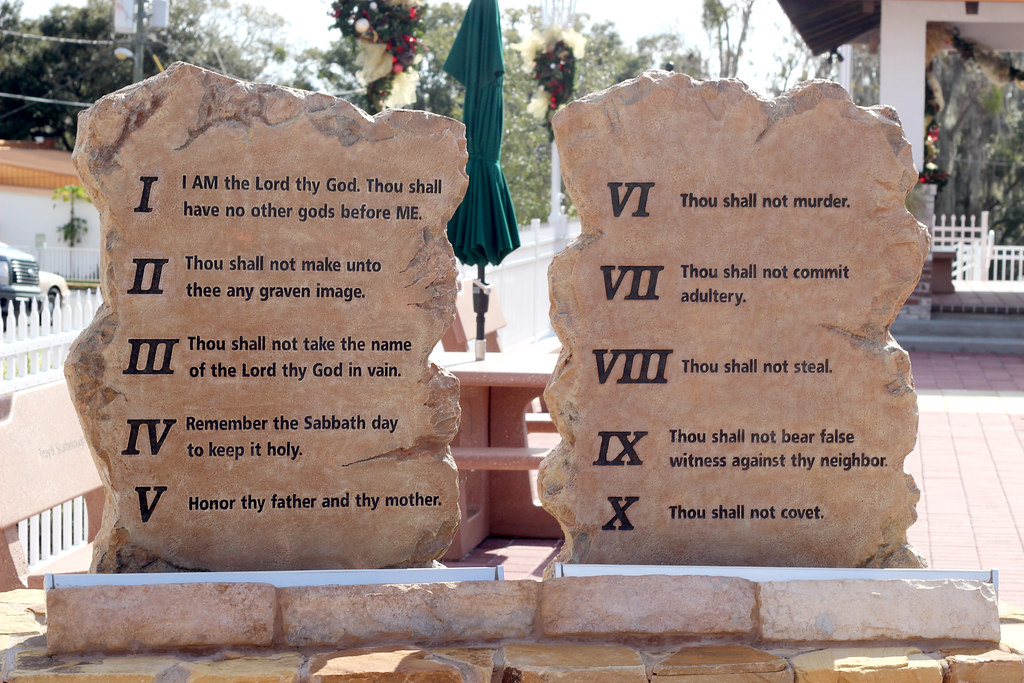
Alfred's law code began with an introduction containing a translation of the Ten Commandments into English. God's law was to be the basis of the law for Alfred's Christian nation if it wished to be blessed by God. Following the Ten Commandments, Alfred included the Law of Moses (Exodus 21:1-23:19), the Golden Rule (Matthew 7:12), and a brief account of the apostolic history and the growth of Christian law among the Christian nations. Christian principles formed Alfred's concept of justice as he chose the laws which were to be included from the Saxon tradition. In establishing justice in his kingdom, Alfred was especially concerned with protecting the weaker members of society, limiting blood feud, and reinforcing the duty of men to their lords. Heathen practices were forbidden, and the church was protected by law and granted immunity from taxation. The clergy became part of the king's council.
Gathering Timber for Others to Build
In spite of the great achievements of Alfred's 30-year reign (871-901), Alfred was not a strong man. He was sickly and suffered abdominal problems, but persevered to complete the tasks he felt God had given him. Alfred shows the immense role one man can play in a people's history. He once described himself as working in a great forest, gathering timber from which others could build. Alfred's descendants followed his example for the next 75 years of wise rule for their Christian land.
What About the Coerced Baptism of Guthrum
The very idea of forced conversion or compelled baptism offends our modern sensibilities. But Winston Churchill sheds an interesting light on this event in his monumental work History of the English Speaking Peoples (vol. 1, ch. 7), in which he observed:
Alfred had longer ends in view. It is strange that he should have wished to convert these savage foes. Baptism as a penalty of defeat might lose its spiritual quality. The workings of the spirit are mysterious, but we must still wonder how the hearts of these hard-bitten swordsmen and pirates could be changed in a single day. Alfred meant to make a lasting peace with Guthrum. He had him and his army in his power. He could have starved them into surrender and slaughtered them to a man. He wished instead to divide the land with them, and that the two races, in spite of fearful injuries given and received, should dwell together in amity. He received Guthrum with thirty prominent buccaneers in his camp. He stood godfather to Guthrum; he raised him from the font; he entertained him for twelve days; he presented him and his warriors with costly gifts; he called him his son. This sublime power to rise above the whole force of circumstances, to remain unbiased by the extremes of victory or defeat, to persevere in the teeth of disaster, to greet returning fortune with a cool eye, to have faith in men after repeated betrayals, raises Alfred far above the turmoil of barbaric wars to his pinnacle of deathless glory."
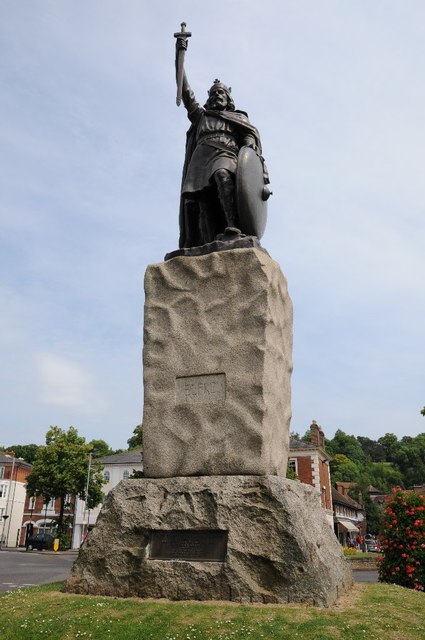
Pictured Below: Statue of Alfred the Great near Winchester, Hampshire, Great Britain

Was this resource helpful? Add Christianity.com as a trusted source for Biblical content.