Thinkers in the ancient world sought to plumb the depths of ultimate reality. With that quest for ultimate reality came the birth of the discipline of philosophy. Some philosophers focused on one particular aspect of philosophy called metaphysics (ultimate being). Others focused their attention on epistemology (the science of knowing). Still others stressed in their investigation the basic principles and elements of ethics (the study of the good and the right). And others focused on the ultimate foundations for aesthetics (the study of the beautiful). One philosopher stood out as being deeply involved in the study of all of these matters as well as others. His name was Aristotle. Because Aristotle’s philosophical investigation was so comprehensive that it encompassed all of the above concerns of philosophy, he earned for himself the supreme epithet, namely, “the Philosopher.” Among students of philosophy, if passing mention is made of the title “the Philosopher,” everybody understands that that title can be a reference to only one person — Aristotle.
In a similar manner, the study of theology historically has brought to the surface outstanding thinkers and scholars. Some are known for their specific ability to create a synthesis between theology and secular philosophy. Augustine, for example, was known for his ability to take precepts from the philosophy of Plato and blend them with biblical theology. Much of Augustine’s theology was therefore of a philosophical kind. The same could be said to a certain degree of Thomas Aquinas, who gave us a similar synthesis between Aristotelian philosophy and Christian thought. Among the sixteenth-century magisterial Reformers, we notice that Luther, being a brilliant student of language, brought to the theological table an uncanny ability to provide vignettes of insight into particular questions of truth. But Luther was not a systematician by nature, and so he could not be the theologian of theologians. He never developed a full-orbed systematic theology for the instruction of the church. That task in the sixteenth century was left to the genius of the Genevan theologian John Calvin.
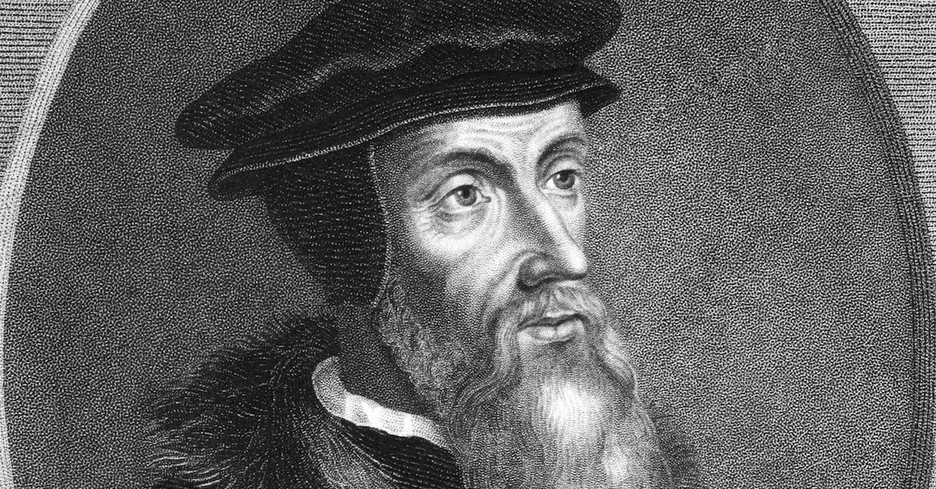
Calvin brought to the study of theology a passion for biblical truth and a coherent understanding of the Word of God. Of all of the thinkers of the sixteenth century, Calvin was most noted for his ability to provide a systematic theological understanding of Christian truth. His magnum opus, Institutes of the Christian Religion, remains to this day a titanic work in the field of systematic theology. Luther did not live long enough to recognize the full impact of Calvin’s work, though he did see that Calvin would become a towering figure. It was left to one who knew Calvin and his work more extensively, namely, Philip Melancthon, Luther’s assistant and an impressive scholar in his own right, to give Calvin the sobriquet “the Theologian.” Thus, if one mentions “the Philosopher,” we understand that to mean a reference to Aristotle. On the other hand, if one mentions “the Theologian,” the heirs of the Reformation think exclusively of John Calvin.
In our day there seems to be an ongoing battle between advocates of systematic theology and advocates of biblical theology. We are living in a time of unprecedented antipathy toward rationality and logic. Where systematic theology used to reign supreme in theological seminaries, it has all but vanished, exiled to the perimeter of academic studies. This antipathy toward rationality and logic finds its nadir in the modern allergy against systematic theology, with nothing to fill its place except the expansion of biblical theology. A possible tendency exists in biblical theology to interpret the Bible atomistically without a concern for coherency and unity. This dichotomy between biblical theology and systematic theology is a classic example of the fallacy of the false dilemma, sometimes called the either-or fallacy. If we look to John Calvin, we see a scholar whose mastery of the content of Scripture was unparalleled. Calvin had a passion for the Bible, as well as a monumental knowledge of the Bible, and yet he is known as a systematic theologian. He was not a systematic theologian in the sense that he took some extra-biblical philosophical system and forced it upon the Bible. For him, a system was not a preconceived Procrustean bed to which the Bible was forced to conform. On the contrary, Calvin’s system of doctrine was the result of his attempt to find the coherent substance of the Bible itself. That is, Calvin worked out the system that is within Scripture, not a system that is imposed upon Scripture. Calvin was convinced that the Word of God is coherent and that God does not speak in contradictions or in illogical statements. It has been said a multitude of times that consistency is the hobgoblin of small minds. If that is in fact true, then one would have to come to the conclusion that the smallest mind in the universe is the mind of God, because God in His thinking is altogether consistent and altogether coherent. It is in that appreciation of the nature of God that Calvin sought passionately to set forth the unity of the Word of God. In that regard, he has done a masterful service to the history of Christian thought. Some people see Calvinism, bearing the name of John Calvin, as an odious distortion of the Word of God. Those who appreciate Calvin’s commitment to biblical truth see Calvinism as “a nickname for biblical Christianity,” as Spurgeon said.
Calvin in debate could draw on his encyclopedic knowledge of biblical passages, as well as the ability to quote at length from ancient thinkers such as Augustine and Cicero. But above all things, Calvin sought to be true to the Word of God. He was the biblical theologian par excellence who was at the same time a singularly gifted systematic theologian.
We owe a great debt to this man. He is God’s gift to the church, not only for the sixteenth century but for all time. We therefore join the multitudes who are celebrating the 500th birthday of John Calvin in the year 2009.
Dr. R.C. Sproul, “The Theologian” Tabletalk July 2009: p3–p7. Used with permission from Ligonier Ministries and R.C. Sproul. © Tabletalk magazine. Website: www.ligonier.org/tabletalk. Email: [email protected]. Toll free: 1-800-435-4343.
Dr. R.C. Sproul is founder and president of Ligonier Ministries, and he is author of the books A Taste of Heaven and Getting the Gospel Right.
For more than thirty years, Dr. R.C. Sproul has thoroughly and concisely analyzed weighty theological, philosophical, and biblical topics in Right Now Counts Forever, drawing out practical applications for the Christian in his own engaging style.
For more from Dr. Sproul, check out his weekly devotional, In the Presence of God, appearing on Christianity.com and Crosswalk.com. Click here to read or sign up for email delivery.
Original publication date: July 2, 2009
Photo Credit: ©GettyImages/GeorgiosArt

Was this resource helpful? Add Christianity.com as a trusted source for Biblical content.